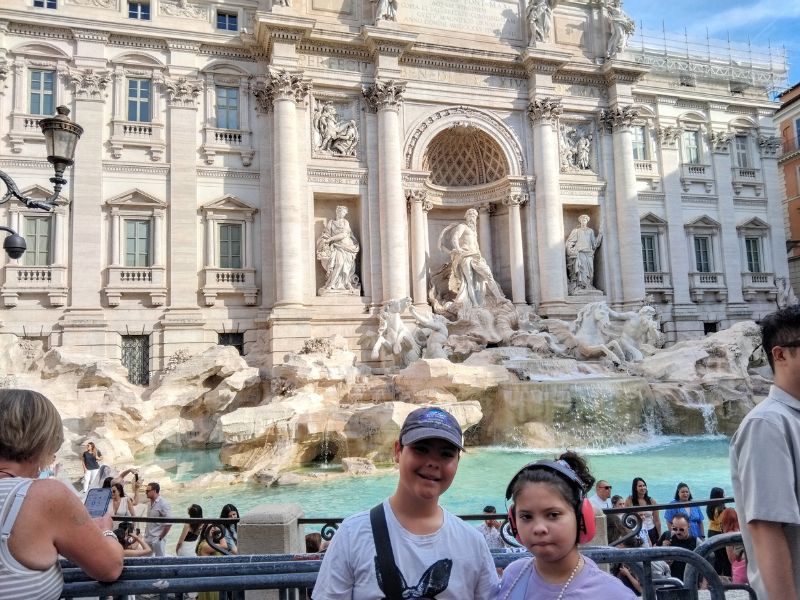
There’s a certain kind of travel photo that makes it look like you’ve always been “good at this.”
A landmark in the background. Kids smiling. Everyone upright. No one visibly unraveling. (A small miracle, honestly.)
And if you’re building toward longer-term travel or international travel, those photos can feel like a different universe. Like some families have a secret ingredient you missed. Confidence. Flexibility. Chill nervous systems.
But the truth is: the big trips don’t start with the big trips.
They start with small stretches. Low-stakes practice. Leaving early. Learning what was hard. Adjusting. Trying again.
If you’re working toward longer travel – especially as an interabled or neurodivergent family – this post will walk you through how to build capacity in a way that’s realistic. Not aspirational. Not “just push through.” More like scaffolding:
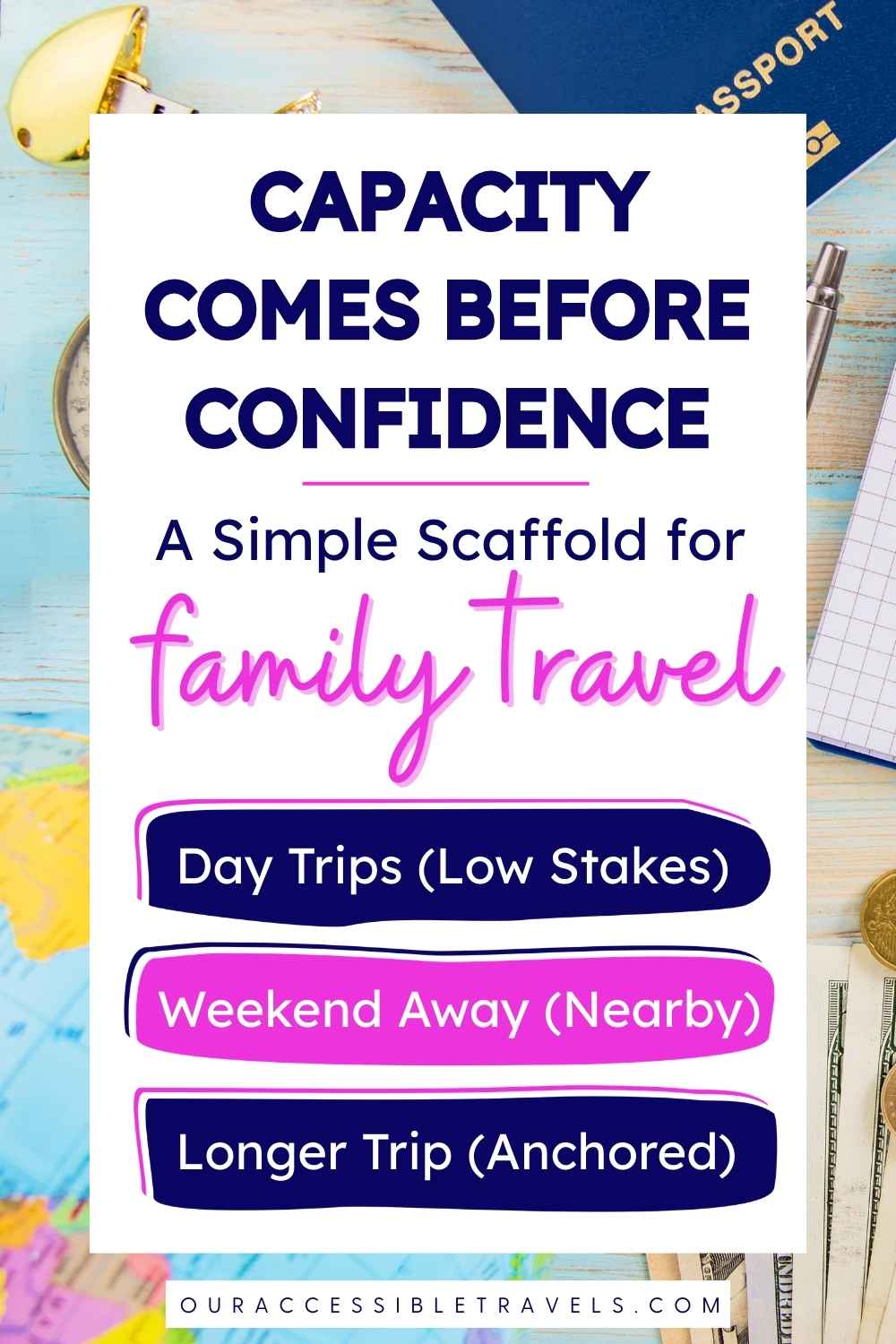
day trips → weekend away → longer travel
And, it will be important to keep familiar anchors still running quietly in the background.
Because capacity comes before confidence.And that’s the part no one sees.
🧱 Capacity Is Built, Not Willed Into Existence
For a lot of families, “travel tips” are framed like motivation.
Be spontaneous. Be flexible. Say yes more.
But when you’re managing real access needs, regulation needs, energy limits, or medical considerations, motivation isn’t the missing piece.
Safety is.
Predictability is.
Recovery is.
This is why we lean on predictable anchors more than perfect plans.
The only way to build travel capacity without paying for it later is to increase the stretch graduallyand watch what happens – not to prove you can do it, but to discover what supports you actually need.
That’s what I mean by scaffolding.
Scaffolding is temporary support that helps you do something bigger than you could do comfortably right now. It isn’t rigid. It isn’t perfect. It’s responsive. And it’s allowed to look boring, uneven, or slow from the outside.
Because it’s not for the outside. It’s for your family.
Confidence is just evidence, collected over time.
So instead of asking, “Are we ready for international travel?” the more useful question becomes: What’s our next manageable stretch?
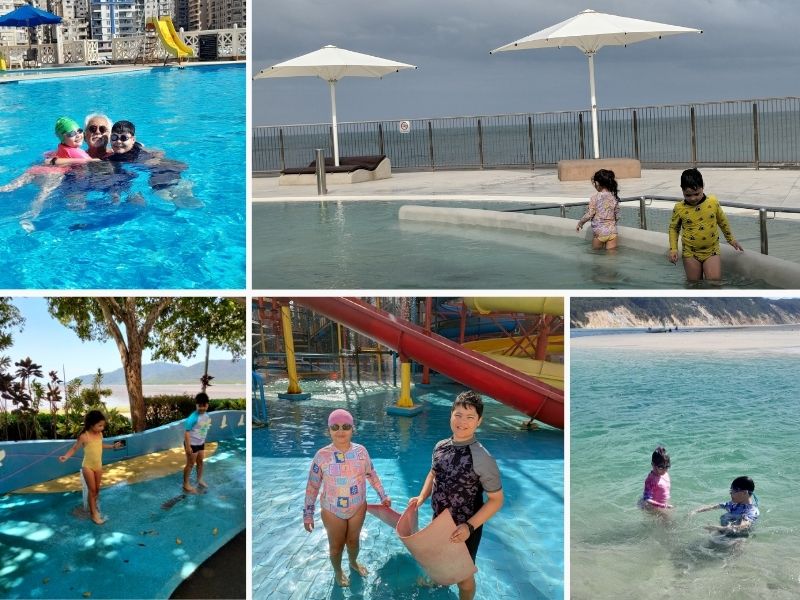
From splash pads and familiar pools, to beaches, water slides and resorts, we have used water experiences as an anchor on our holidays to ensure there is something familiar to hold on to.
🚗 Start With Day Trips (Low Stakes, High Value)
Day trips are the most underrated training ground for longer travel.
Not because they’re easy – they’re often not – but because they’re close enough to be safe.
You can look out for how anxiety raises its head. You can test a new environment. You can see what happens when you add crowds, noise, heat, waiting, transitions, and “different” all in one go… while still having a clear return point.
And that’s the magic of day trips: they give you information.
What you do with that information is the part that makes future trips easier.
Because this is the kind of information you can’t get from reading reviews. The kind you only get by living it.
You start to notice patterns like:
- Everyone is okay… until hunger hits
- The hardest part is actually the transition home
- The sensory load builds quietly, then crashes
- One child needs movement breaks, another needs stillness
- “One more thing” is the moment it tips over
If you have to leave early, it still counts. If the plan changes, it still counts. If someone melts down in a public place and you spend half the outing regulating, it still counts.
Because the goal isn’t to collect perfect memories.
It’s to learn your family’s needs and current capacity.
Food for thought: What usually costs you the most energy on an outing – the getting ready, the transitions, the unpredictability, the sensory load, or the recovery afterward?
If you want the ‘why’ behind this, I unpack regulation and travel stress here.
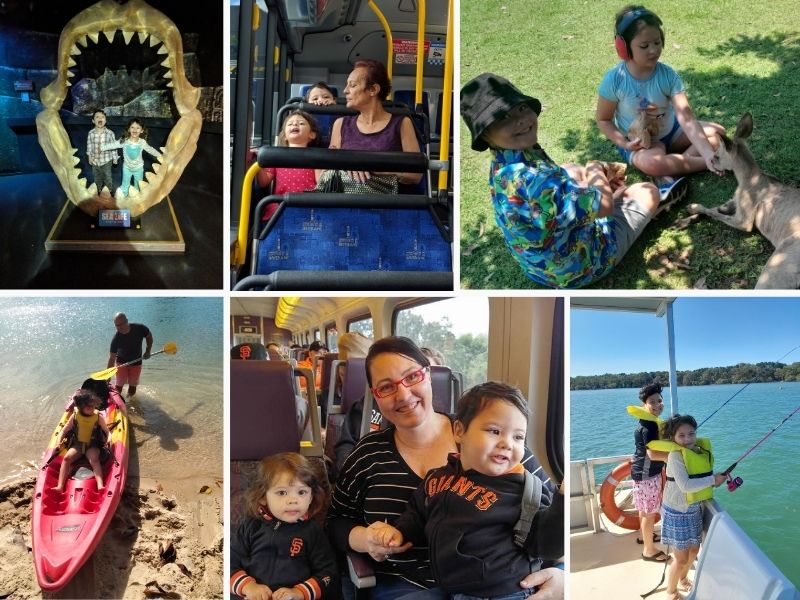
Day trips that have helped build capacity for us have been varied. We’ve included things like public transport – just for the sake of it, or to go to a game; water sports like kayaking and fishing, animal experiences like aquariums and zoos. The key is to start small and build from there.
🔍 Treat Pain Points Like Clues (Not Failures)
This is where the shift happens.
A lot of us come home from an outing and do an emotional debrief that sounds like: “Why was that so hard?”
Which is fair. Travel can be a lot.
But the more useful debrief is quieter and more practical:
Where did it go sideways – and what can we build around that next time?
Pain points aren’t a sign you should stop. They’re a sign you’ve found the edge of capacity.
And once you can see the edge clearly, you can scaffold it.
Here are a few common pain points and what “scaffolding” can look like in real life:
Practical Scaffolds that Actually Help
- Packing chaos → pack the night before, use a fixed “go bag,” reduce decision-making in the morning
- Food timing → protect a food rhythm, pack familiar snacks, don’t “wait and see” if everyone can last until later
- Transitions → use “First, Then,” preview the next step, build in a buffer before and after switching environments, use reminders/countdowns that work for your family
- Crowds/noise → go early, choose quieter versions, identify a nearby exit/reset spot before you enter
- Accumulating fatigue → schedule a regulation break before you think you need it, plan a low-demand afternoon or day afterward
- Mismatch in needs → split the family intentionally (not as a last resort) if needed, so no one has to push past their limit to keep up
None of this is a personal failing. It’s just design.
You’re designing the conditions under which your family can participate.
And once you start doing that consistently, travel stops being a gamble.
A simple visual schedule can do a lot of heavy lifting here.
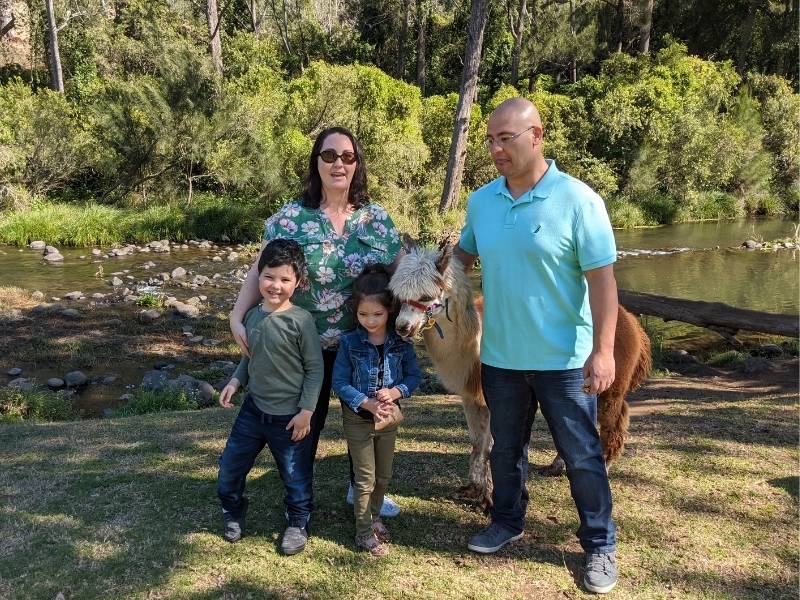
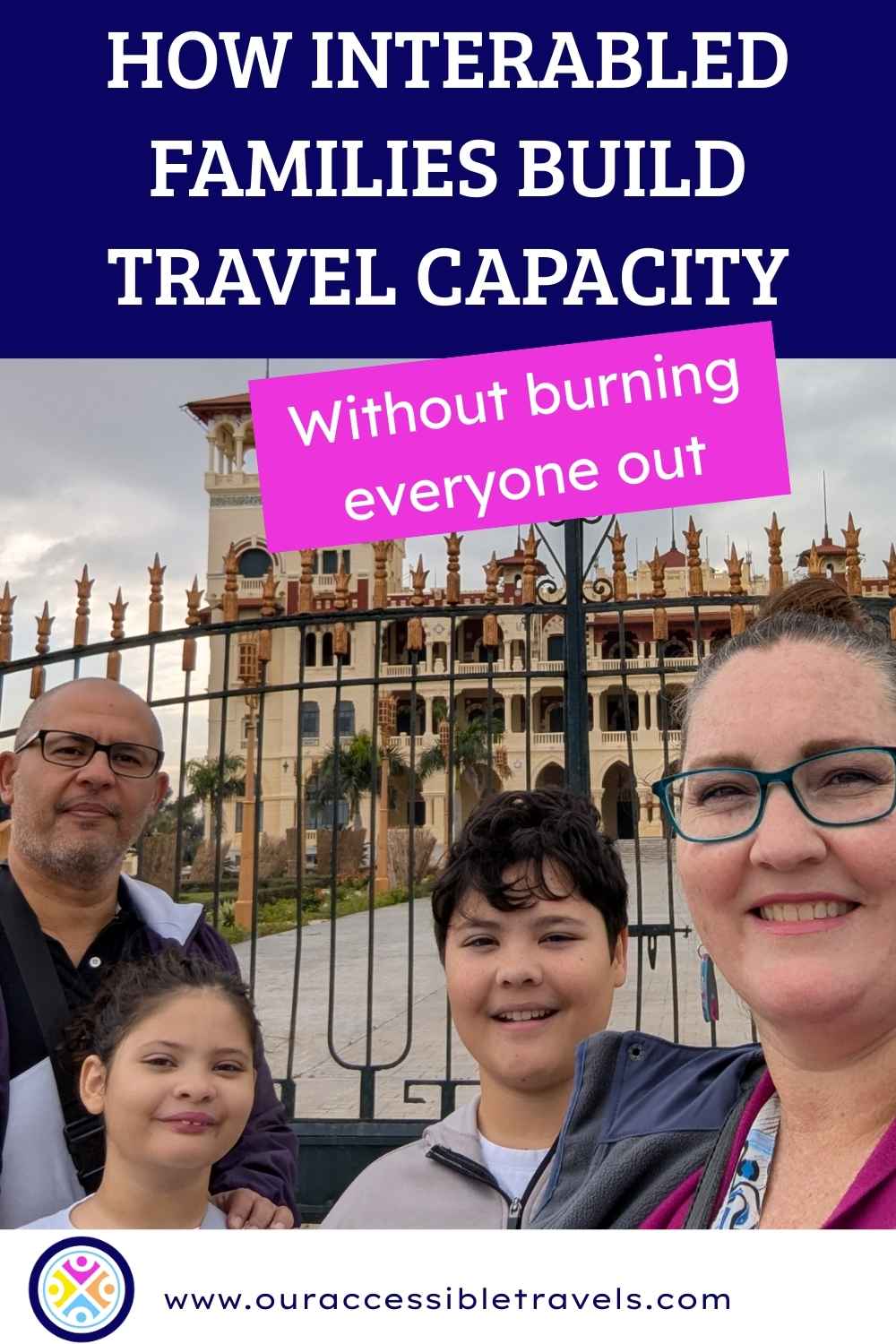
There were moments on this day trip that Kareem told me “never again” – but we took the pain points on board as feedback and adapted for the next time.
🧳 Next Stretch: A Weekend Away Close to Home
Once day trips feel more predictable – not effortless, but manageable – the next stretch is a weekend away somewhere close.
Not far. Not fancy. Not a “once a year, make it count” weekend.
Just a slightly bigger version of what you’ve already practiced.
A weekend away introduces a whole new layer: sleeping somewhere different, managing energy over multiple days, and navigating morning/evening rhythms outside your home environment. This is where a lot of families discover that what’s manageable for four hours doesn’t automatically stretch to forty-eight.
And again: Good. More Information.
You learn things like:
- Sleep disruption changes everything the next day
- Bedtime routines need more scaffolding away from home
- Small transitions add up when you do them repeatedly
- The “down time” you thought you built in wasn’t actually restful for everyone
If possible, pick a place that’s familiar – somewhere you’ve been for a day trip, or somewhere that has predictable features. Familiarity reduces cognitive load. Recognising a park. Knowing where the supermarket is. Understanding the layout of the accommodation. Those things sound small, but they help nervous systems settle faster.
Because novelty stacked on novelty is exhausting.
But novelty layered onto a steady base? Much more doable.
One of the things I noticed when we would do weekends away is that heading to the same location, and even going to stay at the same hotel/apartment was really helpful in reducing anxiety.
So, when we started having weekends away in other locations, I’d look for the same hotel apartment chain – they are often decorated quite similarly or have elements that are familiar between locations. We also chose apartment style as that ensured they had a kitchen which helped reduce food stress for our daugther with ARFID and son with anaphylactic allergies.
This built in the predictability and safety that we needed.
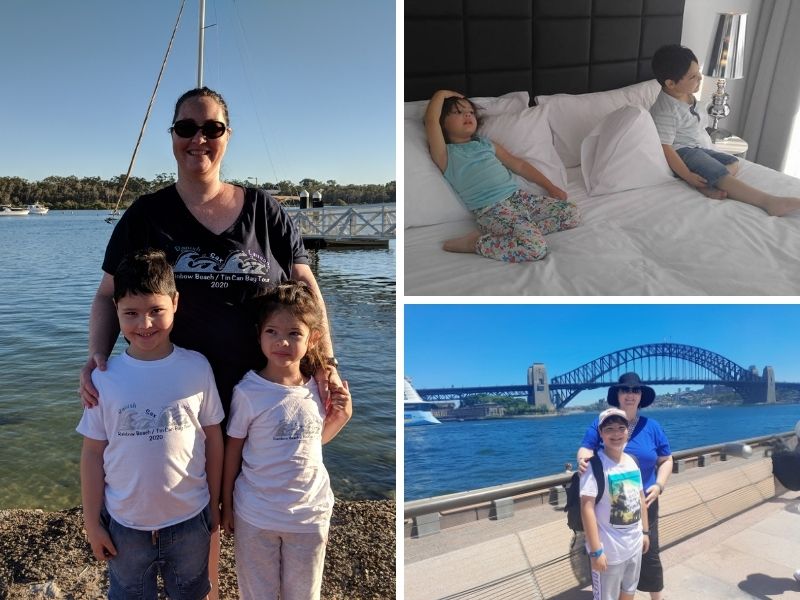
Our first weekends away were only an hour away from home. Then we progressed to a longer drive, and then to a short flight away.
⚓ Longer Trips With Familiar Anchors Still Running
When you move on to longer trips – and especially international travel – the biggest mistake is removing all familiarity at once.
International travel already brings so much new: language, transport systems, time zones, food options, climate, crowds, unexpected closures, cultural differences, and a general feeling of “we don’t know where anything is.”
So, the goal isn’t to make everything new and exciting.
The goal is to keep your anchors steady while you layer novelty on top.
Anchors are the predictable pieces that travel with you. They reduce decision fatigue. They support regulation. They keep you steady in the background so you can actually enjoy what’s in front of you.
Anchors might look like:
- A consistent morning rhythm (even a loose one)
- Familiar snacks and a protected food cadence
- A predictable connection practice (touch first, check-in first, slow start)
- A “First, Then” language pattern to ease transitions
- A daily flow that matches capacity (not ambition)
- A built-in rest window that you don’t negotiate away every day
And sometimes, anchors look like choosing familiar activities on purpose.
The first day or two of a longer trip is not always the time to do the biggest, busiest, most iconic thing. Sometimes it’s the time to do something regulating: a familiar meal, the pool, a kid-friendly museum with interactive activities, a calm park, a “nothing much” afternoon in the accommodation.
That’s not wasting travel.
That’s prioritising connection. That’s ensuring safety. That’s protecting the trip.
Food for thought: If you removed “should,” what would a supportive travel day actually look like for your family?
If you want to see what this looks like in real life, I share the exact anchors we lean on here.
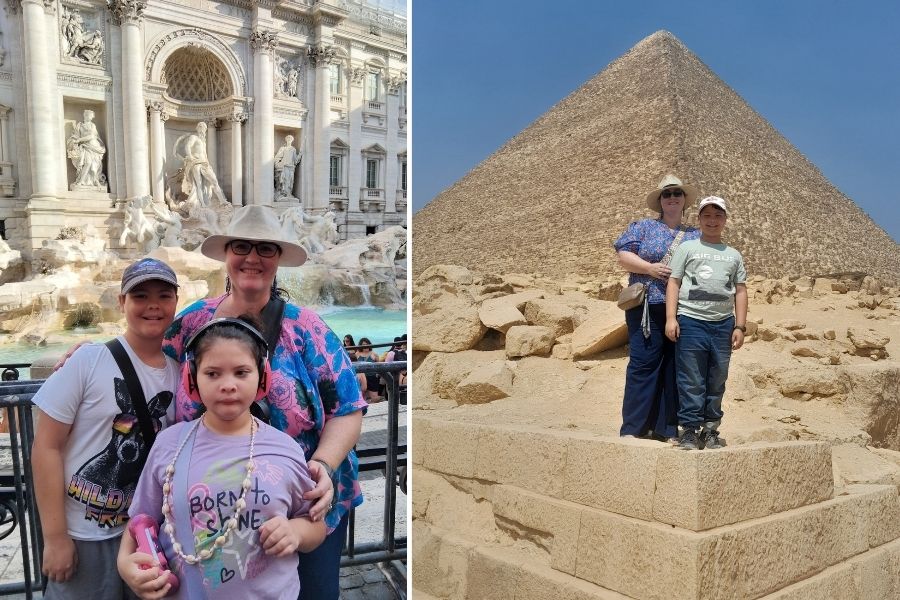
Having strong anchors in place has allowed us to enjoy travel more and explore some iconic places like the Trevi Fountain and the Pyramids of Giza.
🧠 Think Like a Builder, Not a Gambler
Here’s the quiet truth: longer travel and/or international travel has a bigger cognitive, emotional, and sensory load. Even when it’s beautiful. Even when it’s a dream destination.
So instead of gambling on it going well, test the components first.
Not as a rigid system. Just as a way to gather evidence.
Ask yourself:
- Can we manage two nights away without days of recovery afterward?
- What happens after back-to-back high-input days?
- How much downtime does each person actually need?
- What’s the most predictable tipping point?
- What supports are non-negotiable, even on holiday?
This isn’t about shrinking your world. It’s about expanding it safely.
Because the goal isn’t to “push through” and hope everyone survives it.
The goal is for travel to work for everyone – not just the most flexible person in the group.
Sometimes the biggest shift is letting go of ‘comfort’ as the goal.
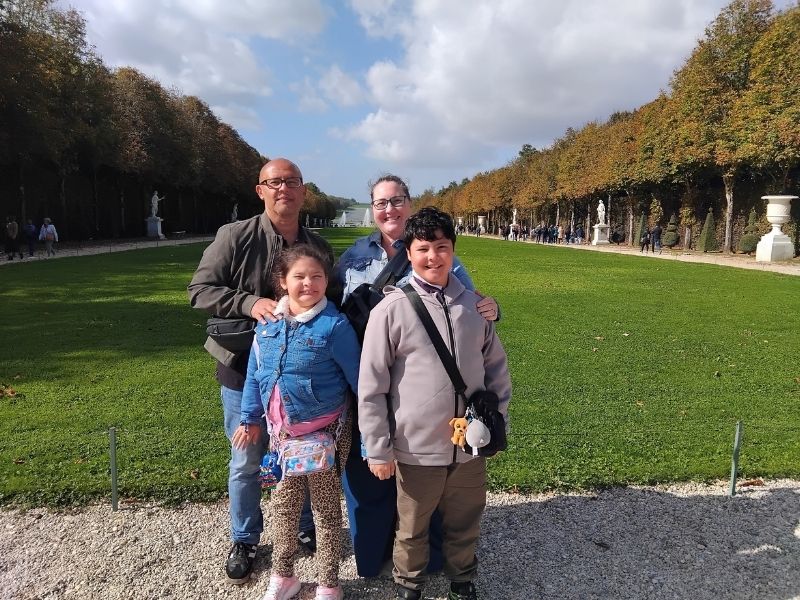
Supporting each person and their needs will ensure everyone gets to enjoy the experience.
💡 Takeaway
Longer-term or international travel doesn’t require fearlessness. It requires awareness.
It starts with day trips that are imperfect but informative. It grows through weekends away that reveal new layers. And it becomes possible when you carry familiar anchors into unfamiliar places.
Capacity comes before confidence.
And when you build capacity intentionally – by spotting pain points early and scaffolding around them – travel becomes something your whole family can participate in.
Not just endure.
What’s your family’s next small stretch?
Drop a comment below with one pain point you’ve noticed on outings (or one scaffold that’s helped) – you’re not alone in this, and your experience might be exactly the clue another family needs right now.
0 Comments