Navigating Travel Challenges for Neurodivergent Kids
Travelling with neurodivergent children can be incredibly rewarding, but it also comes with unique challenges – especially when it comes to sensory and emotional regulation. Many kids rely heavily on predictable routines, familiar environments, and consistent sensory input to feel safe and balanced. Travel flips many of those anchors upside down.
This guide breaks down what sensory and emotional regulation actually are, why they’re so interconnected, and how the demands of airports, long transit days, crowds, and constant change can disrupt a child’s internal equilibrium. More importantly, it offers practical, compassionate strategies to help your child stay regulated, feel supported, and genuinely enjoy the adventure alongside the rest of the family.
Enjoying this post? Pin it for later!
🧠 What is Sensory Regulation?
Understanding Sensory Processing in Neurodivergent Children
Sensory regulation is the way our brain receives, organises, and responds to sensory input—things like sound, light, movement, textures, smells, temperature, and body position.
Many neurodivergent children (including kids with ASD, ADHD, intellectual disabilities, dyspraxia, sensory processing differences, or anxiety) have difficulty processing sensory information. They may be over- or under-stimulated by sensory input and often are a combination of the two. The sensory input for them may not always come in evenly or in a predictable manner.
They may:
-
Seek sensory input (movement, pressure, noise, chewing).
-
Avoid sensory input (bright lights, crowds, scratchy clothing, waiting, overwhelming noise).
-
Need predictability and control to feel safe in unfamiliar environments.
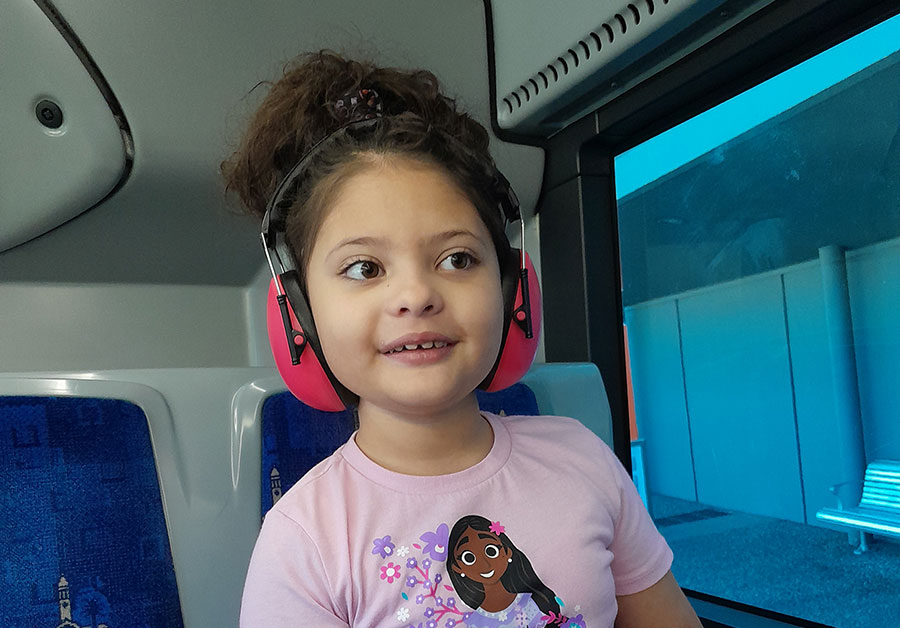
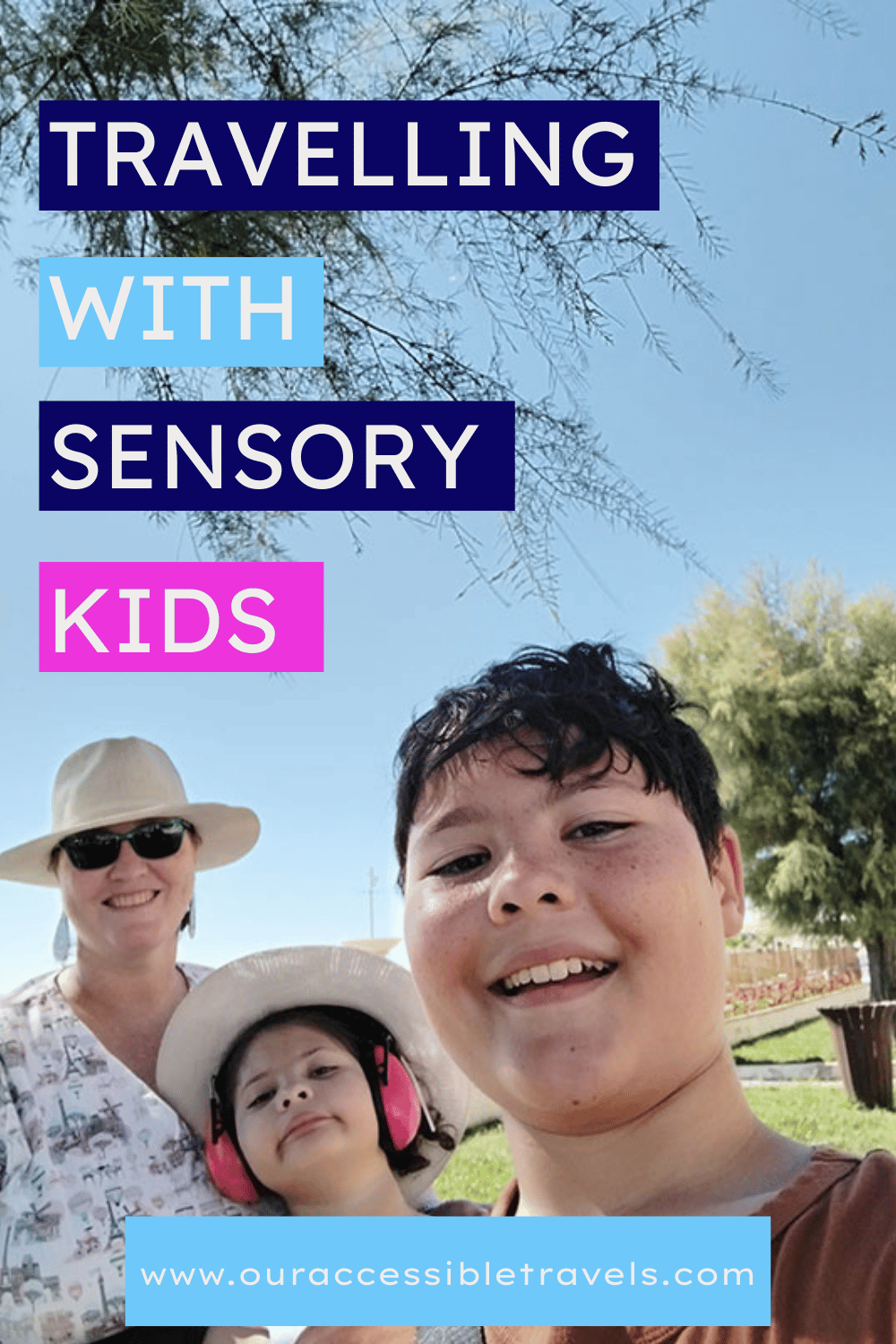
We would honestly be lost without Susu’s ear defenders/headphones. They help filter a lot of the noise out so that she can enjoy travel.
💛 What is Emotional Regulation?
How Kids Manage Big Feelings During Travel
Emotional regulation is the ability to understand, manage, and respond to emotions in a way that makes daily life feel manageable. For kids with additional needs, big feelings can come quickly—especially when their sensory system is overloaded or underfed, or when they are processing new information.
This includes skills like:
-
Recognising what they feel.
-
Knowing what helps them calm, focus, or feel grounded.
-
Using strategies to return to a “just-right” state.
🔗 How Sensory and Emotional Regulation Are Connected
Sensory regulation and emotional regulation are deeply intertwined. When our kids take in sensory input – sounds, lights, smells, movement, textures – their brain decides whether that input feels safe, neutral, or threatening. For neurodivergent children, that process can be much more intense or unpredictable.
Based on how that sensory input is processed, your child will have a natural emotional response. If the sensory input is too much (overload) or too little (underload), their emotional responses can shift very quickly.
Think about airports: bright lights, a sudden loud announcement, or the feeling of a seatbelt rubbing the wrong way. Any of these elements can trigger discomfort that looks like anxiety, frustration, irritability, or even complete shutdown.
On the flip side, not getting enough movement or pressure can lead to restlessness or dysregulation that makes it hard to engage.
When sensory needs are supported, emotional stability naturally improves. Meeting those needs isn’t about “spoiling” or “giving in”—it’s about helping their nervous system feel settled enough to manage the world around them.

Crowded and popular tourist attractions can offer a number of challenges when it comes to sensory input and emotional regulation.
🌍 Common Sensory Challenges During Travel
Travel is exciting but also full of uncertainty. For many neurodivergent children, unpredictability is one of the biggest emotional stressors they’ll face. Transitions, unfamiliar settings, and unexpected changes can spark anxiety long before you even leave home.
Travel often brings:
-
New sounds: airport announcements, traffic, crowds.
-
New smells: food, fuel, unfamiliar environments.
-
Different temperatures: changes between indoor/outdoor, blasting air-conditioning, humid outdoors.
-
Unexpected movement: turbulence, long car rides, walking, ferries, different transport modes.
-
Crowded spaces: queues, elevators, markets, tourist attractions, waiting areas.
-
Changes in routine: meals, bedtimes, transitions, structure.
-
New environments: unfamiliar beds, unfamiliar bathrooms, different rules.
All of this can push a child’s sensory system into overload (too much input), underload (not enough input), or simply a feeling of being “off-balance.”
These sensory inputs aren’t just “discomforts”—they can directly impact behaviour. When the sensory system is dysregulated, emotional regulation becomes harder, leading to distress, irritability, increased stimming, withdrawal, meltdowns, resistance to transitions, shutdowns, or increased anxiety and a sudden need to escape.
Understanding these triggers helps us plan ahead and support our kids before the discomfort becomes too big. With thoughtful planning, visual tools, sensory supports, rest opportunities, and structured predictability we can help our children enjoy the adventure.

Depending on the weather – we like to stay at accommodation that has a pool as it can be very calming for Susu, and loads of fun for the whole family.
💬 Emotional Responses to Travel Stressors
Travel is exciting but also full of uncertainty. For many neurodivergent children, unpredictability is one of the biggest emotional stressors they’ll face. Transitions, unfamiliar settings, and unexpected changes can spark anxiety long before you even leave home.
Kids may:
-
Worry about what’s coming next.
-
Feel overwhelmed by the unknown.
-
Experience frustration when their body or brain feels “too much.”
-
Show clinginess, refusal, tears, or shutdowns when transitions come suddenly.
In these moments, validation is powerful. It helps them feel valued and seen and feel safe enough to keep going.
Try these phrases and see how your child responds:
“I can see that feels really big for you,”
“It makes sense that you’re worried – this is new,”
Reassurance, predictability, and connection lay the foundation for smoother emotional regulation throughout the trip.
🏠 How Unfamiliar Environments and Changes Disrupt Regulation
Even well-planned trips can disrupt a child’s rhythm. Travel often removes the very things that help keep them regulated at home, such as:
-
Consistent daily routines.
-
Safe, familiar spaces.
-
Predictable transitions.
-
Access to preferred sensory tools (swings, fidgets, chewies, noise-reduction options).
-
Ability to avoid triggers.
-
Controlled environments.
-
Opportunities for movement or rest when needed.
Travel places children in environments full of novelty, and while novelty is stimulating for many neurotypical people, it can be destabilising for children who need sensory consistency and predictability to feel safe.
This doesn’t mean travel isn’t possible—or joyful. It means we plan with intention.
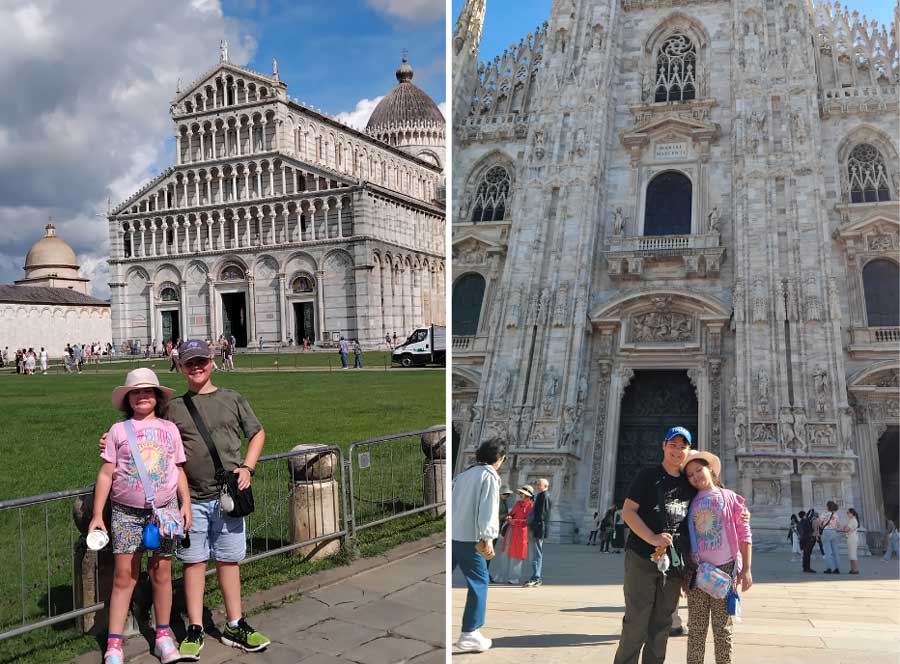
Managing sensory input and emotional regulation has allowed us to enjoy some incredible moments!
🔁 Why Familiarity and Routine Help Regulation
Predictability is a form of safety. When kids know what’s coming, their nervous system can relax. That’s why familiar routines—morning rituals, bedtime steps, meals at regular times—play such a huge role in regulation.
Before, during, and after travel, routines can anchor your child.
Some examples include:
-
Keeping a similar bedtime pattern (even if the time shifts).
-
Using the same comfort item or calming activity each morning.
-
Having a predictable order for transitions (e.g., “toilet → snack → boarding”).
-
Building rest breaks into each day.
Of course, routines get harder to maintain when you’re on the road. The trick is to keep the shape or rhythm of the routine, even when the details change.
A familiar sequence—same steps, different location—can still offer the structure your child’s nervous system is craving.
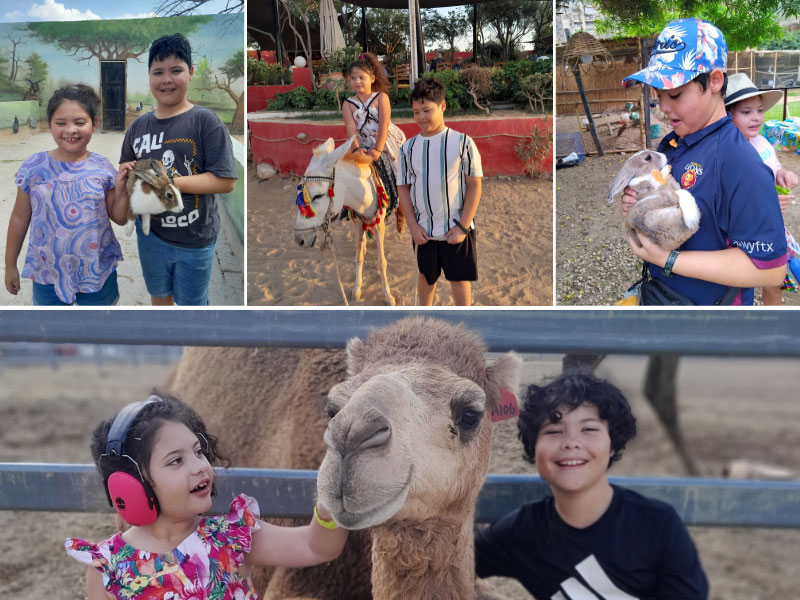
Wherever possible, we ensure that there is an animal experience on our travels. We know it’s very calming and regulatory for Susu, and Laith gets just as much joy from the experience.
🖼️ The Role of Visual Supports and Preparation
How visual schedules, social stories, and advance preparation reduce anxiety:
Visual tools make the unknown visible.
They show what will happen, in what order, and what choices a child can make. This reduces surprise and helps the nervous system relax.
Tips for creating and using visual tools specific to travel:
-
Use real photos of places and people when possible.
-
Keep steps short and concrete.
-
Highlight sensory elements (e.g., loud, bright, busy).
-
Add choice points (e.g., quiet corner or ear defenders/headphones).
-
Laminate or use a small binder ring so you can swap cards easily.
Benefits of previewing environments:
Photos, short videos, and walk-throughs help build familiarity. When a child sees the airport, hotel room, or station ahead of time, the place feels less unknown and less scary.
It also offers an opportunity for your child to ask questions. It can be really beneficial to work collaboratively with your child to help anticipate and solve problems. This builds capacity and empowers them to work through the process independently in the future when they are ready for that step.
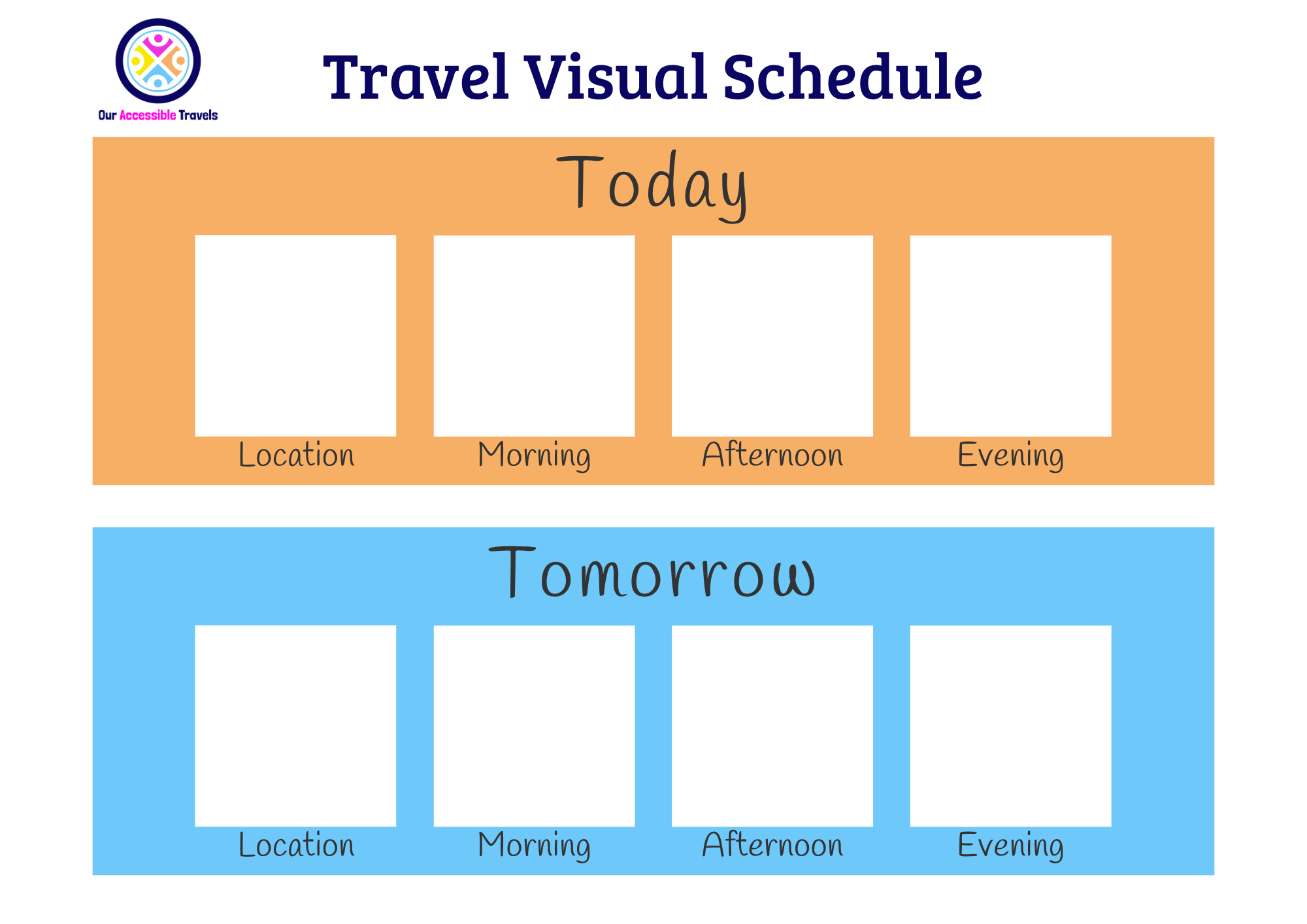
Visual schedules like this can help make travel more predictable and less stressful, giving everyone a clear idea of what’s happening today and what to look forward to tomorrow.
🎒 Sensory Supports: Regulation on the Go
Overview of common sensory tools and aids families use:
- Hidden Disability Sunflower Lanyard
- Sensory toys or fidgets for proprioceptive input
- Noise-reducing headphones
- Chewies/oral supports
- Wilbarger brush
- Compression clothing
- Sunglasses or hats
- Weighted lap pads
- Soft cuddly toys or comfort item
- Preferred snacks
- Tablets for visual grounding
- Mobility aids
Importance of packing a sensory kit tailored to your child:
Each child and their sensory preferences and needs are unique. If you’re not familiar yet with what works best for your child, take some time to implement options and observe their response prior to travelling. You can also work with an Occupational Therapist to help you develop a sensory profile that is unique to your child.
A small, personalised kit gives you reliable options when stress starts to build. Things tend to go even smoother when your child has had input and selected some of the calming options available. They will be more willing to engage with their supports on the go.
How to create calm spaces in crowded or overwhelming environments:
Look for corners, quieter lounges, outside benches, or quieter side streets. Use a hoodie + sunglasses + headphones as a portable “sensory cocoon.” A brief walk, a snack, or a predictable activity can reset the nervous system quickly.
When Susu was younger (and we still have occasional moments now) I would wear an oversized short and she would come under my shirt, close to my skin and I would hold her with my hand gently cupped over her ear. This helped by blocking out the light and noise, and also was beneficial as our heart rates could sync and she could smell my familiar scent.
Give yourself permission to leave any environment that is overwhelming, overstimulating or not conducive to happy travel memories.
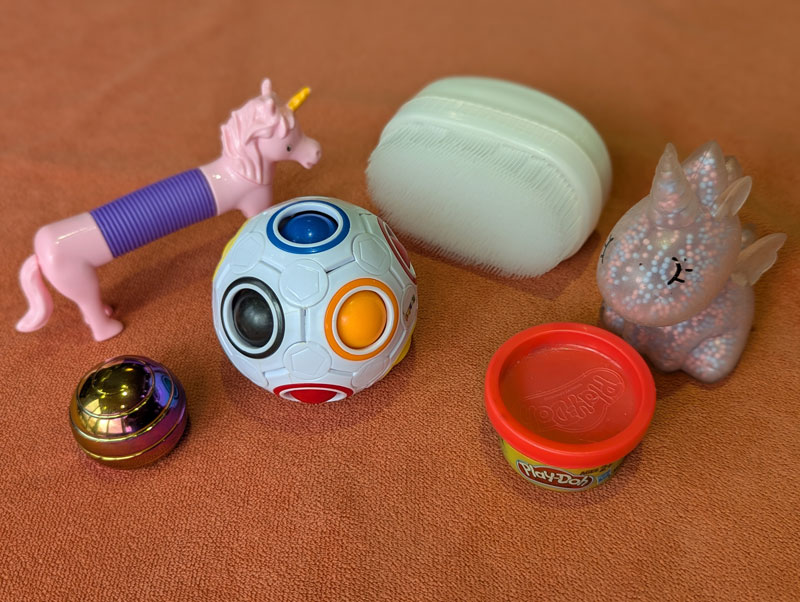
Having a variety of tools and fidgets available helps ensure a variety of sensory needs are met.
🚦 Recognizing Signs of Dysregulation
Early signs of sensory or emotional overload in children:
-
Increased fidgeting or pacing.
-
Sudden clinginess or withdrawal.
-
Covering ears or eyes.
-
Refusing transitions.
- Increase in questions about what is happening.
-
Change in breathing or body tension.
-
More stimming than usual.
-
Trouble following simple directions.
-
Going quiet (a common early warning sign for some children).
How timely intervention can help prevent meltdowns or shutdowns:
When you recognise the signs early, you can offer:
- comfort and validation that you see what they are coping with
- to take a break
- a verbal or visual reminder to access one of their calm down strategies
- a snack
- a movement break
- deep pressure input
- a reduction in demands.
Small interventions, particularly if caught early, can prevent escalation and restore balance faster than trying to calm a full meltdown.
✅ Key Takeaways
Supporting sensory and emotional regulation during travel isn’t about making every moment perfect—it’s about giving our children what they need to feel safe, understood, and capable.
Plan ahead. Watch for early signs. Keep predictable anchors. Honour sensory needs. With the right tools and mindset, travel becomes an empowering experience that meets each child exactly where they are.
📌 Found this helpful? Pin it so you can come back anytime.
This is super helpful. My toddler gets easily stressed out from new setups and I try to keep small things that we do or eat in our routine with us (like his favorite goldfish snacks) on the go to help remind him that he’s safe. I feel like all the other ideas mentioned are so helpful for the future! Thank you
Thank you
This is so interesting and helpful. Having a child on the spectrum, I have been able to include many of your suggestions while we travel. And he is a happy traveller.
Yes, I have a kiddo that fits this category. He is 16 now and does pretty well. We still have to watch and be prepared as we travel!
Thank you for this thoughtful explanation —I really appreciated the practical tips here and how you broke down what sensory and emotional regulation mean along with signs to watch out for.