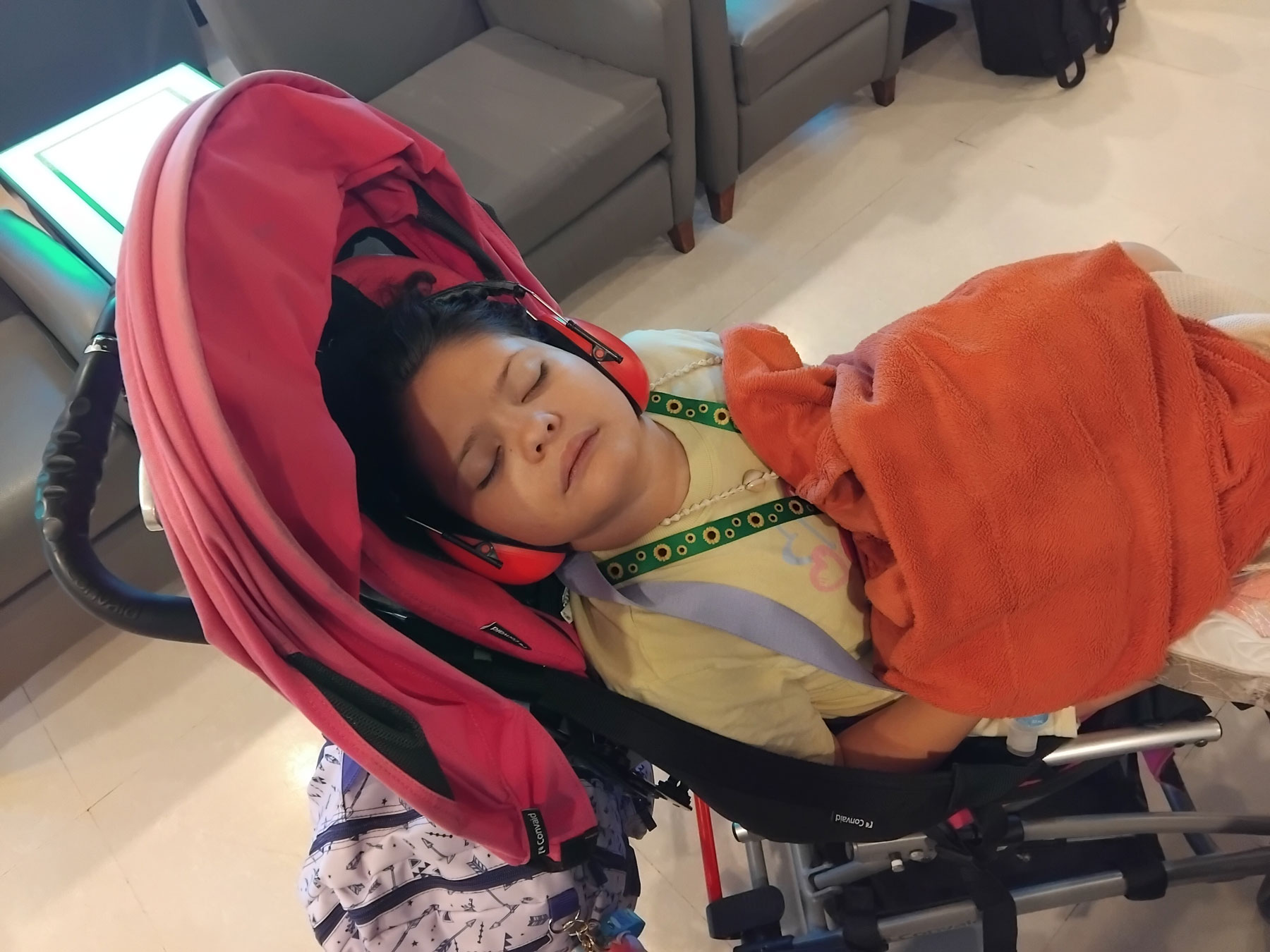
Planning a family trip that’s truly accessible means more than physical access—it’s about creating a journey that respects everyone’s unique needs and fosters connection and joy. This post shares how we balance sensory, medical, and mobility considerations to help every family member feel supported and comfortable.
You’ll find practical tips on building a travel rhythm, packing essentials, and navigating unpredictability with kindness. Whether you’re new to accessible travel or seeking fresh ideas, this guide shows that thoughtful planning makes all the difference.
Enjoying this post? Pin it for later!
🌍 How to Plan a Family Trip That’s Truly Accessible for Everyone
Travelling as a family can be wonderful — but when one or more of you has additional needs, it takes a little extra thought to make sure everyone feels supported and included.
Accessibility isn’t just about ramps or accessible bathrooms. It’s about creating a travel experience where everyone can feel comfortable, calm, and able to enjoy the journey. That includes sensory comfort, predictability, mobility support, and the right balance between adventure and rest. It can also mean balancing the differing needs of family members.
Here’s how we plan trips that work for our whole family — balancing accessibility, sensory needs, medical issues, and everyone’s unique interests.
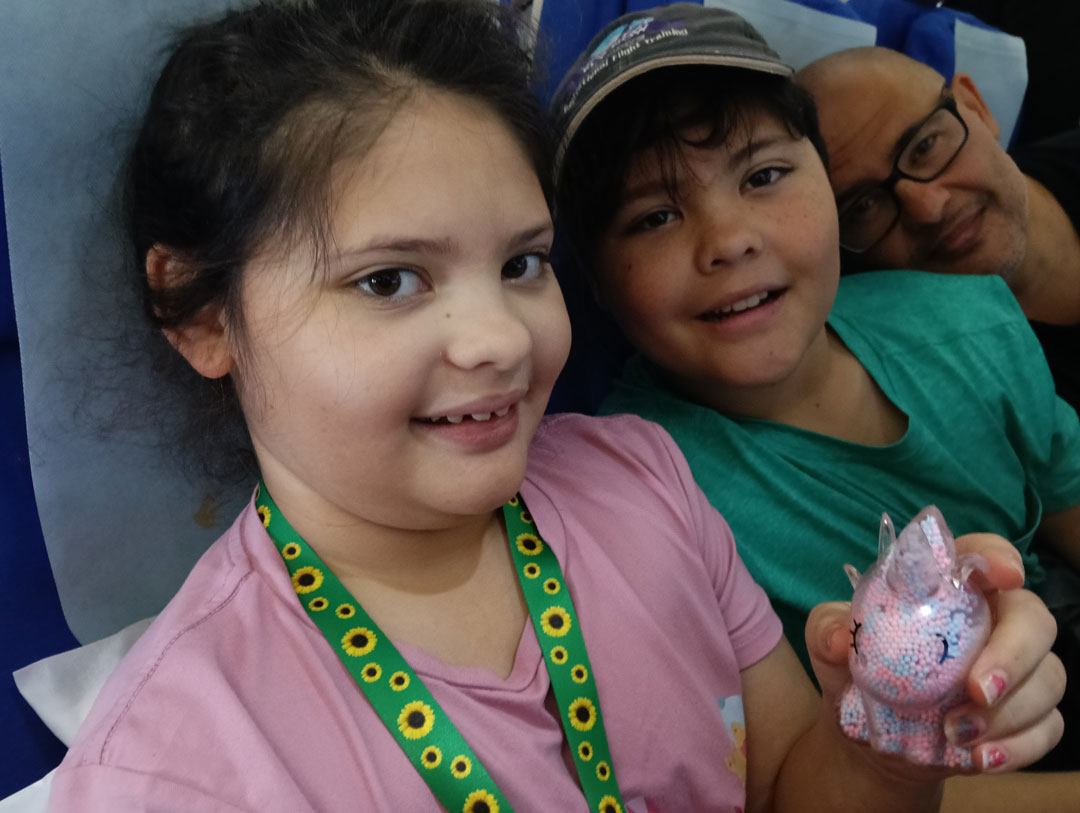
On board and settled — sensory supports, sunflower lanyard, and comfort items ready to make flying a little smoother for everyone.
🗓️ Start With Your Family’s Rhythm
Before you book anything, think about what helps your family thrive at home.
Are you and your kids early risers or night owls? How many transitions can they manage in a day? Do you all do better with a set schedule, or when there’s more flexibility built in? How important is a regular sleep routine for the energy levels (and emotional regulation) of you, and your kids?
These questions might seem small, but they make a HUGE difference.
For us, slower travel with longer stays works best, preferably somewhere where we can prepare some of our own food. My son has a number of anaphylactic allergies, and my daughter hasARFID (Avoidant/Restrictive Food Intake Disorder) so having access to a kitchen where we can prepare meals is critical. There’s also the added financial benefit that comes with preparing at least some of your own meals.
We also build in buffer days between busy ones and try not to change locations too often. This helps manage physical, emotional and cognitive fatigue, ensuring that we are at our best for the moments that really matter. This rhythm also helps everyone settle and actually enjoy where we are, rather than just getting through the logistics.
A simple daily rhythm can also be helpful. You can create a rhythm that works best for the energy needs of your family e.g. If they have more energy and capacity in the morning, that’s the ideal time to organise activities or tours. You may want to create a rhythm of:
Morning activity/tour, lunch & rest, calm afternoon connecting
Last year, when we spent a month in Egypt, I created a Travel Visual Schedule with removable icons representing destinations, activities, and rest. It made it easier to take each day as it came and avoid feeling overwhelmed while travelling. It also gave me the flexibility to adjust our plans with a day’s notice if it looked like a slower, more relaxing day would suit us better.
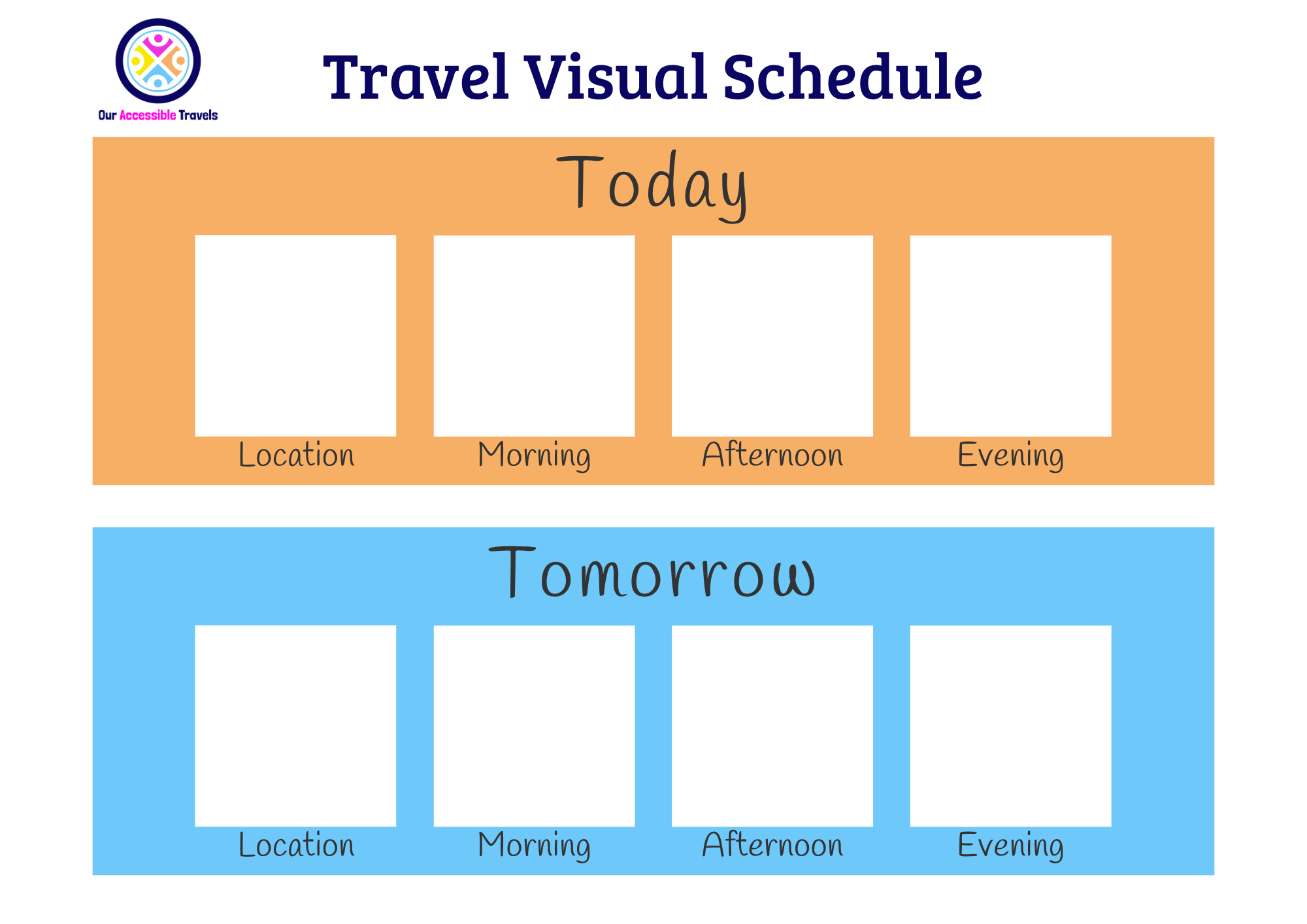
Visual schedules like this can help make travel more predictable and less stressful, giving everyone a clear idea of what’s happening today and what to look forward to tomorrow.
This approach gives structure while still leaving room to adapt as needed. Another option is to plan non-preferred activities in the morning (when energy and focus are higher) and follow them with a preferred activity — something to look forward to that also supports regulation.
The right pace makes a trip feel a bit more like a holiday, and not quite so much of a challenge.
🧩 Plan With Your Family, Not Just For Them
If predictability helps your child feel calm, start building that sense of safety early — even during planning.
We use visual aids to show what’s coming: photos of destinations, social stories, and printed calendars with clear icons. This turns the unknown into something more familiar.
Choice is powerful too. It’s important to make sure choosing is not going to be overly stressful, and you know your family best. So, this may mean offering a choice between two acceptable options or negotiating around which choices work best for the whole family.
I really like to make sure that each trip includes at least one preferred activity for each family member. Generally, for us this means at least one animal related activity for my daughter, something adventurous for my son, something historic for myself and something tech based for my husband.
Then there are those magical moments where an activity is something that is enjoyed by everyone, and it really helps us to connect and bond. I like to weave these types of activities throughout the trip – and keep one up my sleeve for when it’s needed most.
When kids (or adults) know what to expect, anxiety and stress decline and excitement grows.
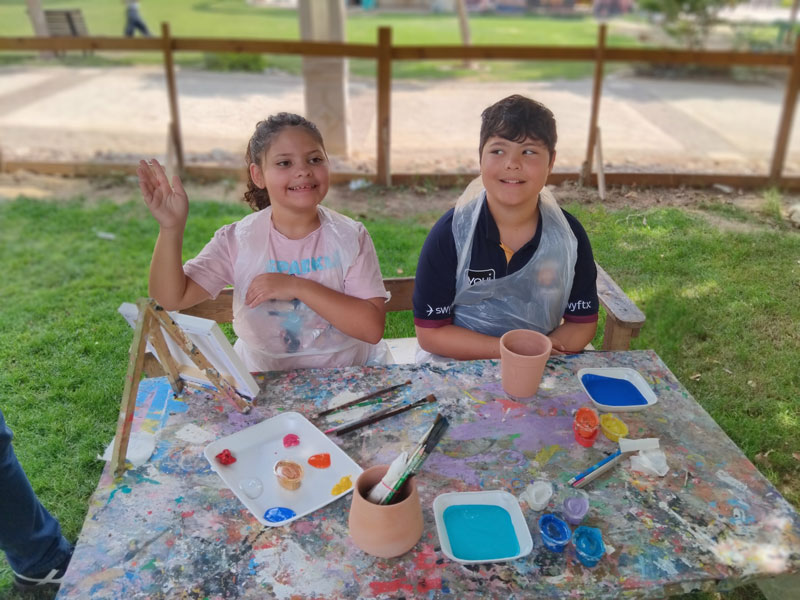
Involving kids in planning — and in the creative moments along the way — helps them feel included, capable, and connected.
🎒 Pack For Comfort, Calm, and Confidence
Packing for accessible travel is less about the gear itself and more about having the right supports in place. Each family’s needs are unique, so use these ideas as inspiration to build your own list. Collaborating with your support team — for example, an occupational therapist — can help tailor your packing to match everyone’s sensory and mobility needs. You’re also welcome to reach out if you’d like to brainstorm what could work best for your family.
Our Travel Essentials Usually Include:
- Hidden Disability Sunflower Lanyard
- Sensory toys or fidgets for proprioceptive input
- Noise-cancelling headphones for overwhelming spaces
- A familiar comfort item (“blanky” travels everywhere with us!)
- A folder with medical letters, insurance details, and medications – I always pack these in our carry on and ensure I have a little extra medication for any mishaps
- Favourite snacks and sandwich spreads — because having even one “safe” food a day is enough to get you by if you can’t find good alternatives
- Games and activities that can easily be played “on the road” that can help with waiting times, work as a distraction during long travel trips, and also offer something ready prepared for when you want to connect during down time
- Mobility aids – pack the one/s that make the most sense for your needs while also considering how they will fit into transport and accommodation
NB – If you’re bringing mobility aids, check airline or train policies ahead of time. Even doing this, there are times where you will come up against difficulties, just as we did when Catching the Train to Milan.
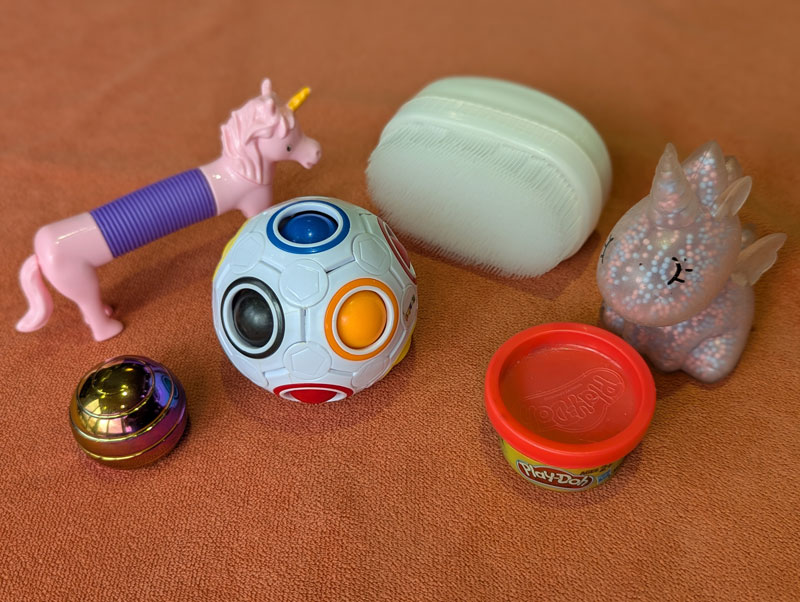
Packing for accessibility means thinking beyond the basics — from fidget toys to comfort objects, every small item helps create calm moments on the go.
⏸️ Accessible Family Travel Tip - Rest isn’t Optional
When you’re you’re making your travel plans, it’s tempting to fill the days so you “get your money’s worth.” But rest days are what make the whole trip accessible for some – and help you keep your sanity!
We always make sure to build in a few slow mornings, relaxed afternoons, or even a full rest day during longer trips. Sometimes, there’s nothing more comforting and restful than giving yourself permission for a pyjama day. You can also seek out calm moments while you’re out and about — a quiet café, a shady park, a public library, or even an aquarium.
These pauses help everyone reset their energy and make the next adventure more enjoyable.
We also alternate high-sensory activities (markets, museums, busy attractions) with quieter ones (nature play, beach time, or a relaxed meal together).
Rest isn’t wasted time — it’s what makes the next adventure possible.
🎠 Balance Everyone’s Needs and Interests
The heart of accessible family travel is balance. Each person’s needs matter — and so do their interests. This becomes especially important when one child has higher or more complex support needs. There will be times when you need to adjust or wrap up an activity early to meet those needs. Creating intentional space for the other sibling to have their own moments of choice, joy, and connection helps everyone feel valued and restores balance along the way.
If one child needs extra downtime, another might have one-on-one time with a parent, if possible. Those small adjustments help keep everyone’s needs in view — without anyone feeling like an afterthought.
Letting each family member choose a “must-do” activity for every trip is another way of balancing needs. It makes the trip feel shared — not just managed.
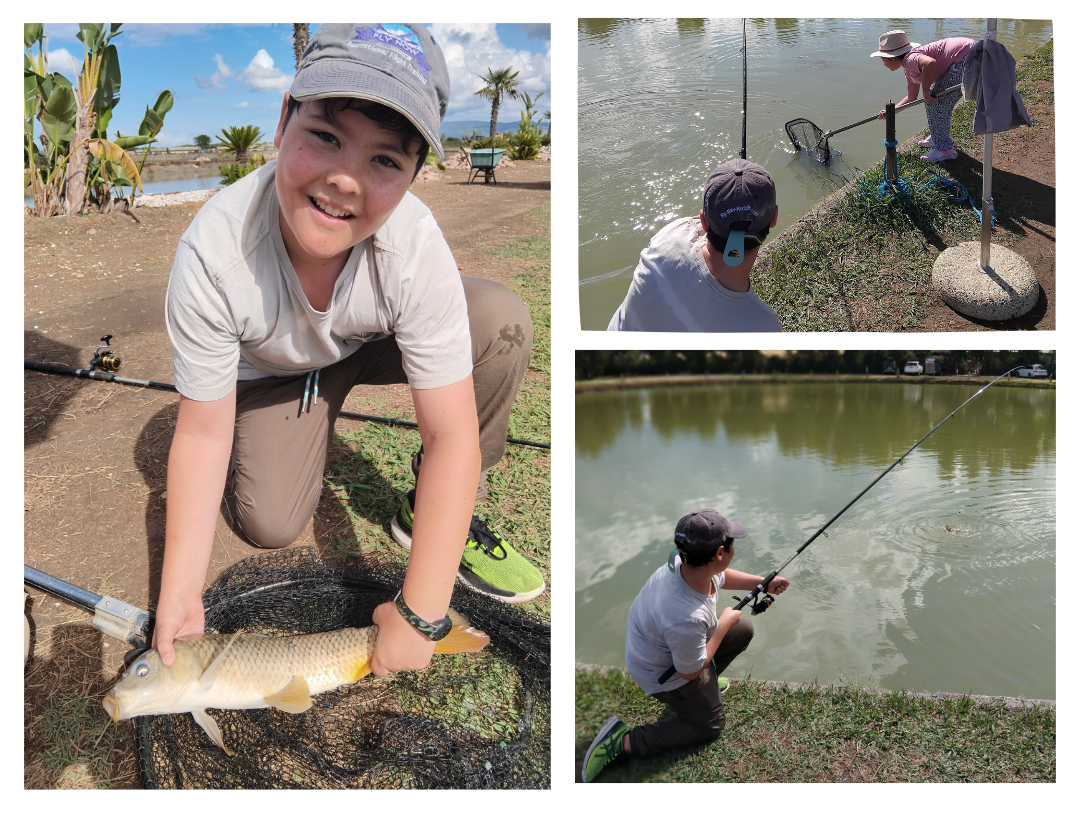
Fishing together is a sure winner for us— calm moments, shared joy, and the kind of connection that fills everyone’s cup.
🧭 Look Beyond Ramps: What “Accessible” Really Means
When researching destinations, we look at accessibility from more than one angle.
Physical access matters — lifts, stair-free routes, and accessible pathways — but so does sensory accessibility and flexibility.
What we look for:
- Physically accessible accommodation with space to decompress and connect
- Self-catering options so we can at least cook some familiar meals
- Availability of preferred activities, e.g. animal experiences to help with regulation
- Accessibility passes, sensory-friendly hours or quiet spaces at attractions
- Local support networks — disability organisations often share current accessibility updates far more accurately than official tourism sites
And a pro tip: always email or call ahead where possible. “Accessible” on a website can mean anything from “there’s an elevator” to “we once had a guest in a wheelchair.” After our experience with so called “accessible” accommodation in Rome, I’ll be taking my own advice on this one!
💡 Expect Unpredictability — and Plan Kindness into Your Days
Even with all the planning, travel with additional needs can still be unpredictable. Plans change. Energy runs out. Sensory overwhelm happens.
So, build kindness into your schedule.
It’s always worth having a few backup options ready — like a movie afternoon or a visit to a nearby playground — for when plans need to change. We had to be flexible like this recently in France, after a couple of long travel days and more transitions than I’d ideally plan for.
My daughter, who had been so excited to see Paris, found it hard to regulate on our first day. Rather than push through, we adapted our plans and visited the Aquarium de Paris the next morning. It meant we had less time for one of our other activities, but it was worth it to see her huge smile and the excitement on her face as she gently touched the koi fish and watched the jellyfish float by.
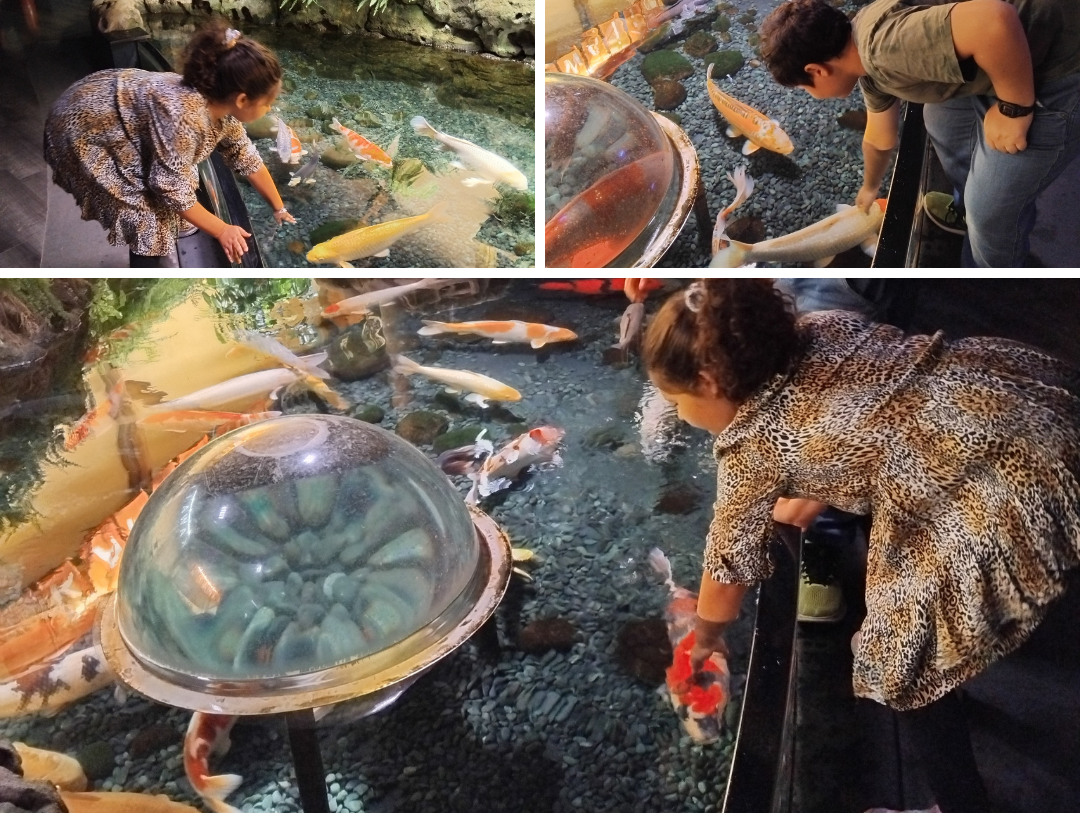
Sometimes the best memories come from slowing down and adapting your original plan — like discovering the magic of koi fish at the Aquarium de Paris.
In moments like this, I find it helps to take a deep breath and remember the bigger picture: flexibility often leads to smoother days ahead. When you can adapt with calm and kindness, it sets the tone for everyone and helps you get back to enjoying the trip sooner.
If we come home with memories of laughter and connection — even if the itinerary didn’t go as planned — that’s a win.
❤️ The Takeaway
Travelling as a family with different needs isn’t about perfection — it’s about presence.
When we plan thoughtfully, include everyone’s voices, and leave room for rest and flexibility, travel becomes something that nourishes rather than drains.
Accessible family travel isn’t just possible — it’s meaningful. It’s about building confidence, connection, and shared experiences along the way. It’s about showing up, adapting, and finding joy in the moments you share.
Because when travel is inclusive, everyone gets the chance to grow, connect, and belong — no matter where the journey takes you.
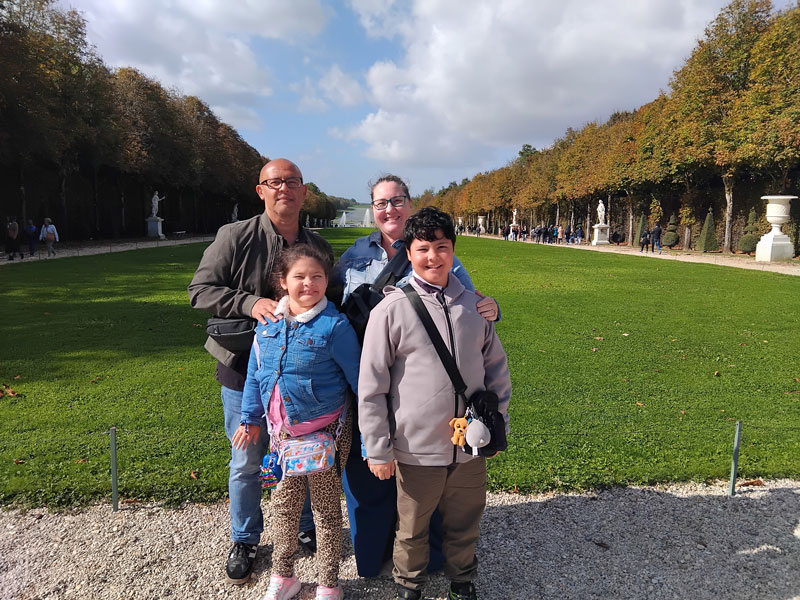
Travelling as a family isn’t always easy, and every trip has its challenges. But when you plan ahead to reduce stress and meet everyone’s needs, you’re left with lasting memories like these.
📌 Found this helpful? Pin it so you can come back anytime.
7 Comments
Trackbacks/Pingbacks
- Sensory and Emotional Regulation Explained - Our Accessible Travels - […] visual schedules, social stories, and advance preparation reduce […]
Our family has also adopted the slower pace of travel, allowing us to cook more meals (addressing allergies / intolerances), and to set up a rhythm for our days, as you suggest. I hadn’t heard of the sunflower lanyard, but it sounds like a great idea!
I feel like our travel experience changes so much before and after kids! It is nice to slow down and take it all in without feeling like you need a holiday to recover from your holiday 😉
Thank you for such a helpful guide — I really appreciated how you emphasized accessible packing tips and factoring in relaxed pacing so the whole family can enjoy the trip stress-free.
I’m so glad you found this helpful! I feel like changing our pacing was a game changer for us
I love your idea of planning the trip with other family members, not for them. It’s important to include everyone’s interests and opinions in the planning process, ask them what they like to see and do, rather than making assumptions by ourselves.
I love how you point out that the accessible family vacation isn’t just about perfect logistics but also shared joy and connection. Such a helpful and thoughtful guide!
Thanks Fiona. There are moments where it has been easy to forget the purpose of connection and shared joy when you are so focused on the plan. As I’ve shifted our focus, it’s meant we’re all able to enjoy our time together more