
Before, During & After Your Family Trip
Travelling as a sensory or neurodivergent family can feel overwhelming. Busy airports, new routines, and unfamiliar environments often trigger sensory overload and emotional stress.
Over the years, we’ve developed practical strategies to help our children — and our whole family — navigate travel with confidence, calm, and connection.
Here’s our comprehensive guide broken into Before, During, and After the Trip, with actionable tips for each stage.
Enjoying this post? Pin it for later!
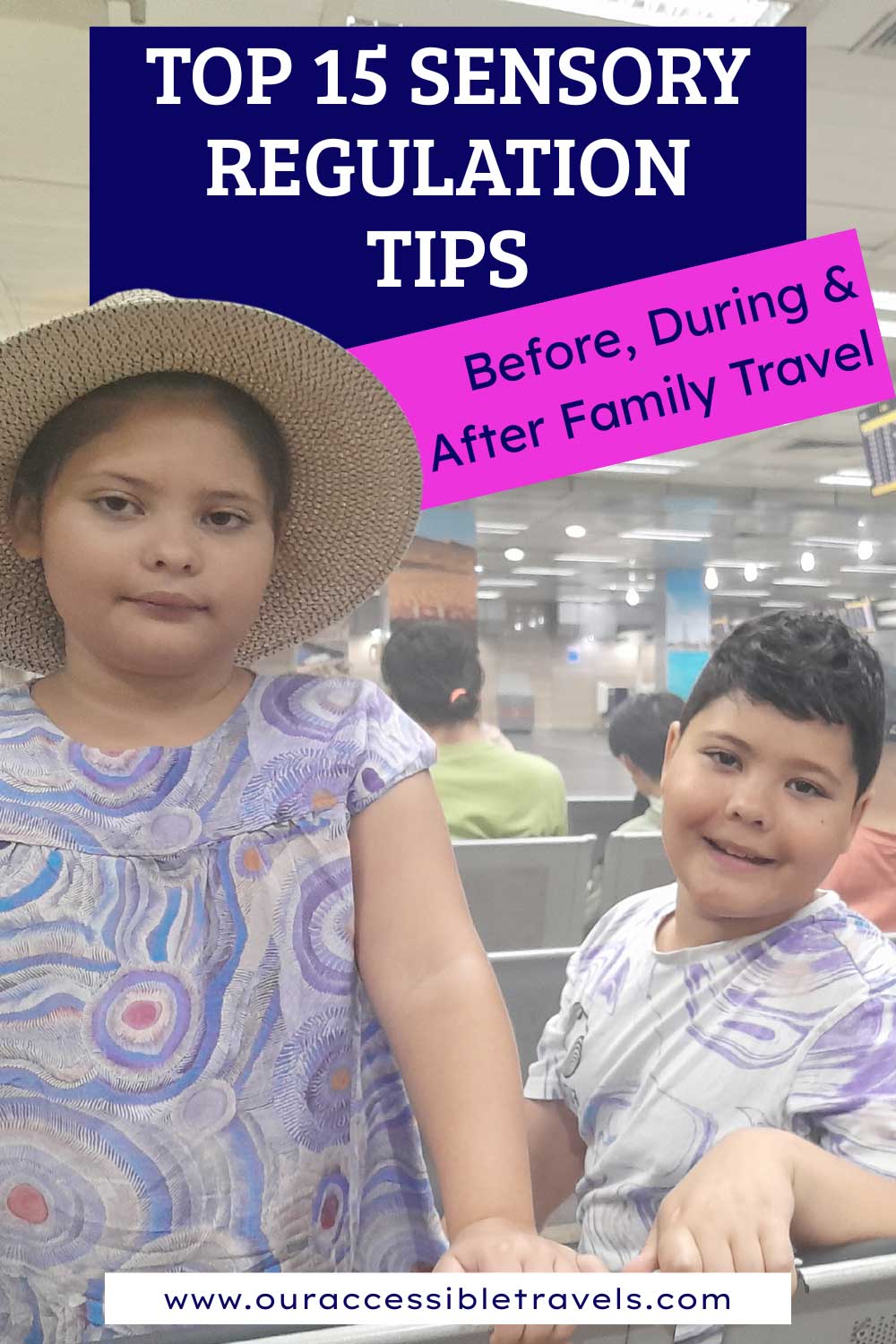
BEFORE THE TRIP
1.🧘♀️ Before Your Trip: Teach Emotional Regulation Skills for Neurodivergent Kids
Why it matters:
I can’t emphasise this one enough! It’s the foundation you will come to rely on while travelling. Travel amplifies stress. Kids who have practiced emotional regulation skills at home are better equipped to manage anxiety, sensory overload, and big feelings while away.
Practical ideas:
- Help your child develop emotional language that they feel comfortable with
- Remind your child that all feelings are valid, but not all behaviours are acceptable
- Teach deep breathing, body scans, or grounding phrases before departure
- Help your child develop an understanding of how their emotional state is connected to their sensory load
- Practice using sensory tools (headphones, fidgets, weighted items)
- Role-play common travel scenarios like security checks or long waits
- Use visual cue cards to show emotions and coping strategies
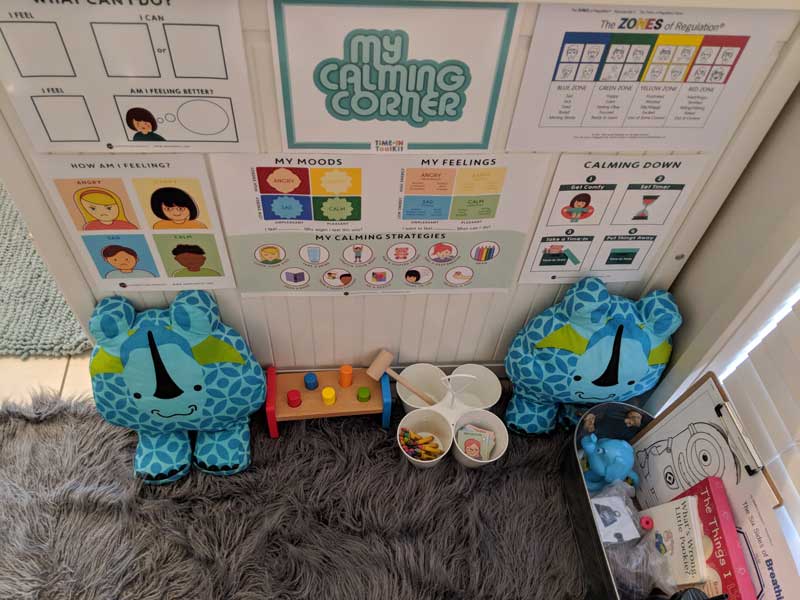
A variety of tools can be used to help teach regulation skills: visual aids, stuffies, books, bubbles, different textures
2. 👀 Create Predictability: Preview Travel Experiences for Sensory Regulation
Why it matters:
Predictability reduces fear of the unknown and supports both sensory and emotional regulation. Kids feel safer when they know what to expect. Anxiety often increases before travel as they anticipate upcoming changes. By creating predictability early, you help them feel empowered and better able to cope with these transitions.
Practical ideas:
- Share photos, videos or virtual tours of airports, hotels, and transport
- If there are particular pain points, such as food, ensure that they are aware of how that will be handled on the trip
- Create a visual schedule using images/icons and consider whether a countdown calendar will be helpful
- Walk through the trip sequence verbally: “first we… then we…”
- Where appropriate, encourage children to be involved in the planning and to make choices such as aisle or window seat, snacks, or activities in transit
- Introduce social stories about flying, waiting, or hotel routines
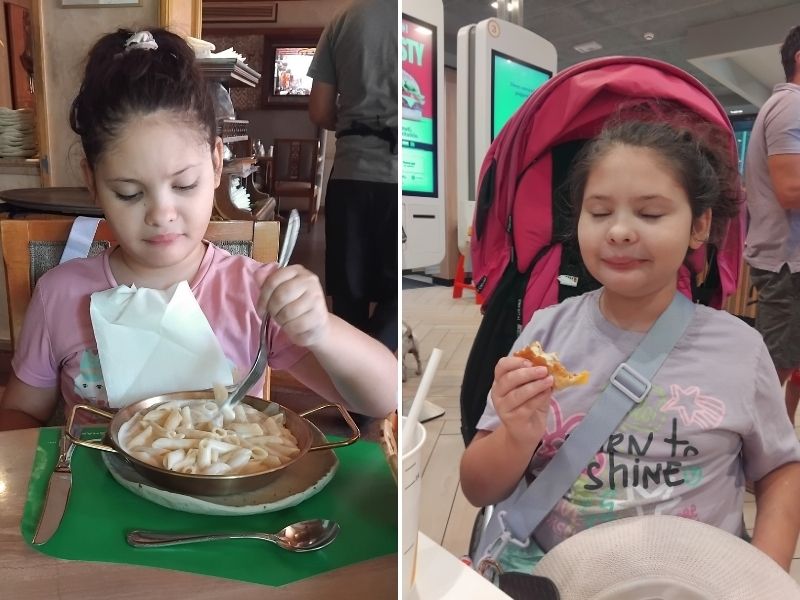
One of Susu’s biggest stressors when we travel is food. She has ARFID and oral sensory issues. One of the best ways to reduce her anxiety is letting her know what preferred foods are available.
3. 🛠️ Essential Sensory Supports & Accessibility Tools for Family Travel
Why it matters:
The right supports make overwhelming environments manageable and can help prevent meltdowns or shutdowns. Consider these sanity savers.
Practical ideas:
- Include your child in determining what supports will work best and be most effective
- Pack headphones, chew toys, fidgets, weighted items, sunglasses, and comfort objects
- Bring snacks and drinks that support regulation
- Pack scent-neutral or preferred-scent sanitizers and wipes
- Let your child choose some appropriate preferred activities for waiting times
- Wrap small surprise gifts that can be unopened during transitions or long waits
- Include any medical or accessibility equipment (brace, wheelchair, medications etc)
- Ensure you pack the majority of these in your carry on luggage to ensure easy access
- Scout quiet spaces or sensory-friendly zones at airports and stations
- Obtain a Hidden Disabilities Sunflower Lanyard
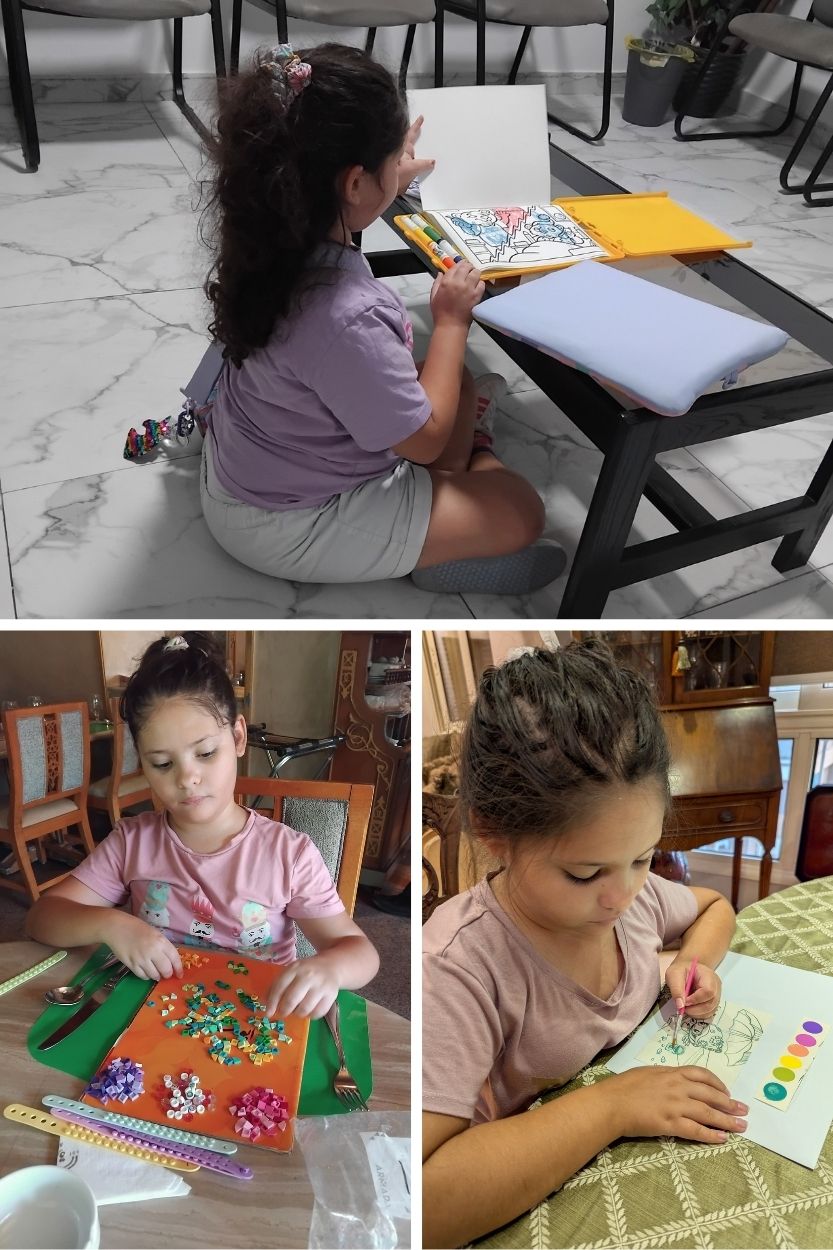
These are common on the go activities that we use when we have to wait. They have been used on trains, in restaurants, at hotels and in doctors rooms.
4. 🗓️ Realistic Itinerary Planning: Build in Rest Breaks to Avoid Overwhelm
Why it matters:
Travel days can be long and demanding. Incorporating rest prevents fatigue, meltdowns, and sensory overwhelm. This step is all about setting your child and your family up for success.
Practical ideas:
- Think about your child’s (and your family’s) natural rhythm and plan accordingly
- Schedule slower mornings or afternoons for recovery
- Include micro-breaks during transitions (quiet corners, shady benches, calm rooms)
- Scout quiet/less busy spots in travel hubs beforehand for sensory breaks
- Limit back-to-back overstimulating activities
- Keep buffer time between events for flexibility
Encourage naps, early bedtimes, or downtime in hotel rooms
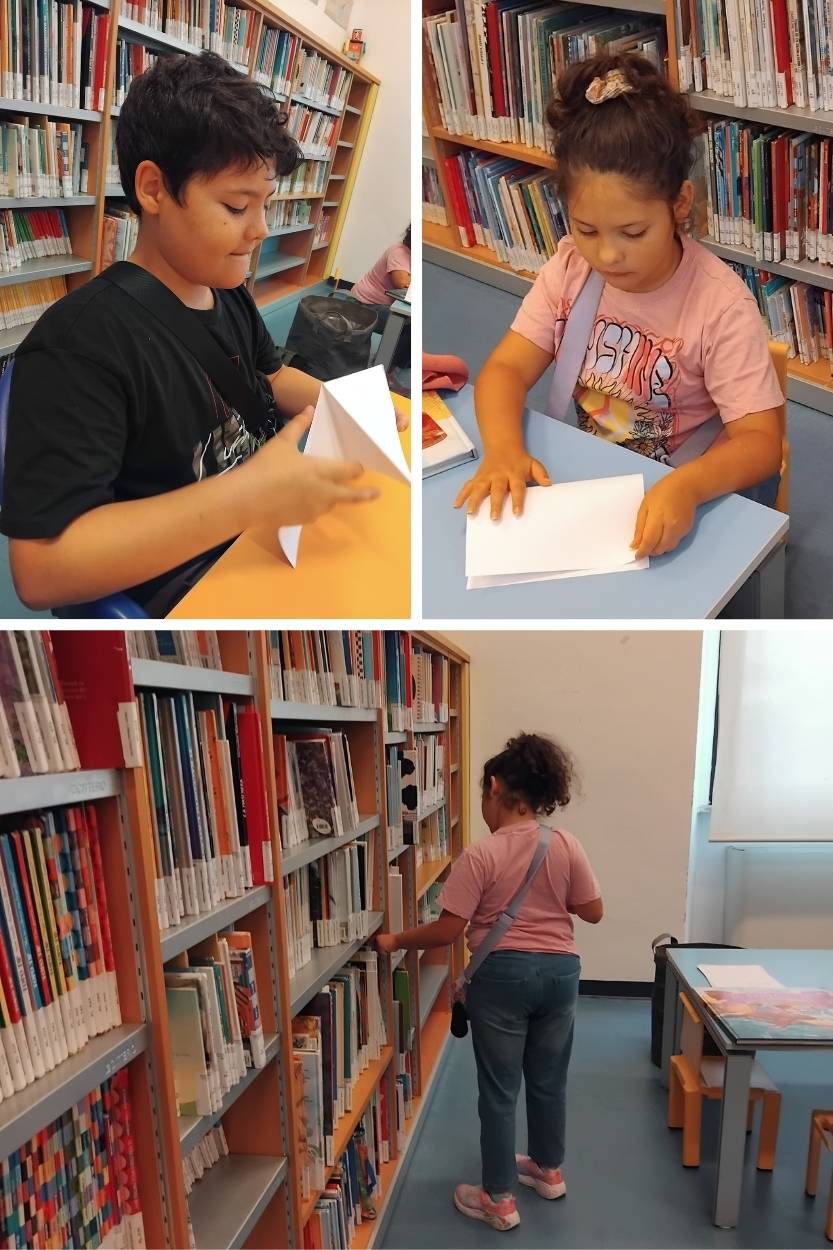
A public library can be a great spot to take a break. We did this recently on our trip to Castiglione della Pescaia and the kids enjoyed doing origami, colouring and reading some books.
5. 🗣️ Support Your Child Emotionally Before Upcoming Family Trips
Why it matters:
Travel can be stressful for the whole family. Preparing emotionally helps children feel safe, confident, and included. When your child starts the trip with a full emotional cup, they have more capacity to handle the shifts, surprises, and stresses that come with travel.
Practical ideas:
- Talk openly about feelings and possible worries
- Validate emotions: “It’s normal to feel nervous about the airport”
- Build excitement with countdowns or small rituals
- Create a family mantra or travel motto for reassurance
- Consider reducing demand and/or stressful activities in the lead up to the trip
6. 📝 Backup Plans & Family Roles for Smooth Sensory-Friendly Travel
Why it matters:
Having clear roles and backup plans ensures the trip runs smoothly even when challenges arise. It reduces stress in the moment and helps everyone know what to do if things don’t go as expected.
Practical ideas:
- Assign roles for packing, carrying sensory kits, and co-regulation
- Contact transport providers to arrange priority boarding or quiet areas
- Identify alternative quiet spaces or low-stimulation areas
- Plan backup activities if the original plan becomes too demanding
- Communicate plans with all adults travelling
- Keep a “calm list” of low-effort activities (movie, quiet play, snack time)
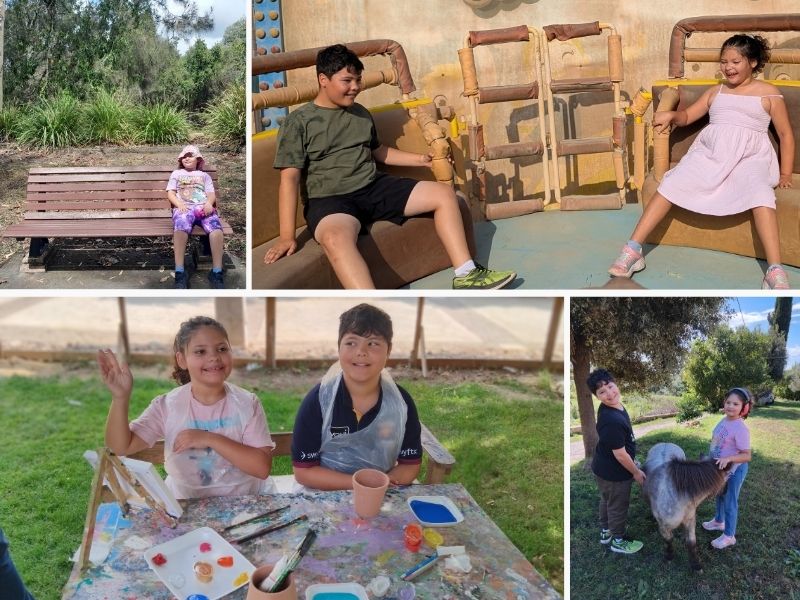
Back up plans for us generally involve nature, playgrounds, animals and creativity. These are guaranteed to give us a reset and for the family to connect.
DURING THE TRIP
7. 🔄 Stay Flexible and Adjust Plans as Needed
Why it matters:
Rigid schedules—or no schedule at all—can increase stress for everyone. Flexibility isn’t about being all or nothing; it’s about finding the balance that works for your family. When you’re willing to drop an activity, add something calming, shift the pace, or change the flow of your day, you can respond to your child’s needs in real time and keep the trip enjoyable for everyone.
Practical ideas:
- Re-prioritise activities if your child becomes overstimulated
- Focus on connection over “checking off” items on a list
- Embrace unexpected delays or changes as part of the adventure
- Adjust expectations and demands on travel days or sensory-heavy locations
- Celebrate progress and connection rather than perfection
8. 🛑 Sensory Breaks & Rest During Family Trips to Prevent Overload
Why it matters:
In-the-moment rest helps children reset, preventing emotional or sensory overload from escalating. These pauses help everyone restore their energy and make the next adventure more enjoyable.
Practical ideas:
- Take short breaks in quiet areas, hotel rooms, or outdoor/nature spaces
- Let go of the pressure to do and see everything—holidays don’t need to be packed to be meaningful.
- Use ear defenders/headphones, calming visuals, or comfort objects for micro-resets
- Use familiar music or white noise via headphones to block sensory overstimulation
- Prepare audio playlists or audiobooks linked to relaxation – these can be particularly good to wind down with at the end of the day, when preparing for bed
- Schedule downtime between high-stimulation activities
- Let children self-direct rest if needed
- Focus on how far they have come when you see them acknowledging their needs and asking for a break
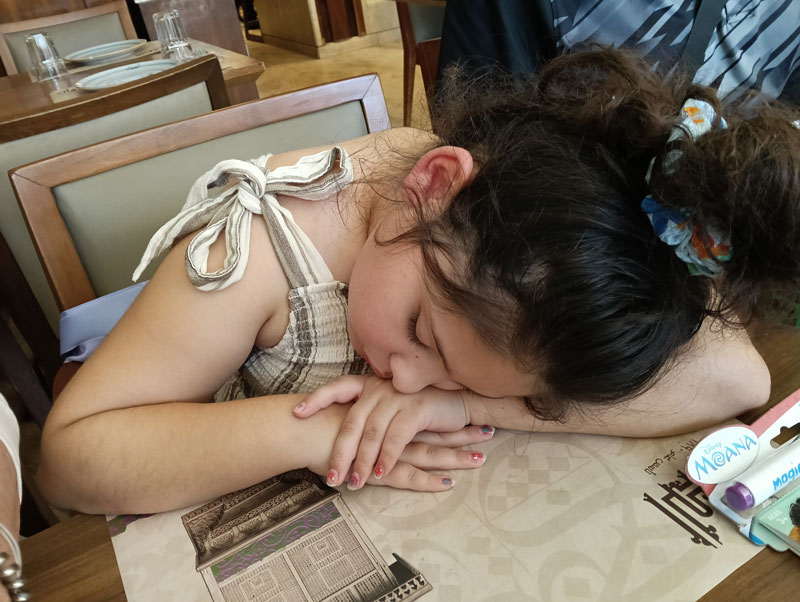
There have been a number of times where Susu’s exhaustion has meant literally falling asleep while eating. Factoring in rest and breaks helps avoid these types of situations and the irritability that happens when they are woken up mid sleep.
9. 🗨️ Boost Autonomy: Communication Tips While Traveling with Neurodivergent Children
Why it matters:
Children who can express their needs and make meaningful choices feel more empowered and less anxious while travelling. Encouraging communication—whether through words, gestures, visuals, or scripts—helps them feel understood and gives them a sense of control in unfamiliar environments.
Practical ideas:
- Offer small, meaningful choices (seat, snack, activity)
- Use visual supports or AAC devices for communication
- Check in regularly: “Do you need a break?” or “Do you want help?”
- Encourage the child to make simple decisions independently
- Each night talk about what is planned for the day ahead – using a Travel Visual Schedule can be helpful
- Encourage them to share their thoughts on what is going well on the trip, and what they are enjoying
10. 🤗 Co-Regulate and Stay Connected During Challenging Moments
Why it matters:
Children who can express their needs and make meaningful choices feel more empowered and less anxious while travelling. Encouraging communication—whether through words, gestures, visuals, or scripts—helps them feel understood and gives them a sense of control in unfamiliar environments.
Practical ideas:
- Offer small, meaningful choices (seat, snack, activity)
- Use visual supports or AAC devices for communication
- Check in regularly: “Do you need a break?” or “Do you want help?”
- Encourage the child to make simple decisions independently
- Each night talk about what is planned for the day ahead – using a Travel Visual Schedule can be helpful
- Encourage them to share their thoughts on what is going well on the trip, and what they are enjoying
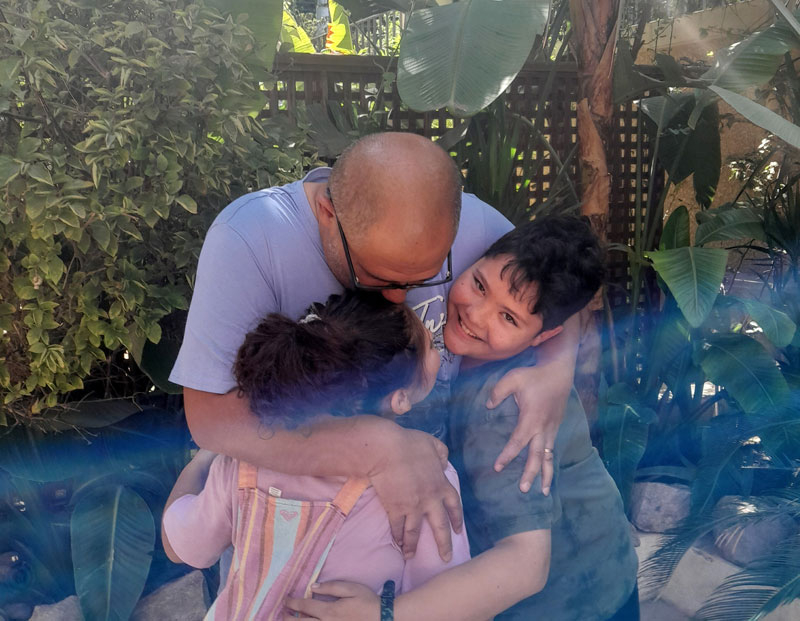
Being really present helps when co-regulating. Physical touch and a hug can really help your child (and you) feel grounded.
11. 🌈 Prioritize Family Connection Over Perfection
Why it matters:
Shared experiences and positive memories matter far more than ticking off every activity on the list. When you let go of perfection and focus on connection, you create space for joy, presence, and genuine moments with your child. Slowing down, meeting them where they’re at, and celebrating the small wins strengthens your bond and makes the whole trip feel more meaningful. At the end of the day, it’s not about doing it all—it’s about feeling connected while you’re doing it together.
Practical ideas:
- Celebrate small wins and joyful moments
- Prioritise capturing memories over forcing structured activities if someone is struggling
- Take time to laugh, play, or connect as a family – we really love playing card games together
- Intentionally take time during the trip to connect with each family member – having others join in on a preferred activity can be a great way to connect and show love
- Let curiosity and exploration guide the pace
- Don’t get hung up on picture perfect moments – sometimes the photos that bring back instant memories are the ones where things don’t look “perfect”
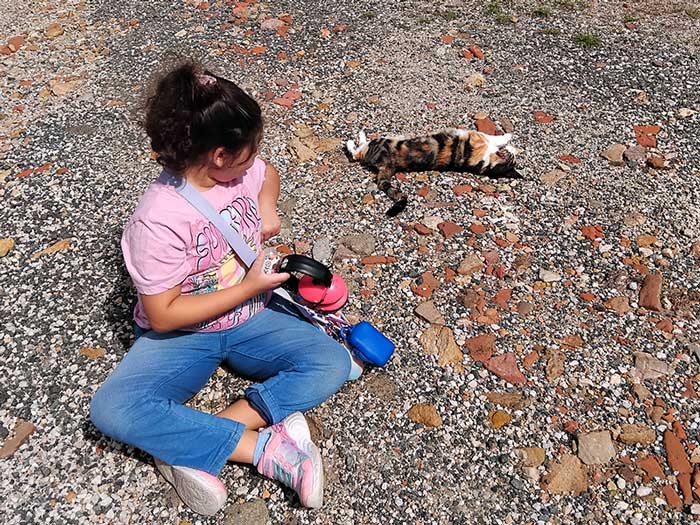
Connection and regulation for Susu, in this moment, was to sit down and be near this cat – not to look at the fascinating building nearby. So we all took a moment to be together and join her in her joy.
12. 🔁 Daily Routines for Structure & Stability During Family Trips
Why it matters:
Travel naturally disrupts a child’s sense of stability, and for neurodivergent children especially, routine is an anchor. Maintaining small, predictable rhythms throughout the day helps reduce anxiety, supports regulation, and gives your child something familiar to hold onto in the middle of new environments and changing plans.
Practical ideas:
- Keep key routines consistent where possible—bedtime rituals, morning rhythms, and mealtimes provide familiar markers in an unfamiliar place
- Bring familiar comfort items from home – favourite pyjamas, a blanket, stuffed animal
- Use a simple daily flow, not a strict schedule—e.g. breakfast → activity → rest → activity → wind-down
- Maintain familiar sensory regulation habits, like a bedtime story, a warm shower, a nightly stretch routine, or calming music.
- Give cues for transitions – first/then language – to reduce uncertainty and support smoother shifts.
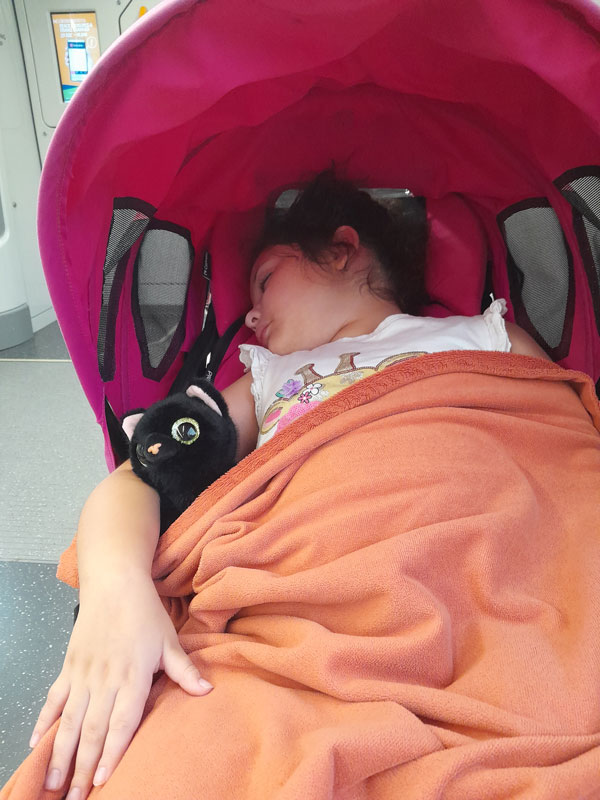
Blanky and a stuffed toy are an easy way to make sure Susu feels safe. Also, having her disability stroller that tilts in place means she can nap as needed while out and about and keep a predictable routine.
AFTER THE TRIP
13. 💤 Post-Trip Recovery: Sensory & Emotional Reset for Neurodivergent Kids
Why it matters:
Coming home can be just as challenging as leaving. Recovery supports emotional balance and reintegration into routines.
Practical ideas:
- Plan a decompression day or two after returning
- Resume familiar routines at your child’s pace
- Allow extra sensory breaks and quiet time
- Keep expectations and demands light for the first few days
- Prioritise sleep and predictable mealtimes
14. 🔍 Family Travel Reflection: What Worked for Sensory Regulation
Why it matters:
Reflection helps children process experiences, understand their emotions, and build resilience. By doing this together you’re helping to build capacity for your child as well as getting some insight into what could be helpful for future travel plans.
Practical ideas:
- Ask your child what they enjoyed most and least – be prepared to remind them of things they said on the trip in case it’s difficult for them to remember and process it all
- Discuss tricky moments calmly, at a time that makes sense, without blame
- Review photos or souvenirs as conversation starters
- Validate feelings: “That airport was loud and long, and you did so well”
- Incorporate the lessons learned on your next trip
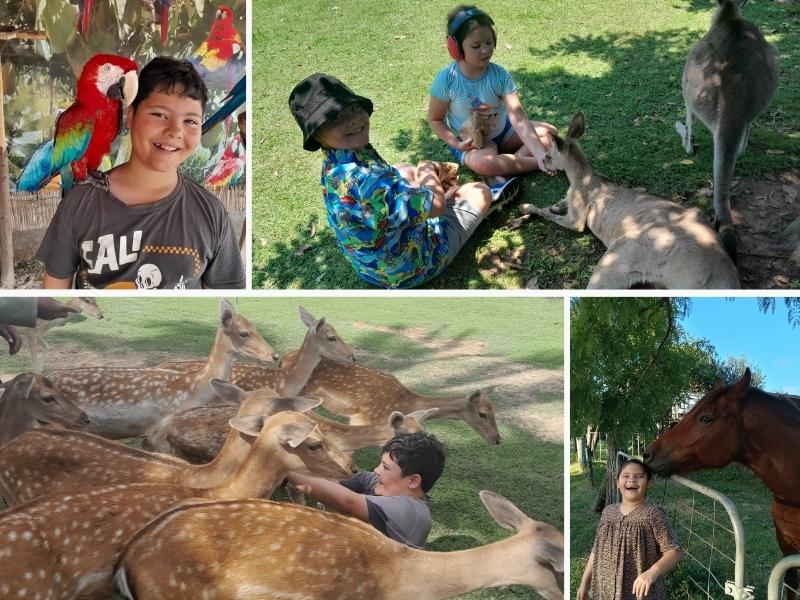
The consistent takeaway for both of our kids is that animal experiences fill their cup and make our trips successful, so we always make sure each trip includes some type of animal experience.
15. 🎉 Celebrate Wins: Update Strategies After Family Travel
Why it matters:
Acknowledging success and refining strategies empowers children and sets up future trips for success. It can also help build excitement for future trips.
Practical ideas:
- Highlight personal achievements
- Adjust sensory kits, visual supports, or routines for next time
- Praise independence and resilience
- Note favourite places, tools, or strategies to replicate for future success
- Build confidence and excitement for future travel
💭 Final Thoughts
Your family is unique. The key is anticipation, preparation, and connection. By teaching skills ahead of time, packing supports, building predictability, allowing rest, and co-regulating along the way, travel can become a meaningful, joyful, and shared experience — rather than a series of obstacles to overcome.
Every child — and every trip — is different. But when we travel at our own pace and honour our children’s sensory needs, the world opens up in incredible ways. Travel becomes less about “getting through it” and more about shared discovery, growth, and connection.
📌 Found this helpful? Pin it so you can come back anytime.
This is such a thoughtful and genuinely helpful guide. I really appreciate how you break everything down into before, during, and after the trip — it makes such a big, overwhelming topic feel manageable and realistic. These are the kinds of tips families actually need, and it’s clear they come from real experience, not theory.
Thanks so much for that feedback – it’s definitely coming from lived experience. I hope that this helps other families to ease their mental load a little and be encouraged to take family trips without quite as much overwhelm.