

Travel has a way of shaking up everything we rely on. Beds change. Sounds change. Meals shift. Even the smallest parts of the day feel unfamiliar. And when you’re traveling as an interabled family, that unfamiliarity can add up quickly. Over time, we’ve learned that the secret isn’t a perfectly planned itinerary – it’s protecting the rhythms that help our family feel steady. The anchors that travel with us, even when everything else changes.
This post is a guide, but it’s also a look at what this actually looks like for our family. The tiny routines we protect. The things we do proactively. The ways we stay flexible without it tipping into chaos.
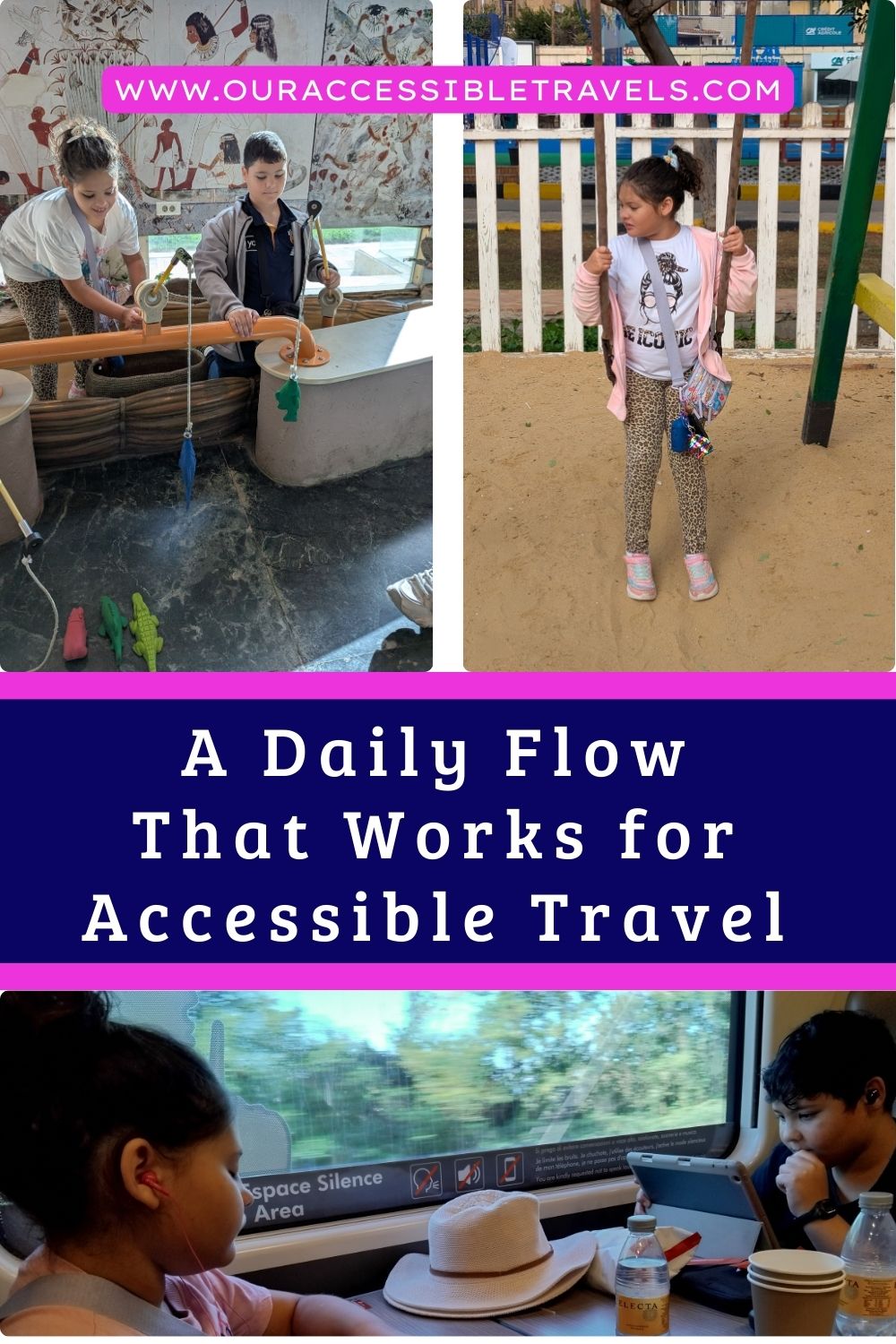
🧭 Zoom Out First: What Helps Your Family Thrive at Home (and Travel Better)
Before you book anything, it helps to zoom out and think about what makes your family thrive at home.
What kind of rhythm does your family naturally fall into at home – are you all early birds who greet the sunrise, or night owls who come alive after dark? How many switches or transitions can your kids (and you) usually handle in a day before the edges start to fray?
Do you feel more grounded with a predictable structure, or do you breathe easier when there’s room to flex and adapt? And how much does protecting a consistent sleep pattern actually shape everyone’s energy – and their ability to stay emotionally steady – throughout the day?
These questions might seem small, but they make a huge difference.
For us, we’ve found we thrive on slower travel – longer stays in one spot, preferably with a kitchen. With my son’s anaphylactic allergies and my daughter’s Avoidant Restrictive Food Intake Disorder (ARFID), being able to cook our own food is non-negotiable.It keeps everyone safe and has the added bonus of cutting costs by skipping endless restaurant meals.
We space out big activity days with quiet buffers and avoid hopping locations too frequently. That steady pace protects us from piling up physical, emotional, or mental exhaustion – so we show up fully for the highlights and actually soak in the experience instead of just powering through the itinerary.
And then there’s the daily rhythm. The on-the-ground anchors that help Susu feel grounded when everything around her is new.
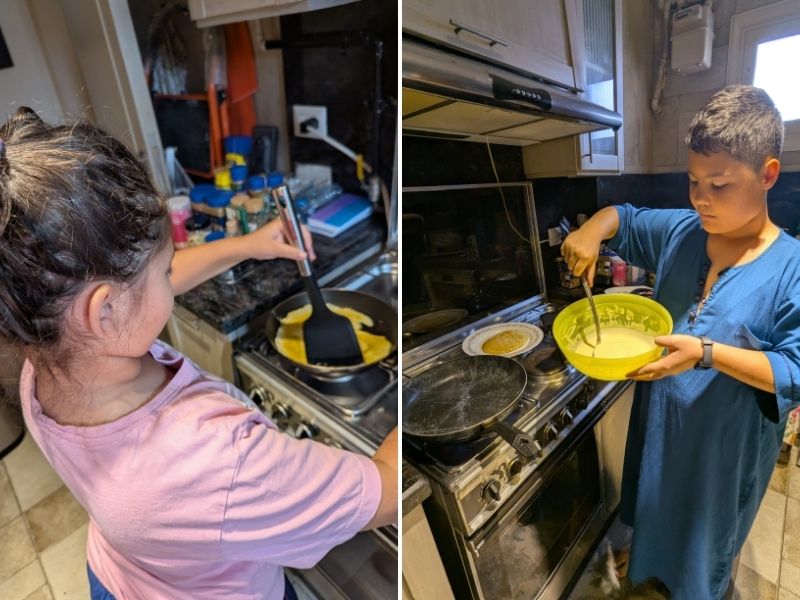
Another bonus of having accommodation with a kitchen is the skill development and connection that comes with cooking meals together. These two are becoming quite good at making breakfast.
🔄 Routine vs Rhythm: Neurodivergent Travel Routines Explained
When I talk about routine, I’m not talking about a strict schedule that has to be followed to the minute. I’m talking about predictability. Familiar sequences. The shape of the day.
Travel flips a lot of the usual anchors upside down. New beds, new sounds, new smells, new expectations, new transitions. Even the “fun” stuff comes with sensory load, uncertainty, and a lot of decision-making.
So, for us, routine is less about control and more about support.
We build a rhythm that holds steady in the background, so we can handle the parts of travel that can’t be controlled. A delayed train. A tour that runs long. An outing that ends early because someone’s nervous system has had enough.
We call those steady parts our anchors.
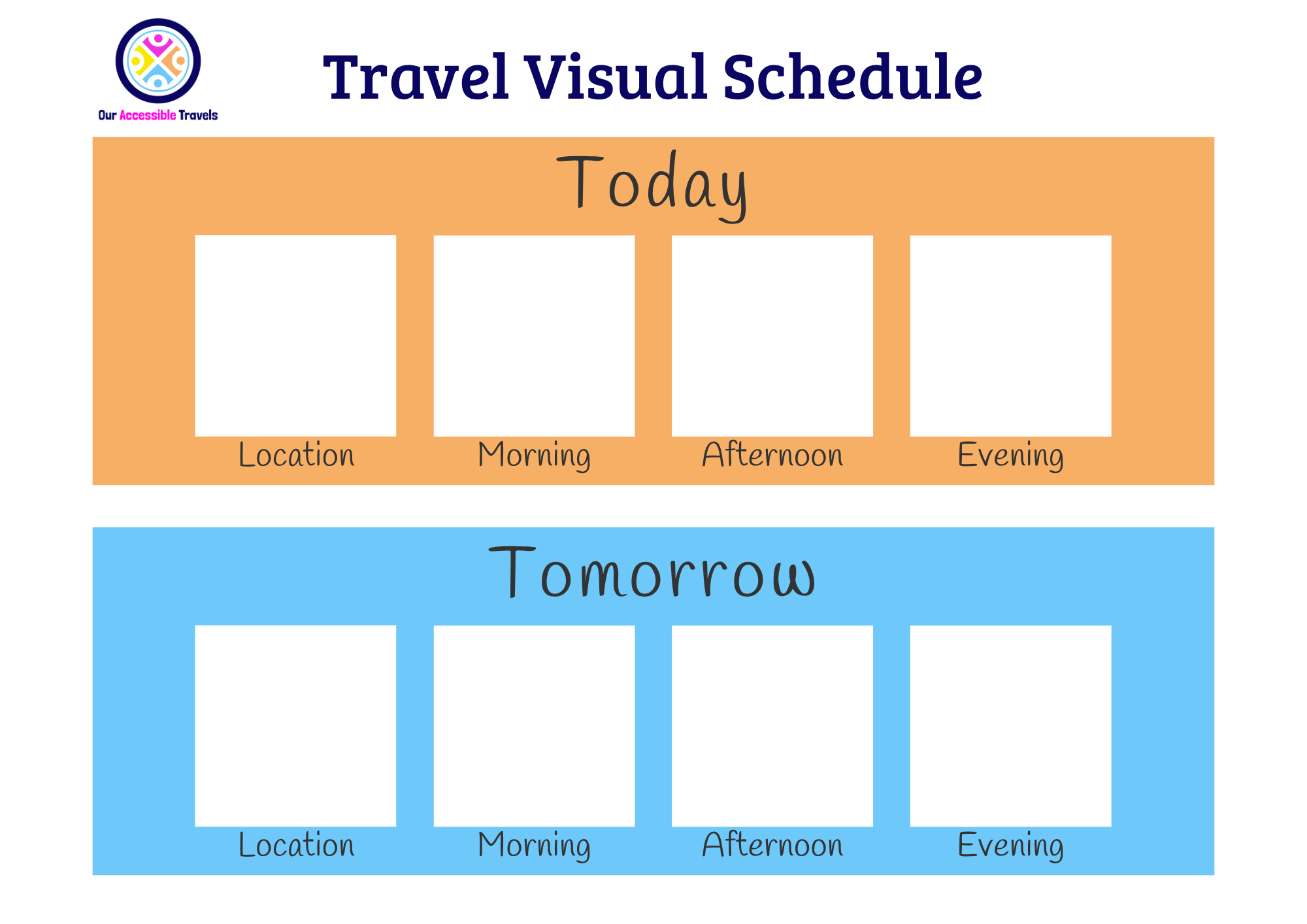
Using a tool like our Travel Visual Schedule that follows our natural rhythms has been very helpful.
🤗 Anchor 1: Starting the Day with Snuggles (Proactive Co-Regulation in Action)
Morning snuggle time is a staple in our house. And I mean that literally – no matter where in the world we happen to be calling home.
From the time Susu was little we recognised she required a lot of proprioceptive input. She also has touch as her love language. One of the early OTs we worked with opened my eyes and gave me a real lightbulb moment.
Instead of waiting for Susu to require co-regulation and responding when her needs were highly visible, why not proactively schedule in time during the day for high-touch moments?
By filling up her cup from the very beginning of the day, we were setting her up to cope better with the challenges that came along.
That conversation happened a decade ago and this little ritual is still going strong.
And on the days we overlook it, it shows. It shows with dysregulation, impatience, harder-to-handle feelings, and bigger reactions. Not because she’s “being difficult,” but because a need didn’t get met in a reliable way. This isn’t to say we don’t spontaneously have snuggles, because we absolutely do. This is about intentionally connecting through touch and fulfilling a need in a way that builds capacity throughout the day.
So, no matter where we are in the world, morning snuggle time gets prioritised. And if we’re in a season of big transitions or high stress, additional touchpoints get added in.
It’s such a simple thing. But it changes the whole day.
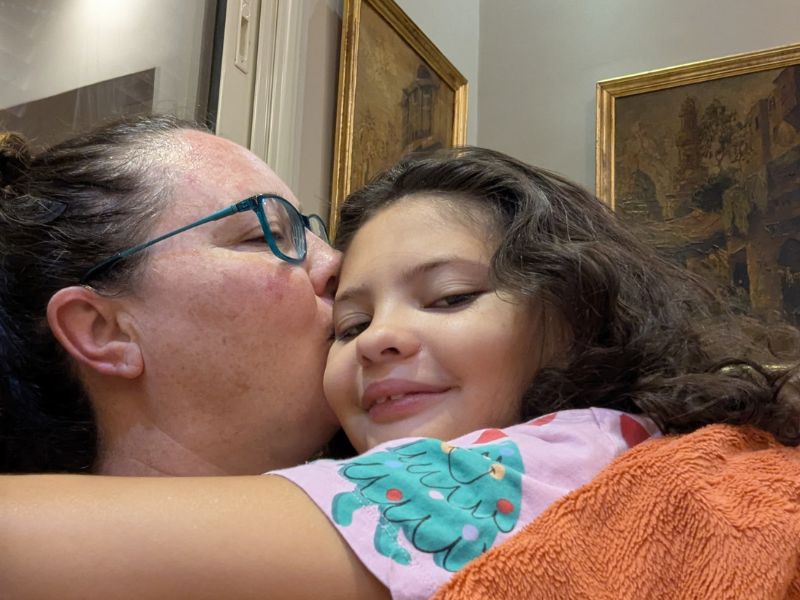
The beauty of starting the day with snuggles is that it helps regulate both of our nervous systems. We both fill our cup so we’re ready to cope with whatever comes our way.
🥪 Anchor 2: Food Rhythm (Meals + Strategic Snacks)
Meal rhythm is more than timing windows for us.
We do tend to eat three times a day, and then we add snacks as needed – especially if there’s going to be a longer break between meals. Maybe we ate an earlier lunch and dinner will be later. Maybe we’re going to have to eat a later lunch because of travel elements. Maybe we’re doing something that we know will take longer than expected.
Snacks aren’t an afterthought. They’re a tool.
They help bridge the gaps before hunger turns into dysregulation, fatigue, or a “why is everyone suddenly falling apart” moment that seems to come out of nowhere.
On long travel days – planes and long trains especially – we always make sure there are snacks available. Not just “in the suitcase somewhere,” but accessible. Easy to reach. Familiar. Something we know she will eat. Food preferences and sensory needs don’t magically disappear because you’re on a trip.
I’ve learned that keeping the body steady helps keep the day steady.
We felt this last year in Rome, during our Colosseum tour. It ran longer than we expected, and we’d already started the day on the back foot because we’d been rushing to make it on time. Add the crowds, the squeeze of certain sections, and a few points that were genuinely hard to navigate with Susu’s buggy, and we started tipping into dysregulated pretty quickly. It wasn’t one big problem. It was lots of smaller demands on Susu stacking up, one after the other, until you could feel the whole thing getting heavier.
We made a call partway through: we’d leave off the forum portion and head to dinner early.
We changed the plan. But we kept the routine elements.
We brought dinner forward, and we still made sure Susu got pasta. It sounds small, but it was one of those steady, familiar things that helped her settle when everything else was asking too much.

Having preferred or safe foods available is essential. Making sure we have regular eating times – and snacks as needed – helps give her the energy to get through a busier travel schedule.
🗂️ Anchor 3: “First, Then” Visual Schedules to Ease Transitions
If there’s one tool we lean on constantly, it’s “First, Then.”
It gives Susu a clear sequence. It reduces power struggles. It supports transitions. And it helps her nervous system relax because she can see what’s coming.
For her, non-preferred tasks almost always come before preferred tasks. We find it works better. Not because we’re trying to be strict, but because if she does the preferred thing first, it’s much harder to shift out of it. Whereas when she knows the preferred thing is coming and she trusts that it’s actually coming, she can move through the first task with less resistance.
Because we’ve been doing this so long now, we find she also chooses a non-preferred task when offered a choice.
This is what it looks like for us:
First we’ll explore the castle, and then you can play in the garden.
First we’ll do a non-preferred task, and then you can have some iPad time to relax.
First we’ll get dressed, then we’ll play a game together.
It’s simple. It’s consistent. And it helps.
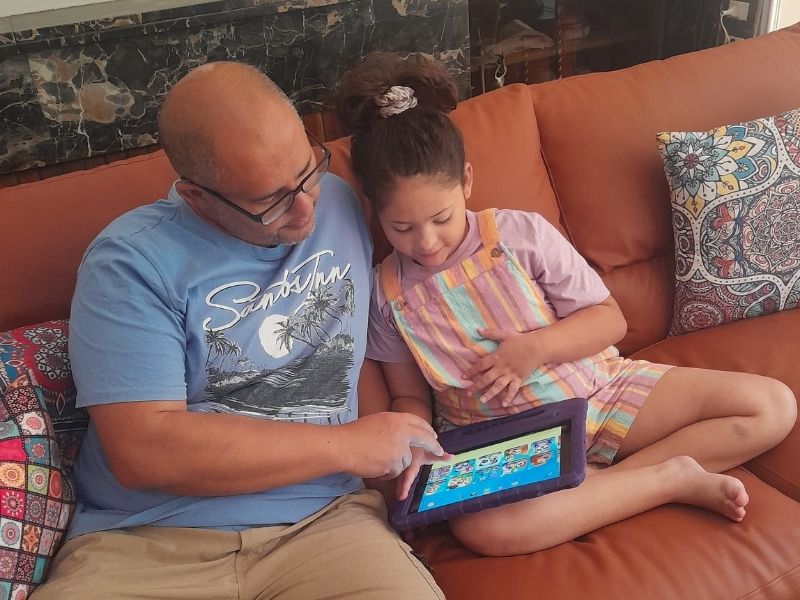
Sitting together and connecting with the iPad is one of Susu’s favourite ways to chill out in the afternoon after a big travel morning.
🌤️ Our Go-To Daily Flow: Morning Adventure → Lunch → Rest & Connection
A simple daily rhythm can be incredibly helpful.
If your family has more energy and capacity in the morning, that’s the ideal time to organise activities, tours, or outings. We aim for a rhythm that looks like:
Morning outing, lunch, connection/rest time or a calm afternoon activity.
That calm afternoon might be a movie, play in the park, downtime in the accommodation, or an animal experience like an aquarium. Something that still feels enjoyable, but doesn’t demand quite as much and is often quite regulating.
It’s not about “doing nothing.” It’s about choosing something that supports regulation and keeps the day from spiraling.
And when we don’t get it right, we adjust.
In Paris, there was an afternoon where we’d planned to go to the Luxembourg Gardens. On paper, it was a lovely plan. But we were noticing dysregulated behaviour, and it was clear that pushing through wasn’t going to give us the experience we were hoping for.
So, we went back to the accommodation and played card games together instead.
That decision did two things. It met the need in the moment, and it protected the rest of the day. We didn’t have to drag ourselves through an outing that would likely end in tears and overwhelm. We did something connecting and regulating instead.
And because I like to ensure we have some spaces in our schedule where we can do anything we wanted to do and had to skip, we were able to reschedule Luxembourg Gardens to just before we left Paris.
Nothing was “ruined.” We just shifted the order.

No matter how calm and peaceful the activity is, it’s hard to enjoy it when someone is dysregulated. Visiting at a later time on our trip made all the difference.
⚖️ Keeping Flexibility Without Losing Predictability
One of the things that helps me hold all of this lightly is having a structure that can move.
One of my favourite tools is a Travel Visual Schedule with removable icons representing destinations, activities, and rest. It makes it easier to take each day as it comes and avoids feeling overwhelmed while travelling. It also gives me the flexibility to adjust our plans with a day’s notice if it looks like a slower, more relaxing day would suit us better.
I also like to build in space for the things we skip. A few open pockets in the plan where we can circle back to something we missed, without it becoming another source of pressure. That alone changes the feeling of the whole trip. Skipping doesn’t feel like loss. It feels like pacing.
🔑 Key Takeaways: Anchors for Predictable Family Travel
Supporting regulation while travelling isn’t about making every moment perfect. It’s about giving our children what they need to feel safe, understood, and capable.
For us, routine and rhythm look like predictable anchors: connection through touch, steady food rhythms, simple sequences like “First, Then,” and a daily shape that matches capacity rather than fighting it.
And the biggest shift has been this: we change the plan when we need to, but we try to keep the anchors.
Because when the anchors hold, the adventure becomes something the whole family can actually enjoy – not just endure.
If you travel with a child who needs predictability, I see you. What’s one anchor that helps your child (or you) feel grounded when the day starts to feel like a lot?

0 Comments