
When you’re travelling as a family — especially with anxious or neurodivergent children — unpredictability can be one of the hardest parts of the experience. This can lead to an unpleasant travel experience. But there are tools that you can use to help establish clear expectations, and in turn, ease some of the stress of travelling.
Atravel visual schedule is one of my favourite tools to make things feel calmer, more predictable, and even more enjoyable for everyone.
🗓️ What Exactly is a Travel Visual Schedule
Atravel visual schedule is a tool that helps make travel more predictable and less stressful — especially for children or adults who benefit from structure and visual cues.
There’s no one “right” way for it to look, but there are some key elements that make it effective. The most important thing is totailor it to the person’s individual needs and preferences.
I’m a little lucky in that my daughter has been using visual supports from a very young age. Over time, I’ve learned what does and doesn’t work for her — and I’ve travelled both with and without these tools.
That experience means I can anticipate the kinds of questions that are likely to come up and use the schedule to provide reassurance, structure, and independence.
An effective travel visual schedule gives useful information about theday or trip ahead. It can include as much or as little detail as needed — whatever best supports the person using it.
Some helpful elements to include are:
- Thelocation you’ll be in
- Themode of transport
- Theactivities planned, and in what order
- Thepeople joining in
- Thefood and where you’ll eat
- Specifictimes or general time blocks (morning, afternoon, evening)
Think of it as a tool to answer the questions you’re asked repeatedly — because often, those questions come fromanxiety or a need forpredictability. Having the answers visible helps reduce stress and builds confidence.
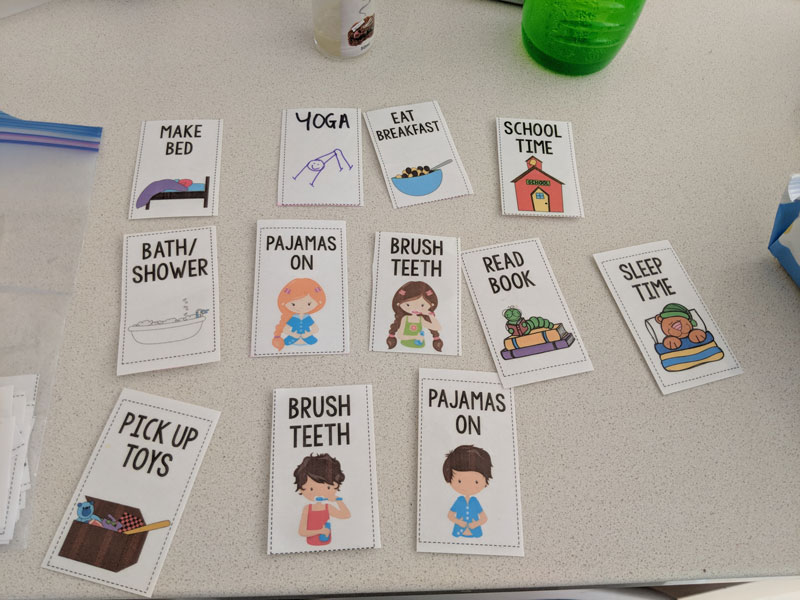
Starting with visual aids at home made it easier to adapt them for travel later — building predictability, confidence, and comfort along the way.
✈️ How a Travel Visual Schedule Helps Reduce Anxiety and Stress
Atravel visual schedule takes the guesswork out of the day. It helps everyone see what’s happening next, what to expect, and what’s coming later — which is especially helpful for anyone who experiencesanxiety, executive function challenges, or simply prefersvisual information over verbal explanations.
When everyone can see the plan, it keeps the whole family on the same page. It also makes it easier to prepare for transitions between activities and can help to reduce last-minute stress or meltdowns.
If you’ve ever travelled with kids, you probably know that constant stream of questions:
“What are we doing next?”
“When do we get there?”
“Can we have McDonald’s yet?” 🍟
For children (or adults) who feel anxious or find it hard to retain verbal information, these questions often come from a place ofuncertainty, not misbehaviour. But when you’re tired and trying to juggle everything, even the most patient parent can lose their cool.
A visual schedule helps break that cycle. Instead of repeating yourself, you can point to the plan — giving reassurance, structure, and predictability. And that simple change can make a world of difference to how your whole family feels about travel.
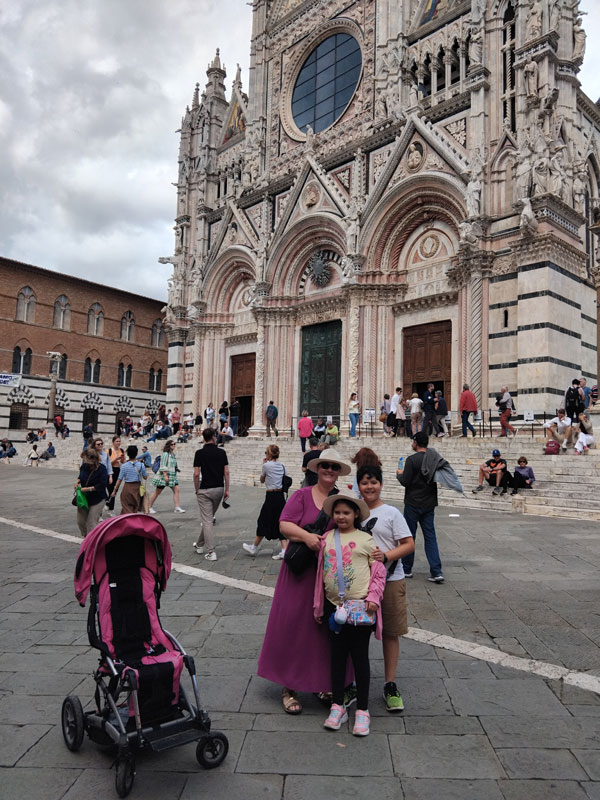
This particular day, visiting the Duomo di Siena (Siena Cathedral), was one of the days where having a visual travel schedule came in handy. It was important for Susu to know that a preferred activity was coming up next to help her get through this non-preferred activity.
💁♀️ How We Set Up Our Travel Visual Schedule
Over the years, I’ve used a range of differentvisual schedule styles for travel. It’s not the only visual aid we use — we also havecountdown calendars andsocial stories about the flight, airport experience, and accommodation. But the travel visual schedule is the one we always come back to, no matter how experienced we’ve become as travellers.
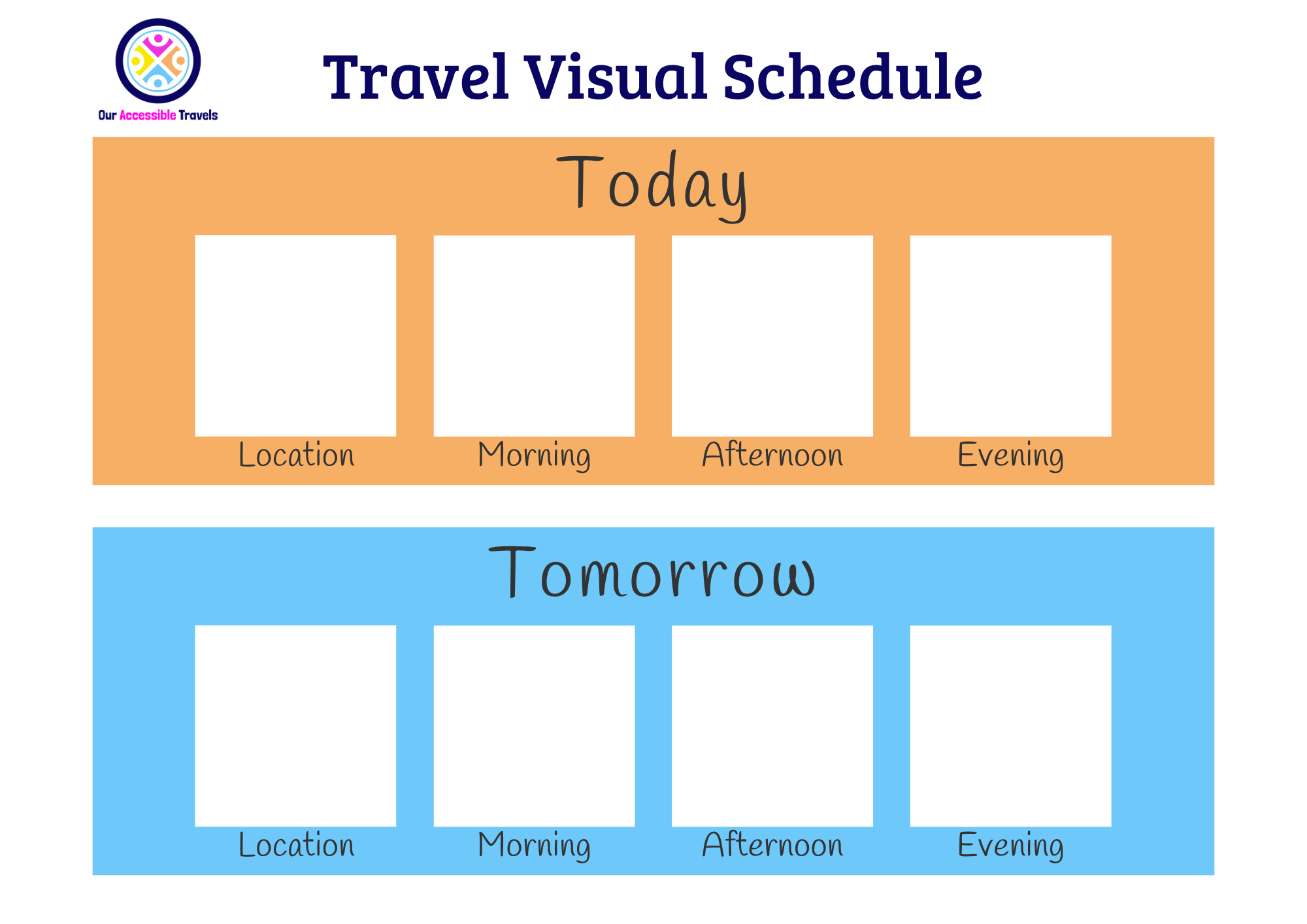
Our current version hastwo main sections — one fortoday and one fortomorrow. This layout keeps things clear and predictable without being overwhelming. Some people prefer to see further ahead, but for us, having just two days visible strikes the right balance: it provides a sense of security while still allowing flexibility.
Each day includes a space for thelocation, which we find especially helpful if there are changes to our accommodation, city, or country. It’s also divided intomorning, afternoon, and evening, which helps us structure the day without tying ourselves to exact times — avoiding the added stress that can come from delays or plans shifting.
When creating our schedule, I useimages that represent the location and activities, and I involve my daughter in the process. Since it’s designed to support her, her input helps make it both effective and engaging. It also builds excitement and reduces anxiety in the lead-up to our trip.
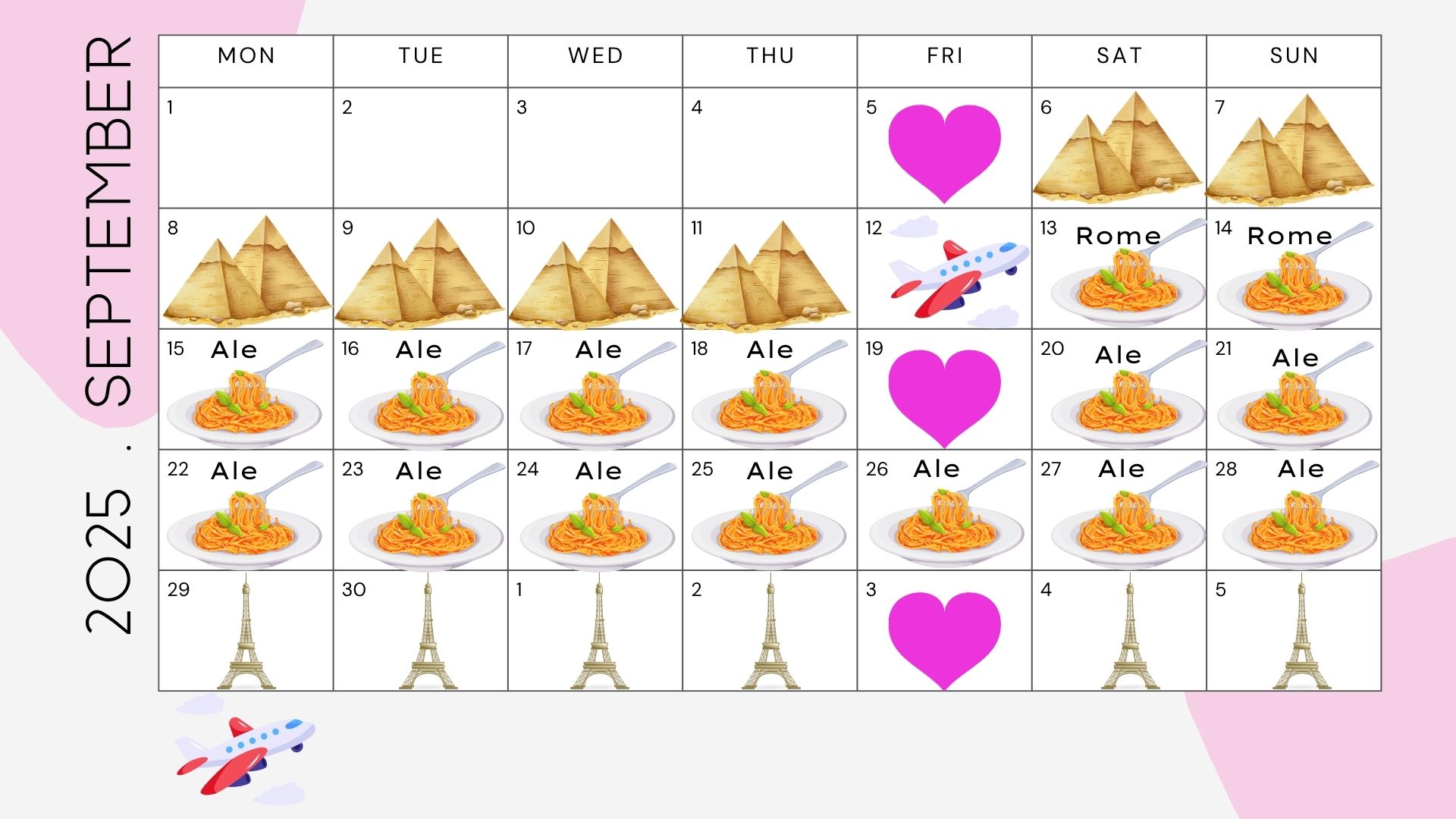
This was a countdown calendar and an overview of the trip we took in September. Susu helped to choose the images so that she could connect with them.
Depending on her capacity (and, let’s be honest, mine!), she might help me select the images — or she might not be interested at all that day. Either way, the goal is for the schedule to feel supportive, not like extra work.
What elements do your children or family members find most reassuring when traveling? Share your experiences in the comments!
♻️ Tips for Creating a Reusable and Eco-Friendly Visual Schedule
Creating areusable travel visual schedule isn’t just environmentally friendly — it’s also practical, especially if you plan to travel regularly.
I like tolaminate the schedule so it can be used again and again while staying durable. Sometimes, I laminate the entire A4 page with both thetoday andtomorrow sections together; other times, I cut out and laminate each section individually. You might need to experiment to find which layout works best for you — flexibility is key!
I alsocut out and laminate each image or icon, making sure to have duplicates of common ones (like buses or planes) for multi-day travel. Once everything is laminated, there are several ways to attach the icons:
- Magnetic tape — my favourite option: quick, easy, and inexpensive.
- Velcro dots — perfect if you want something more tactile or secure.
- Blu Tack — simple and accessible, but be cautious as it can stick to hair or carpet if pulled off.
If the person using it can read and prefers text, you can alsowrite directly on the laminated sheet using whiteboard markers. Just remember that whiteboard ink can rub off easily when stored, so it’s best for short-term use.
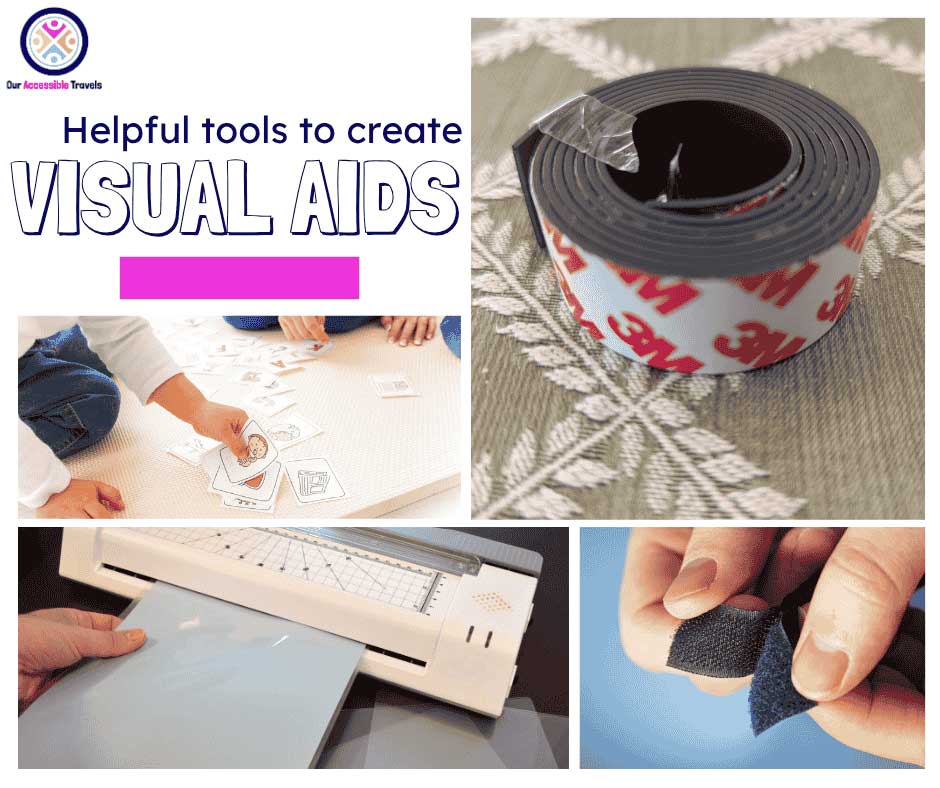
Essential tools for making reusable visual aids and travel schedules for kids — from Velcro and magnetic tape to laminators, here’s what you need to stay organised on family trips.
💼 How to Organize Your Visual Schedule for Easy Travel Use
There are a number of simple ways to organise your travel visual schedule so it’s easy to use on the go.
If space is tight, I cut theToday andTomorrow strips separately and store them in anA5 double pocket pouch. It keeps things light, compact, and easy to slip into a regular travel sling bag.
If you’re using abackpack each day — or if the person using it prefers to see everything at once — anA4 plastic wallet works beautifully. I especially like using one with asmaller zippered pocket, perfect for storing all the laminated icons so they don’t get lost.
Inside that pocket, I keep a few practical extras:
- A small strip of magnetic tape or a handful of Velcro dots
- A few spare blank icons
- A fine-tip whiteboard marker for quick changes
Having everything in one place means you can easily adjust plans if needed — whether that’s during a flight delay, a spontaneous change, or a shift in accommodation.
For example, during our recent trip to Paris, my daughter struggled after more transitions than I’d ideally planned for. I realised I needed to adapt the next day’s plan and include an animal encounter — something that helps her regulate and reconnect. Having extra icons with me made that adjustment easy and stress-free.
The key is toset it up in a way that works for you. Your visual schedule should be compact, portable, and easy to access — ready to pull out anywhere, from airports to hotel rooms to sightseeing days. Keeping it organised also models great planning and flexibility for kids, which makes transitions smoother and helps them feel involved in the process.
🌍 Using Your Travel Visual Schedule While Travelling
Before the trip, I make sure my daughter knows about the visual schedule — it’s important for her to understand that she’ll have a way to see what’s happening while we’re away. I encourage her to be familiar with it and use it, creating a sense of ownership and empowerment.
The day before we leave, we set up the first two days together. While doing this, we talk through what to expect — how long we’ll be on the plane, train, or in the car, whether there will be meals, and when she might sleep during transit.
This isn’t a tool that replaces communication, but one that supports it.
Each morning (or the night before), we set up the schedule for the two days. It’s a great opportunity for everyone to see the plan, make adjustments if needed, ask questions, and feel confident about what’s ahead.
It also becomes a lovely moment of connection — checking in, sharing what we’re excited for, or flagging if something feels too much. And at the end of each day, it only takes a minute to reset for tomorrow.
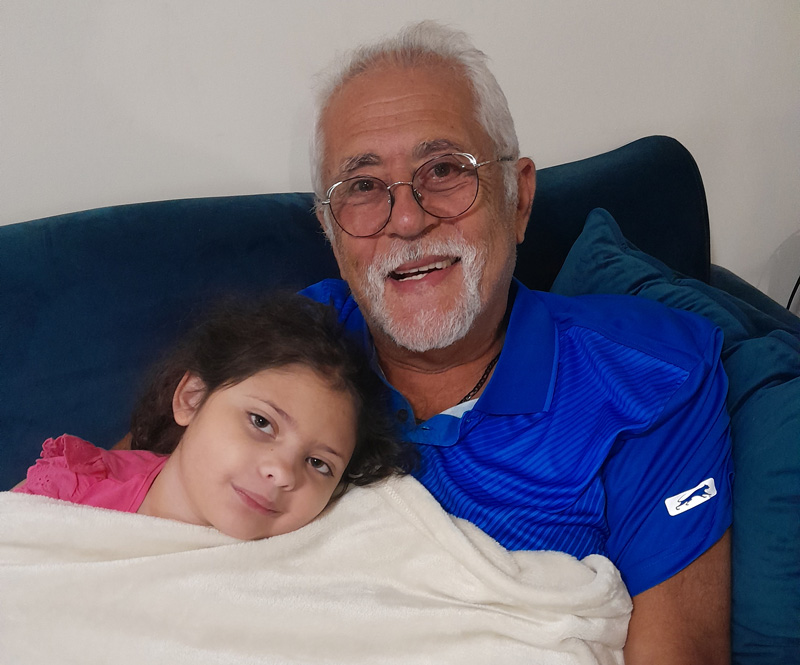
Taking time to prepare for the day ahead often becomes more than just planning — it’s a moment to slow down, connect, and share comfort together.
📌 Want the Ready-Made Travel Visual Schedule? Download Your Free Template
A visual schedule might seem simple, but it can make an enormous difference in helping everyone feel safe, prepared, and included.
It takes a little effort to set up initially, but once you do, it becomes an invaluable part of your travel toolkit — helping to bring more calm and confidence to every trip.
Ready to simplify your family travel? Download our free Travel Visual Schedule template to get started today!
If you found this helpful, please share it with other families who could benefit from calmer, more predictable travel. And don’t forget to subscribe for more accessible travel tips!
0 Comments
Trackbacks/Pingbacks