
🏛️ Welcome to Our Coptic Cairo Series
Coptic Cairo is layered in a way that invites you to slow down. History, faith, and everyday life sit side by side, often on the same street. While it’s no longer the centre of the city, this area once carried enormous importance – and you can still feel that if you allow yourself the time to notice.
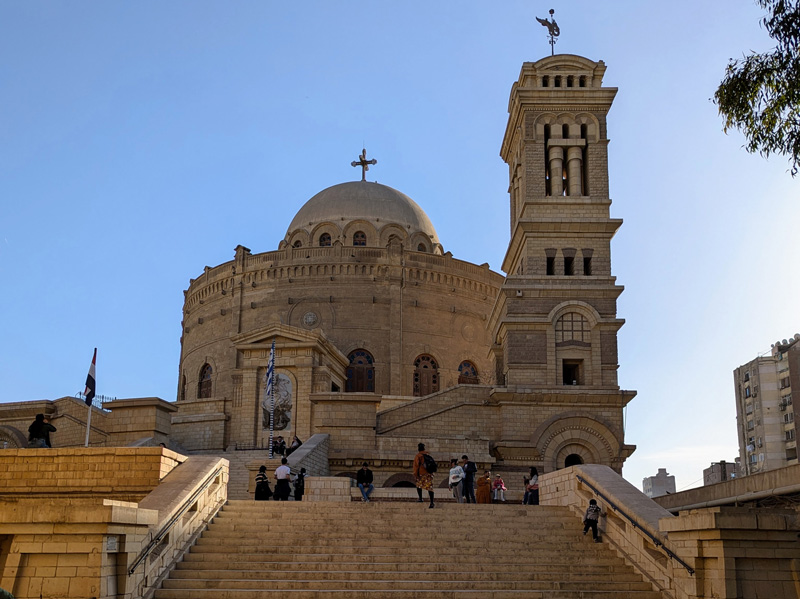
After visiting the Hanging Church and Babylon Fortress, we made our way to theChurch of St George, and I’ve got to say – I feel like it’s underrated.
⛪ Church of St George (Mar Girgis), Coptic Cairo
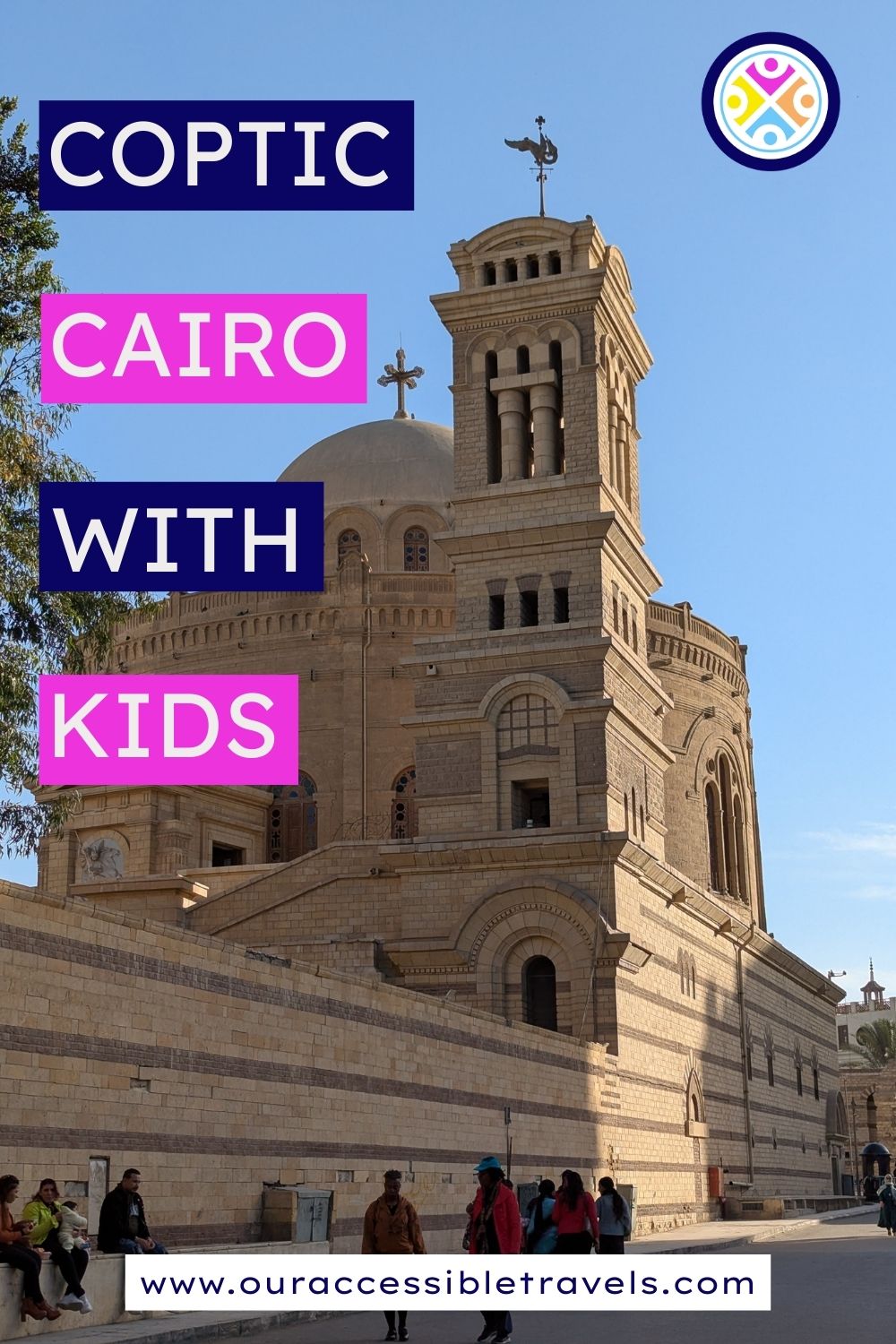
The Church of St George – known locally asMar Girgis – is one of the most significant Greek Orthodox churches in Egypt.
Like much of Coptic Cairo, it’s a place shaped by layered history and continuity – rebuilt, restored, and still actively used for worship today. The current structure was rebuilt in 1909 (after a fire) but dates back to the 10th century. Additionally, this site was built on the remains of earlier Roman towers from the 2nd century that once formed part of the Babylon Fortress.
It’s an architectural rarity – one of the only rotunda style churches in Egypt. It’s circular form and domed interior reminded me more of local mosques than the traditional cross shaped or basilican style churches.
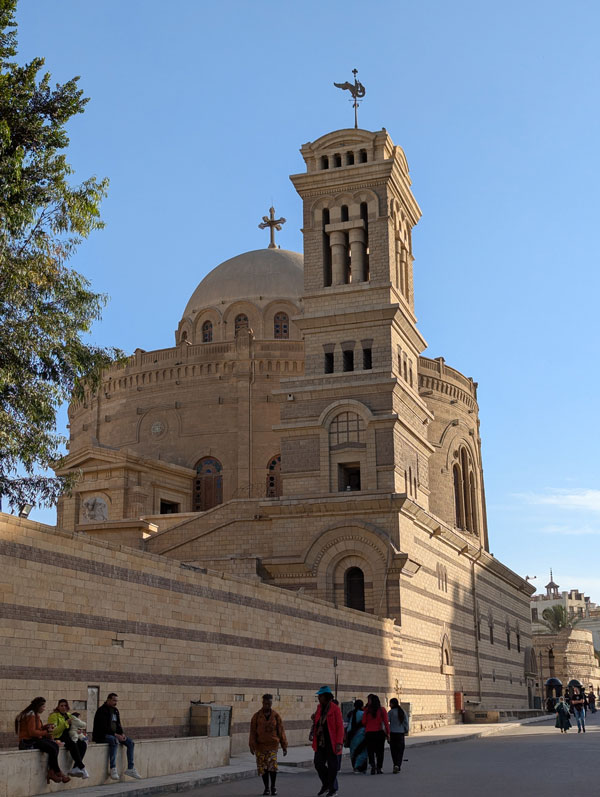
The unusual domed shape is clear from the outside and the striped pattern that they have layed the brick also makes it distinct.
☦️ The Significance of St George in Coptic Cairo
The Church of St George (Mar Girgis) sits withinCoptic Cairo, just a short walk from the Hanging Church, the Babylon Fortress remains, and the Coptic Museum. Like much of this area, it’s built on layers of earlier Roman and Coptic history.
Dedicated to Saint George, a figure revered across Christian traditions and also recognised in Islamic history, the churchholds deep cultural and religious meaning for many Egyptians.
In addition to being theofficial seat of the Greek Orthodox Patriarch of Alexandria, it also is said to house the chains and torture tools used on St. George.While the church is a place of pilgrimage and prayer, it also functions as a living community space – it’s not just a historical monument, but a place that continues to hold meaning in everyday life.
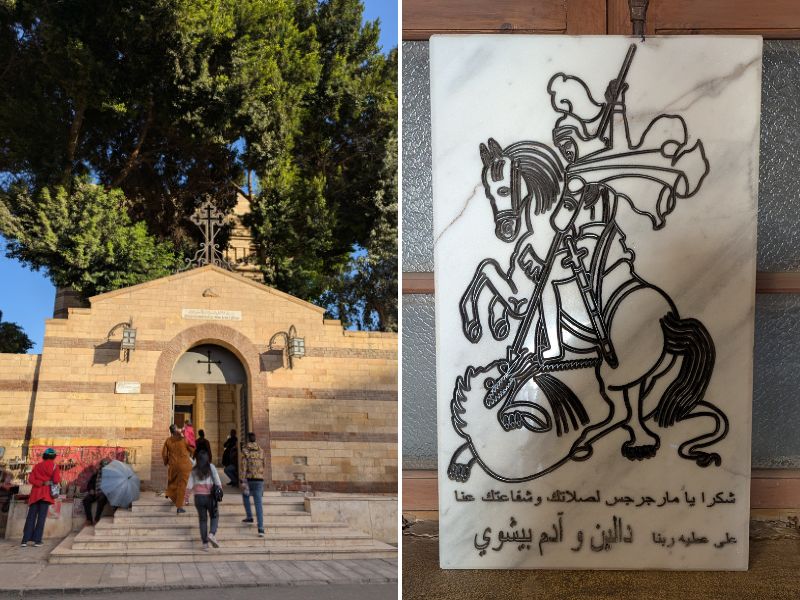
The iconography for St George were clear throughout the church and entryway
🕊️ Peaceful Pauses at St George’s Church
From the outside, it’s a striking structure, rising above the courtyard in a way that immediately sets it apart from other churches nearby. But what stayed with us was the peace and tranquillity found in the courtyard itself. Quiet, spacious, and dotted with benches and shady trees, it offers a natural place to pause.
Susu stayed here with Kareem while Laith and I explored inside – a decision that allowed everyone to get what they needed without pushing through fatigue. Being able to split up, rest, and regroup made the visit feel manageable rather than demanding.
This flexibility – knowing when to step back and when to continue – is something we’ve learned to prioritise when visiting historic sites.
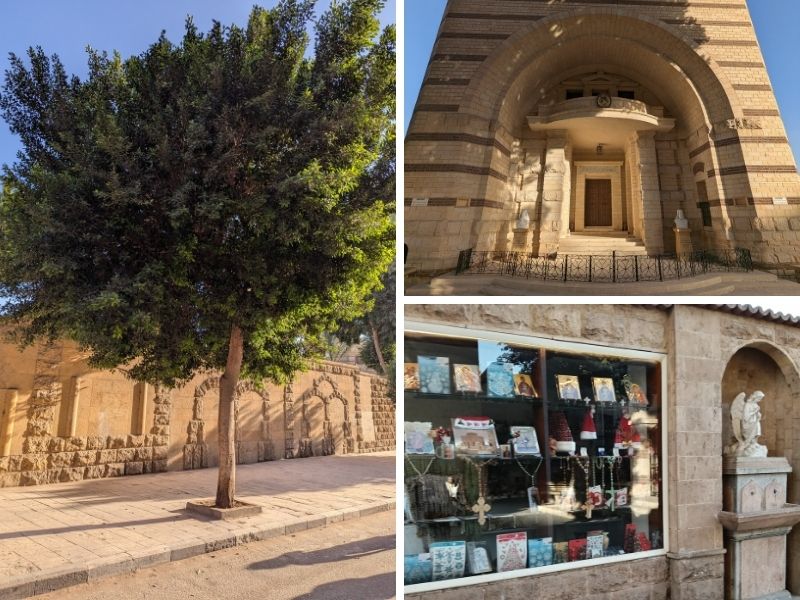
There were some benches scattered around in the shaded courtyard, and of course Susu loved checking out the little shop.
👀 What to Look for Inside
St George’s reminded me of some of the local mosques – how the space uses pattern, height, and symmetry to create a sense of awe.
Inside, a few details are especially worth slowing down for:
- The domed ceiling is richly patterned and full of colour. It draws your eye upward immediately and sets the tone for the whole space.
- The circular layout means the church feels more open and spacious than the Hanging Church, and the flow of people is a little easier to manage.
- A small side area houses religious relics and devotional objects, offering a quieter moment away from the main flow of visitors.
- Look for repeated motifs and layered designs that give the interior a sense of depth without feeling heavy.
- Near the exit, a glimmering mosaic caught the light for us, one of those small details that makes the space feel alive.
- Views from above (if you’re able) – stairs lead further upward, and the steeple area offers a wider view across the surrounding neighbourhood.
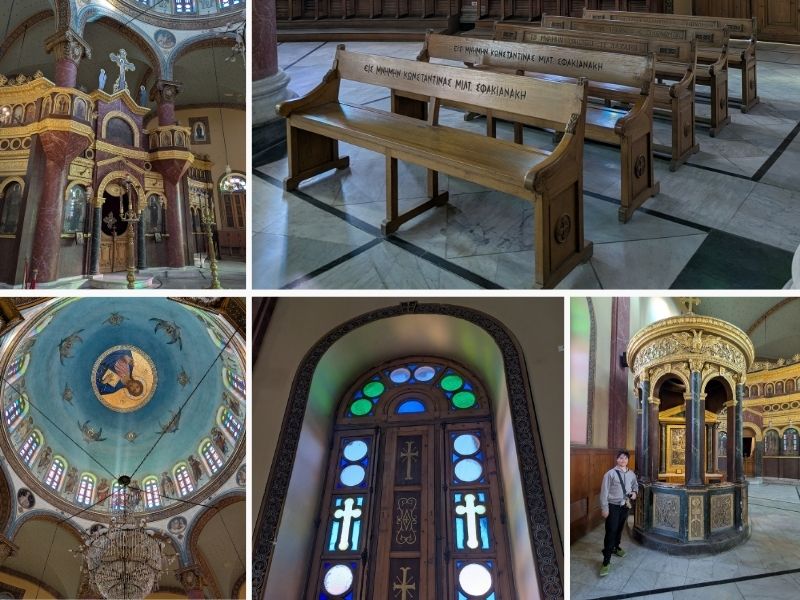
There were so many details to check out inside – intricate carvings, marble pillars, crosses, and of course the painting of Jesus surrounded by angels on the ceiling.
📝 Plan Your Visit: Accessibility, Timing & Getting There
| Aspect | Details |
| ♿ Mobility | Access involves multiple staircases, both from the courtyard and within the building itself. There is no flat or step-free entry, which makes this site challenging for visitors with mobility issues.
|
| 🪑 Rest & Regulation | The courtyard is a calm, open space with benches, making it an easy place to sit, pause, or regroup. For us, it meant Susu could rest there with Kareem while Laith and I explored inside.
|
| 🧠 Sensory | St George felt more open than the Hanging Church, with easier crowd flow and less echo, even when groups moved through. The patterned dome and richcolours are visually striking, but may be stimulating for some, so pacing and pauses help.
|
| 🕰️ Best Timing | Arrive early in the day if you can –the church closes at 4pm, and an early visit can help avoid crowds. NB – Mass is typically held on Wednesdays, Fridays and Sundays, usually from 8am – 11am, so it is best to avoid these times and allow worshippers to gather unimpeded.
|
| 💰 Entry | Free
|
| 🗺️ Getting There | The Metro Line 1 to Mar Girgis Station islocated just steps away from the entrance. An Uber or a taxi will drop you a short walk away.
|
| 🧭 Other Nearby Sites | Other nearby sites include the Coptic Museum, the Church of St Barbara, and the Holy Family’s Path – more on these in upcoming posts |
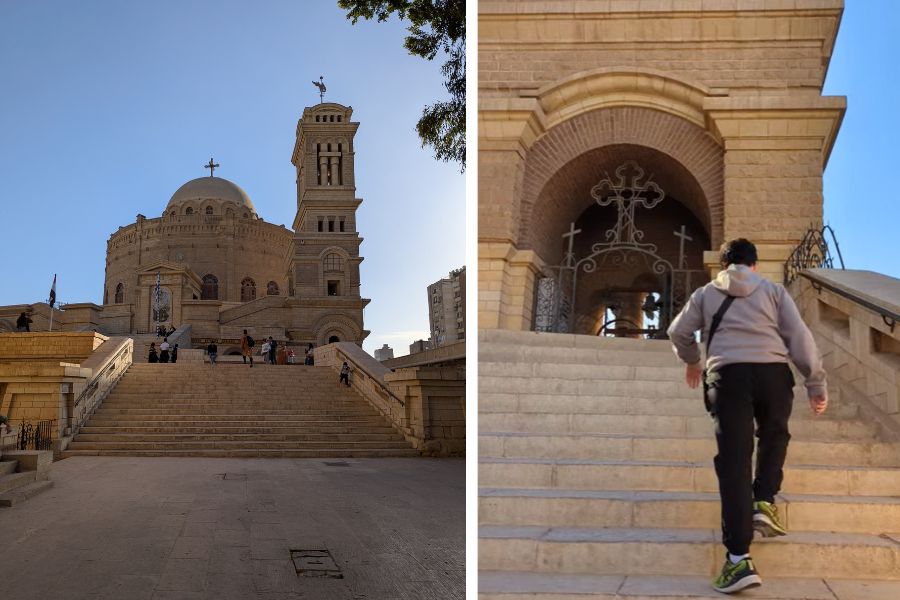
There are multiple sets of stairs to be aware of for those with mobility issues.
👨👩👧 Visiting as a Family
For us, St George Church paired well with the Hanging Church and Babylon Fortress remains. It’s only a short distance away and we were able to compare the two different structures.
If you have little ones, or those that need extra space or help with regulation, the outdoor courtyard is a real blessing. A chance to move around freely and get energy out before taking in all the details inside the church.
It reinforced something we’ve come to understand through travel: accessibility isn’t only about physical access. It’s also aboutflow, pacing, and having places where you can pause without feeling in the way.
By focusing on fewer sites and allowing each of us to engage in the way that worked best, the visit felt meaningful rather than overwhelming.
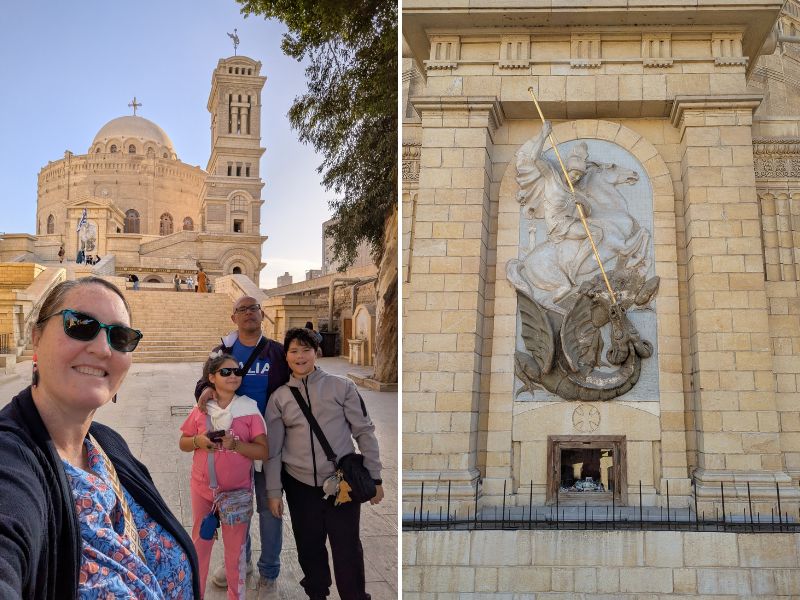
One of the things we liked best about this outing was that no one felt rushed, which meant we could take our time taking in all of the details, like this relief of St George kiling the dragon.
💡 Practical Tips
- Wear comfortable shoes – surfaces can be dusty and uneven.
- Dress modestly out of respect.
- Use the courtyard intentionally for movement breaks, rest or as a transition.
- Pair it with the Hanging Church and/or the Coptic Museum (just a short walk away) for a fuller experience of Coptic Cairo.
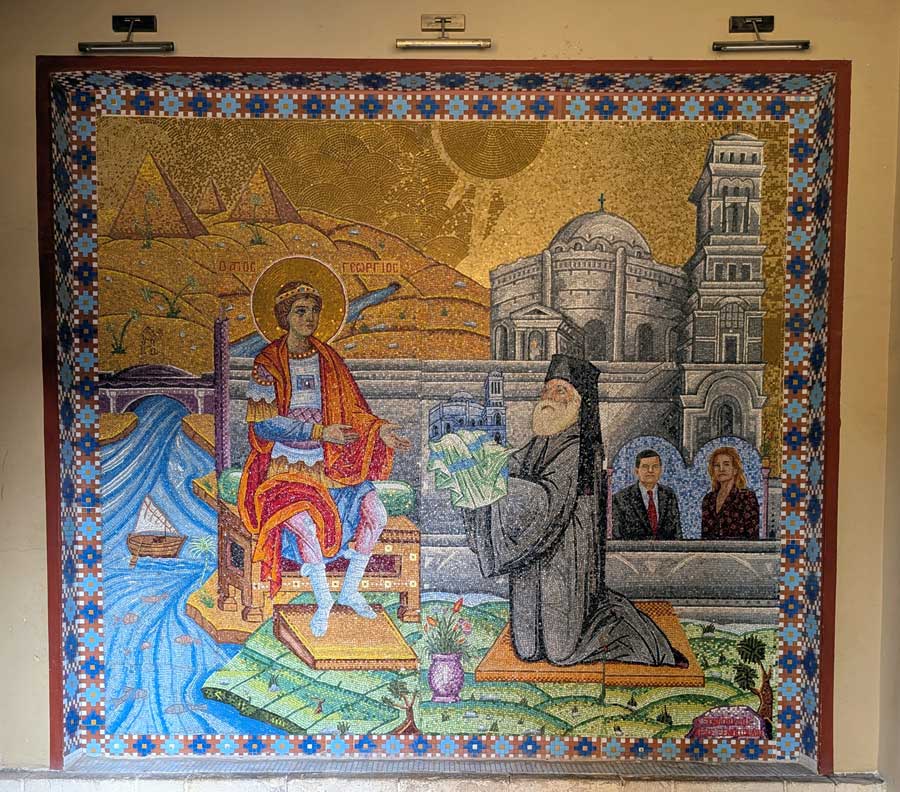
Laith and I both loved the details of this intricate mosaic that had a glimmering/glittery element.
➡️ What’s Next in Our Coptic Cairo Series: Visiting as a Family
This visit to St George Church is part of our ongoing Coptic Cairo series,where we’re exploring the area one site at a time – slowly, thoughtfully, and with accessibility in mind.
Each visit looks a little different, and that’s part of the beauty – adjusting, noticing, and letting the experience unfold in its own time.
Up next: theCoptic Museum. We’ll be sharing what it’s like for families, including accessibility notes, pacing tips, and sensory considerations
Have you visited St George’s? Share your family’s tips below!
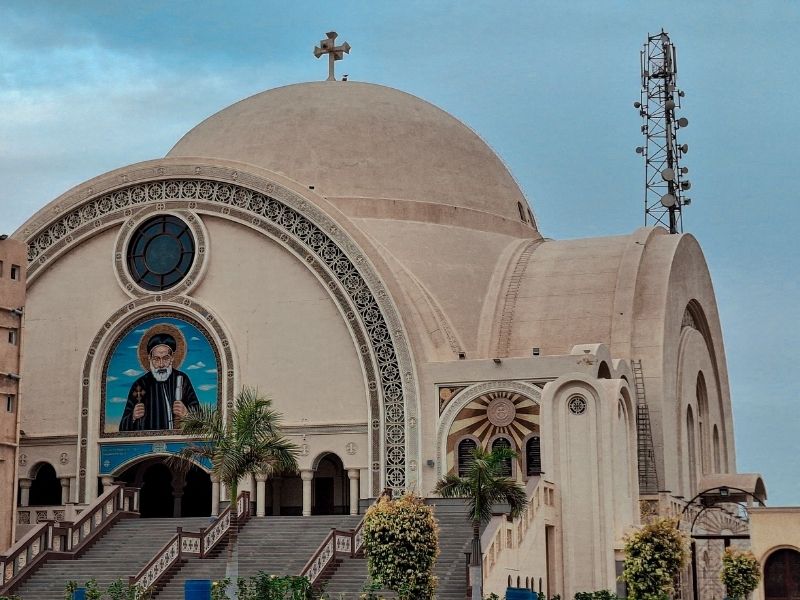
Next in our Coptic Cairo series, we’re planning to explore the Coptic Museum.
📌 Found this helpful? Pin it so you can come back anytime.
0 Comments