
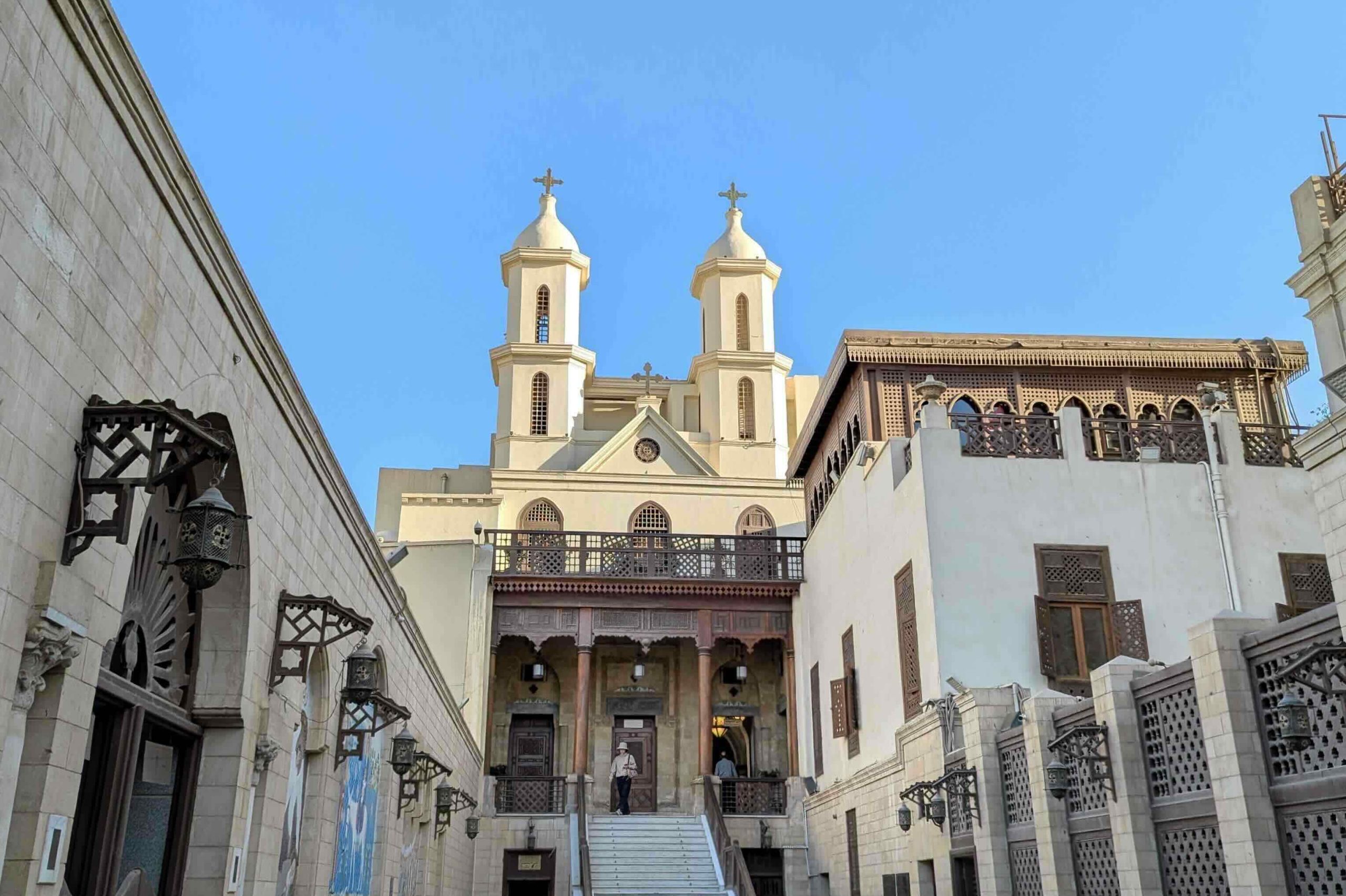
🏛️ Welcome to Our Coptic Cairo Series
This marks the beginning of our Coptic Cairo series – a space where we explore some of the key sites in the area, alongside key accessibility concerns, and travelling as a family, at a slower pace.
Coptic Cairo holds layers of history, faith, and everyday life – often intertwined in the same street. While today it may not be the centre of the city, historically, this area was a hive of activity. Trade routes, religious life, and governance all passed through here. You can feel that layered importance even now, if you pause long enough.
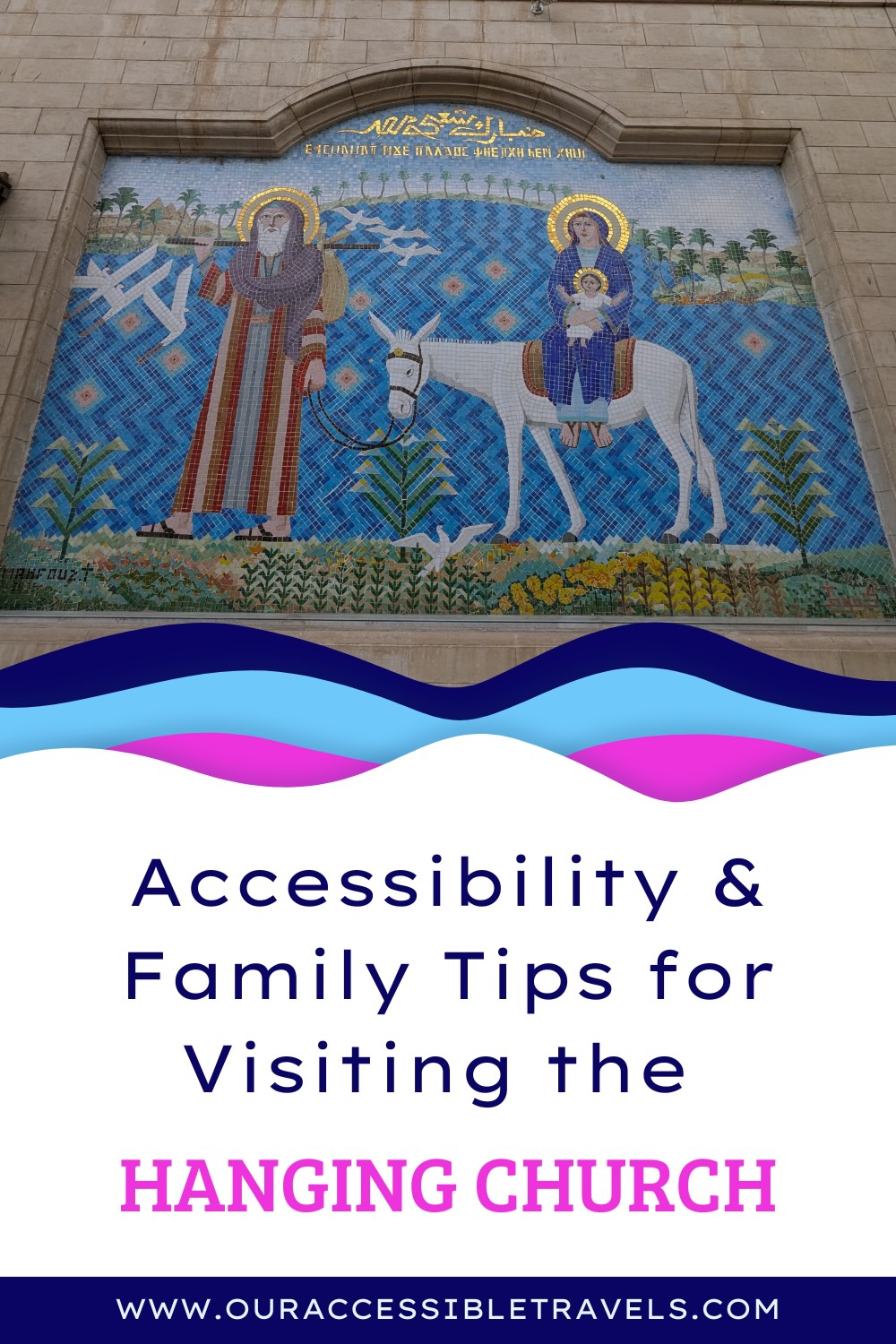
⛪ Hanging Church & Babylon Fortress
You can’t mention the Hanging Church – known locally as Al-Muallaqa – without acknowledging the Babylon Fortress. The Hanging Church quite literally owes its name and existence to the fortress beneath it – built on top of the gate towers of the ancient Babylon Fortress.
They sit within Coptic Cairo, close to the National Museum of Egyptian Civilisation. They form part of Old Cairo, a UNESCO World Heritage listed area. In this area you’ll see a nod to Cairo’s past with a blend of Roman, Coptic and early Islamic history.
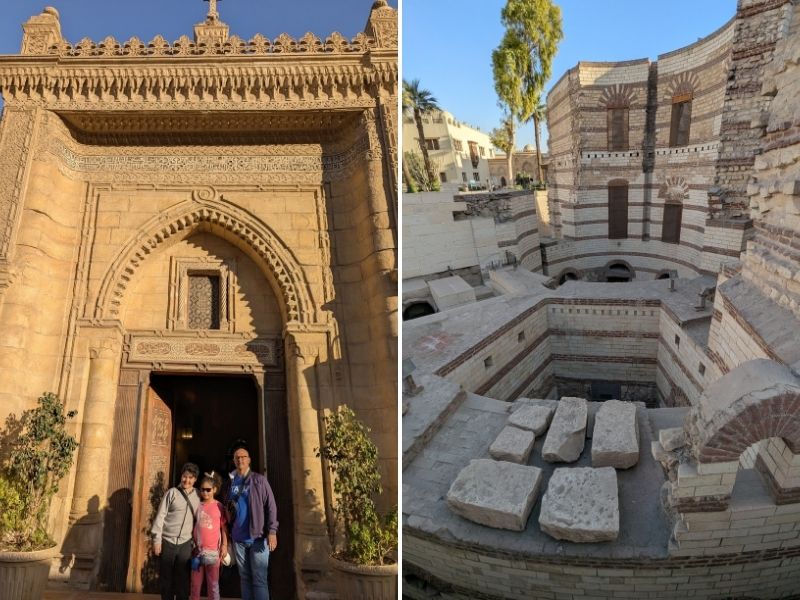
The remains of the Babylon Fortress are located just before the entrance to the Hanging Church – you literally can’t miss them.
🕊️ The Hanging Church: A Church Built Above the Past
The Hanging Church (Saint Virgin Mary’s Coptic Orthodox Church) was built in the 7th–8th century under early Islamic rule, on a site used by Christians since the 2nd–3rd centuries – making it one of the oldest Christian churches in Egypt. It was constructed above the Roman Babylon Fortress, which is why it appears to “hang” above the ground rather than sit directly on it. Over the years the ground level rose so it’s not as immediately noticeable these days.
That sense of being suspended between eras is something you really feel here. This isn’t a site that has been frozen in time. It’s layered, worn, and still in use – history continuing rather than history preserved behind glass.
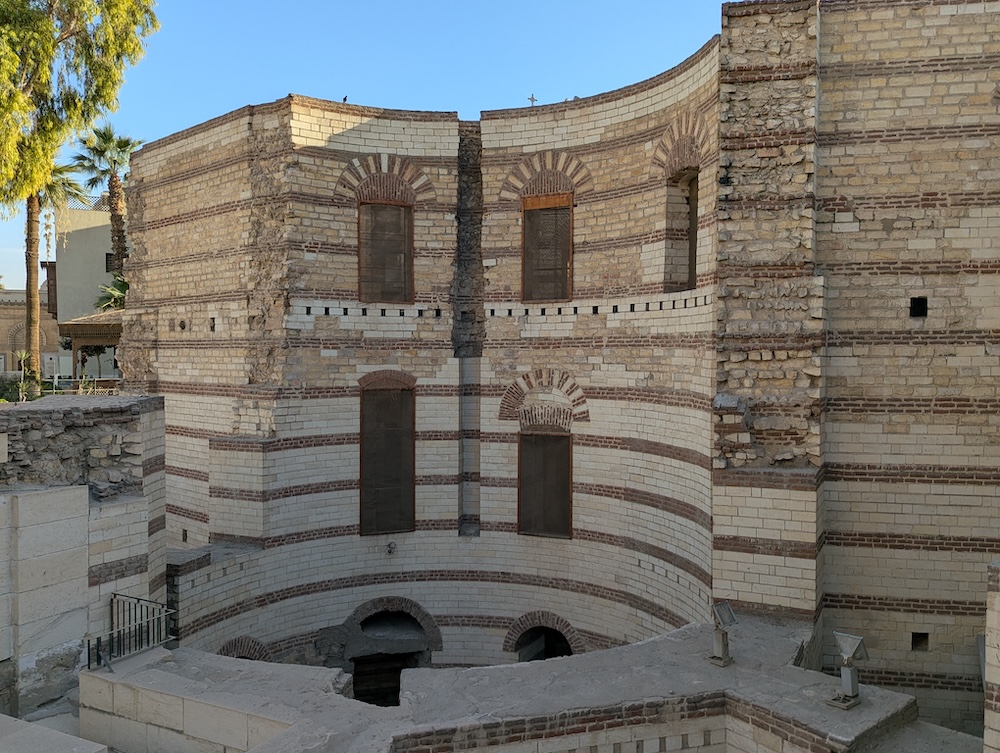
The stripes of the Babylon Fortress somewhat reminded me of Cathedrals I have visited in Tuscany.
👀 What to Look for Inside
Before you even enter the main church, the courtyard sets the tone – colourful biblical mosaics lining the walls, a softly arched entryway, and a sense of transition from the noise of the street into something calmer.
Inside, the details of the carved wooden interiors immediately draw your eye and are representative of something more:
- The wooden ceiling is said to have been built to resemble Noah’s Ark
- The pulpit is supported by 13 slender, marble columns representing Jesus and the 12 disciples
- There are 110 icons that line the walls that offer a visual depiction of the history of the Coptic faith
- There is even an artwork known as the “Coptic Mona Lisa” dating back to the 8th century, depicting Virgin Mary with Jesus and John the Baptist – in addition to being the oldest icon in the church – watch how her eyes follow you wherever you go
It’s a space that rewards slowing down and taking your time to take it all in. You don’t need to understand every symbol to feel the weight and peace of the place – just being present is enough.
Insider’s Tip
Once inside the church, turn to the right and walk towards the corner.There’sa small, narrow glass-covered opening in the floor. If you peer down, you can see part of the original gateway of the Babylon Fortress below – an unexpected reminder of just how many centuries are stacked beneath your feet.
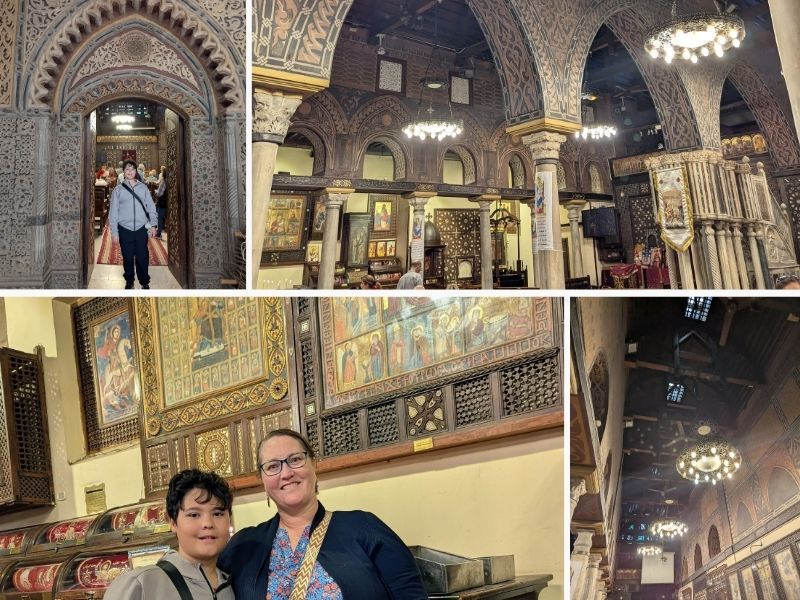
The interior is full of ornate carving, textures and small details that you need to pace yourself to see.
📝 Plan Your Visit: Accessibility, Timing & Getting There
| Aspect | Details |
| ♿ Mobility | Access involves stairs leading up to the church. No flat or step-free entry, which makes it challenging for those with mobility impairments.
|
| 🪑 Rest & Regulation | A calm outdoor vestibule with carved wooden pews and potted trees offers a good place to rest or regroup. This is where Susu stayed with Kareem due to fatigue earlier in the day, while Laith and I continued inside.
|
| 🧠 Sensory | While it felt peaceful for me, I did notice some echoes inside the church and there was some incense which I think Susu may have struggled with. Crowds can build quickly, especially later in the day. Sound carries, footsteps echo, voices travel, and the shift from bright outdoor light to darker interiors can be noticeable.
|
| 🕰️ Best Timing | The Hanging Church is open from 9am – 5pm daily. Weekday mornings are quieter and more manageable for sensory-sensitive visitors. Earlier in the day tends to be calmer overall. NB – Mass is typically held on Wednesdays, Fridays and Sundays, usually from 8am – 11am, so it is best to avoid these times and allow worshippers to gather unimpeded.
|
| 💰 Entry | Free
|
| 🗺️ Getting There | The Metro Line 1 to Mar Girgis Station is located just steps away from the entrance. An Uber or a taxi will drop you a short walk away.
|
| 🧭 Other Nearby Sites | The Hanging Church and Babylon Fortress remains are right next to the Coptic Museum, and just a short stroll from the Church of St George. Other nearby sites include the Coptic Museum, the Church of St Barbara, and the Holy Family’s Path – more on these in upcoming posts |
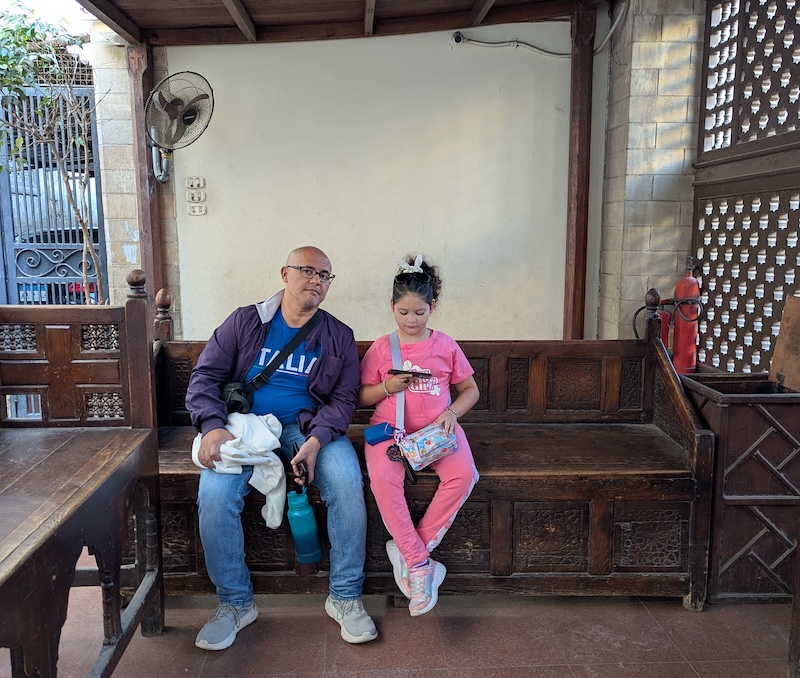
This little alcove proved to be a game changer for our visit. Susu was already fatigued earlier in the day so having a place to rest and take a break was key to us having a smooth visit.
👨👩👧 Visiting as a Family
We decided to just focus on the Hanging Church, Babylon Fortress and the Church of St George for our visit. This was very achievable to do at a slow pace. We were dropped at the entrance and enjoyed strolling along the street that leads to the churches.
The street leading in is lined with small market-style shops selling souvenirs and trinkets – calmer than Khan El Khalili. A couple of cafés and friendly (not overly pushy) vendors make it feel approachable.
For kids, especially those who are sensitive to crowds or sound, it’s worth setting expectations beforehand and knowing where you can step aside if needed – like the outdoor vestibule area, which was particularly helpful for Susu. It was a quiet, calm place to sit, regroup, and observe without pushing through.
Visiting places like this with kids may highlight unexpected conversations – about history, faith, and the idea that places can hold meaning for people over thousands of years. It can be helpful to look up information ahead of time if you’re not planning to go with a guide.
For us, it was less about seeing everything and more about being there together, noticing what each of us could manage, and adjusting accordingly. That flexibility made the experience feel meaningful rather than overwhelming. We found it helpful to move slowly, stay near the edges when needed, and use the outdoor areas intentionally rather than pushing through fatigue.
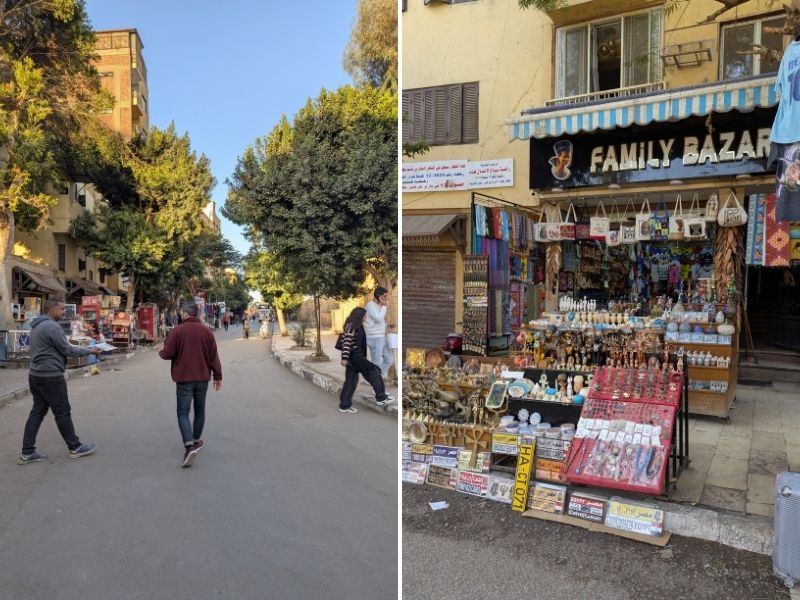
There were a number of items for sale that you might find at Khan el Khalili but the vendors here seemed less pushy.
💡 Practical Tips
- Wear comfortable shoes — surfaces can be dusty and uneven.
- Dress modestly out of respect.
- Build in time to sit and pause, especially if visiting multiple sites in Coptic Cairo.
- Don’t feel pressure to see everything in one visit – this area rewards returning.
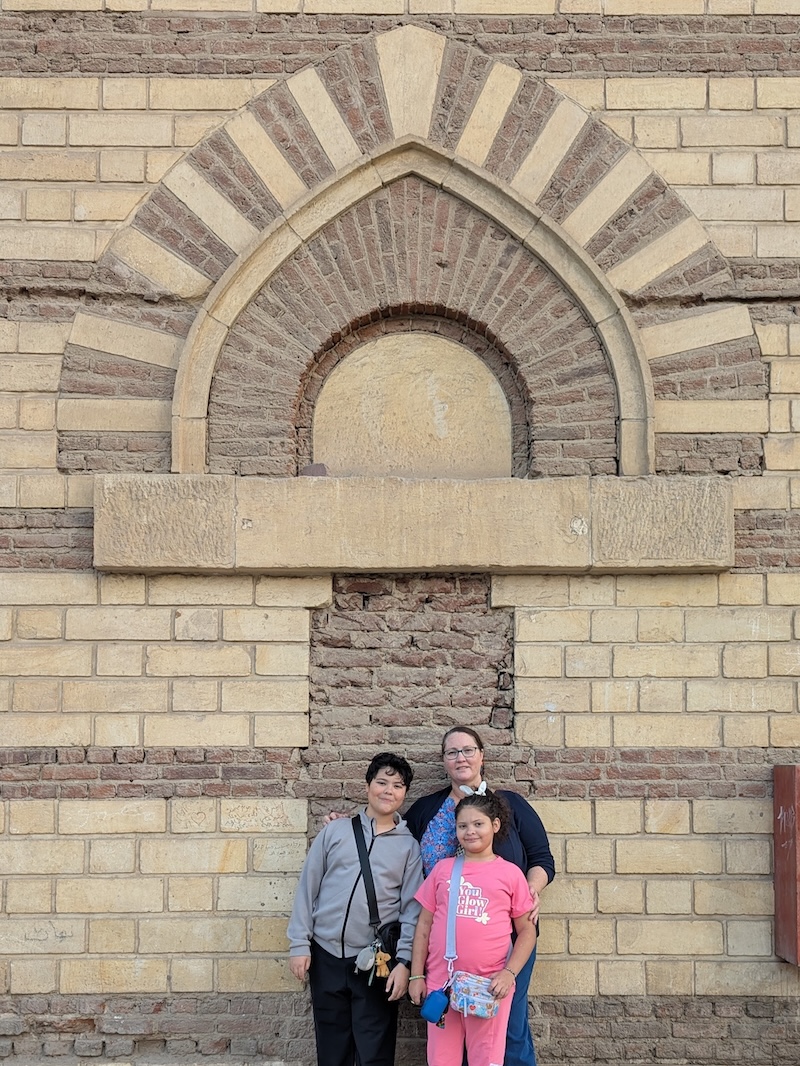
Coptic Cairo is a place where you can take as little or as much time as you need. It’s a great place to wander through and take in the mixed history of Cairo – Roman, Coptic and Islamic elements are interwoven and layered over it’s rich past.
➡️ What’s Next in Our Coptic Cairo Series: Visiting as a Family
This is one stop in our ongoing Coptic Cairo series, where we’re taking a slower, more considered approach to exploring the area’s historic sites. Each visit looks a little different, and that’s part of the beauty – adjusting, noticing, and letting the experience unfold in its own time.
In the next post in our Coptic Cairo series, we’ll walk you through the Church of St George and what it’s like to visit with kids who deal with fatigue.
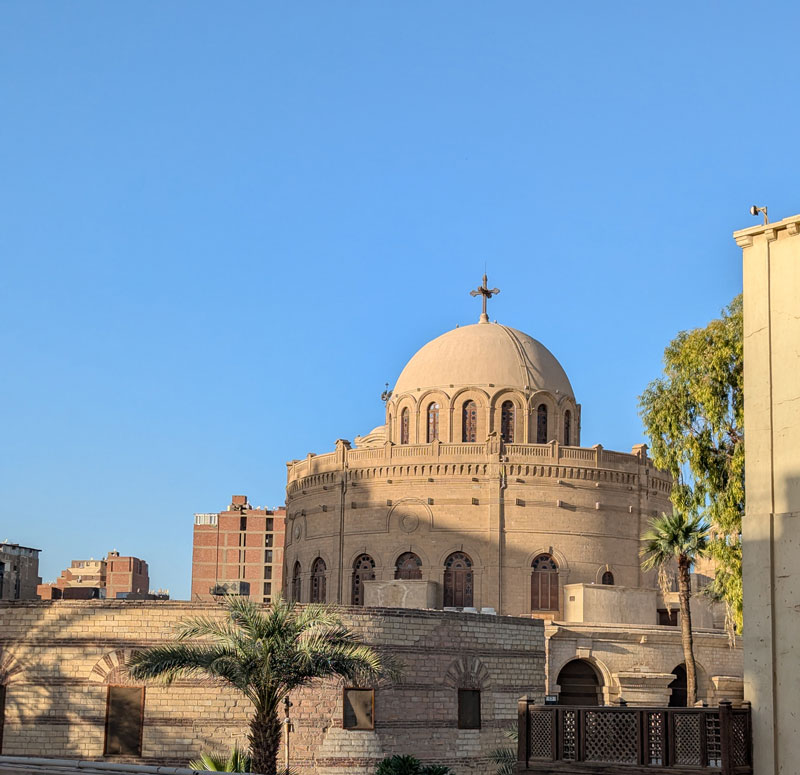
There’s a wonderful view of St George’s Church from the top of the stairs of the Hanging Church. With the two churches so close together, it really makes sense to visit them both in one day.
📌 Found this helpful? Pin it so you can come back anytime.
0 Comments