
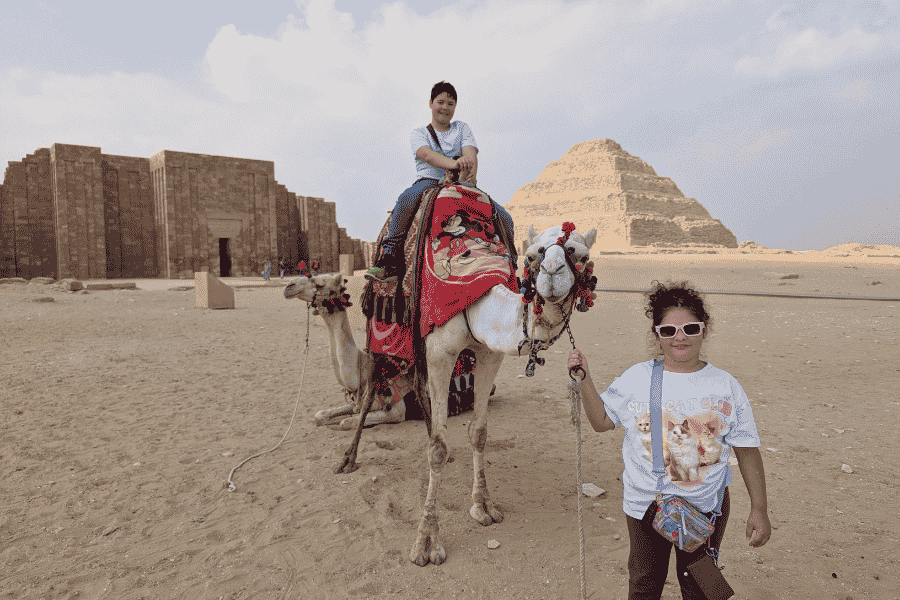
Saqqara is one of those places that feels bigger than you expect.
Not just physically – though it is sprawling – but in the way it stretches your imagination. The scale of it. The age of it. The way the desert holds these structures that have stood for so long, and somehow still manage to feel mysterious.
For kids, that mystery can be half the fun.
For Susu, this was instantly an adventure. She spent part of the visit keeping an eye out for “booby traps,” which honestly felt like a very reasonable response to walking through one of the world’s oldest pyramid complexes. There was something about the atmosphere of the place – the stone, the tombs, the passageways, the wide open landscape – that invited that kind of imagination.
But like many historical sites, Saqqara is also a place where access, pacing, and expectations matter. It is not the kind of outing where you can assume everything will be easy to reach, easy to tolerate, or easy to do in one go. And that does not make it less worth visiting. It just means you may need to approach it differently.
If you are visiting as a family, or with mobility limitations, fatigue, sensory needs, or just a realistic understanding that not every day needs to be an “see everything” day, here is what Saqqara was like for us.
🏜️ Why Saqqara Feels Different
There are some places that feel polished for visitors. Saqqara did not feel like that to me.
It felt older. Wider. More exposed. More raw.
That is part of what makes it so compelling. There is a stillness to it, but also a sense that you are moving through layers of history that have not been overly softened. The Djoser Step Pyramid is instantly recognisable, of course, but what stayed with me was the feeling of being spread out across the landscape, moving between structures, trying to take in just how much is there.
It is the kind of site that benefits from slowness. Not because everything is calm or easy, but because it asks more of you than a quick walk-through. There is more ground to cover. More heat than you might anticipate. More decisions about what to enter, what to skip, and how much capacity everyone has left.
For our family, that meant constantly balancing curiosity with pacing – which, if I am honest, is not unusual for us when we travel. It is part of how we make travel work.
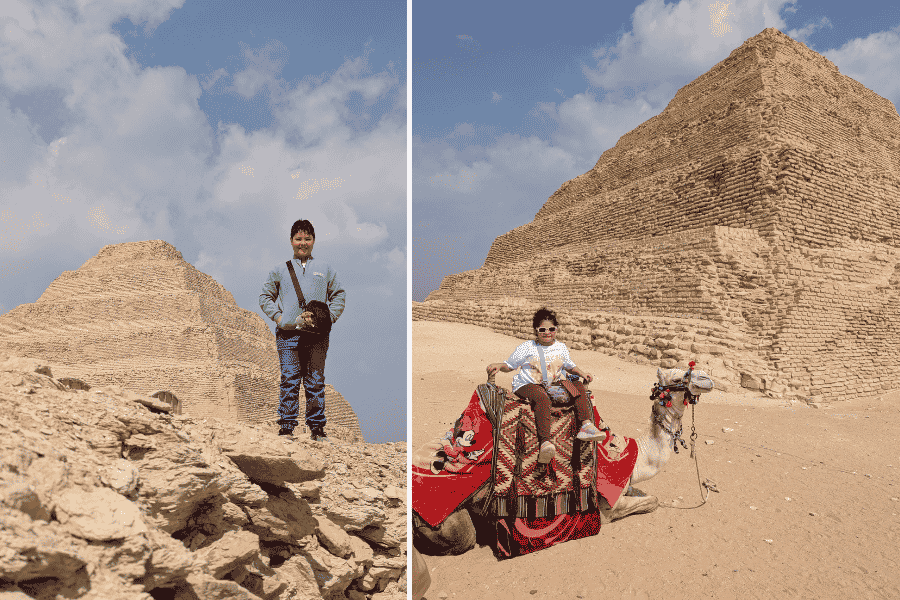
While the Step Pyramid of Djoser at Saqqara may not be as famous as the Pyramids of Giza, it’s actually the oldest pyramid in Egypt.
🔺 Visiting the Djoser Step Pyramid Complex
The Step Pyramid itself gives the whole visit a strong sense of scale from the beginning. It is iconic, yes, but standing near it still feels different from seeing it in photos. The whole complex has that effect. It feels less like looking at one monument and more like entering an archaeological landscape.
That also means it is not always straightforward.
There is walking. There are uneven surfaces. There are areas that are more open and manageable, and others that require more physical effort or tolerance for enclosed spaces. Even for people who enjoy this kind of site, the visit can become tiring faster than expected.
And that was true for us.
We enjoyed it, but it was also the kind of outing where energy management really mattered. By the end of the day, Susu was too fatigued to walk back after the climbing. The kids ended up riding camels, which worked well for us in that moment – not just as a memorable experience, but as a practical tool.
That is one of the things travel has taught us over and over again: sometimes the thing that looks like a novelty is actually what makes the day doable.
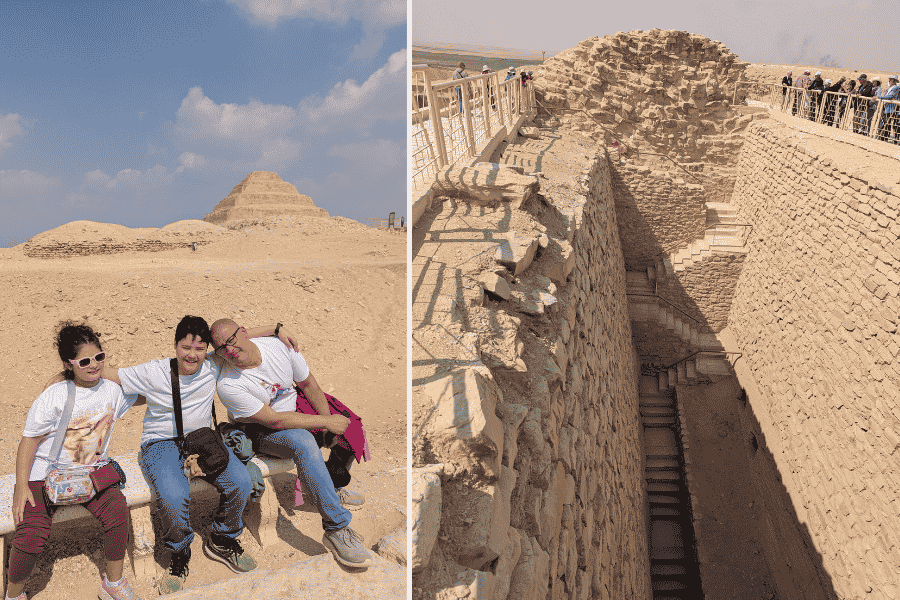
Finding this bench to rest at was a blessing on the day. Moving around through the complex was quite a lot so it was helpful to be able to take a break.
😵💫 The South Tomb: What to Know Before You Enter
The South Tomb stood out to me as one of the areas where people may want more warning beforehand.
For some visitors, it will be fascinating. For others, it could feel like too much.
To enter, there is a steep pathway down, and once inside, part of the route requires you to remain bent over while moving through to another section. That immediately changes who this space will feel comfortable for. It is not only a mobility issue. It is also relevant for anyone with claustrophobia, balance concerns, pain, or reduced stamina.
This is the kind of detail that often does not come across properly in general travel advice, but it matters. A lot.
It is one thing to hear that a site contains tombs or underground elements. It is another to realise that accessing them may involve steep descent, narrow movement, and sustained bending. That could be completely manageable for some people and a hard no for others. Both are valid.
It is also worth noting that the South Tomb closed at 2pm on the day we visited, so timing matters if it is one of the sections you most want to see.
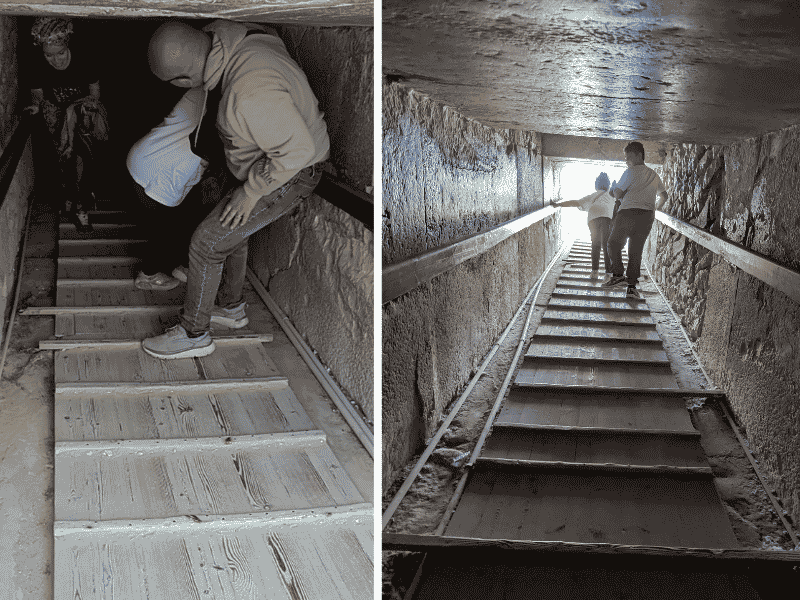
The entrance to the South Tomb at Saqqara demanded quite a bit physically. We were bent over for sections, and the grading of the ramp was quite steep.
♿ Accessibility at Saqqara
From an accessibility perspective, Saqqara is important to be honest about.
Many parts of the site are not accessible for people with impaired mobility. That does not mean the whole outing is impossible for everyone with access needs, but it does mean expectations need to be grounded. This is not a site with broad, easy, step-free access throughout. It involves walking across a large complex, navigating uneven terrain, and making decisions about which areas are worth the effort or realistic for your group.
Some areas may be manageable from an observation point of view without entering every structure. But if your goal is to move deeply through multiple sections of the complex, physical access becomes a much bigger factor.
For visitors with claustrophobia, the South Tomb in particular could be difficult. The need to stay bent over while passing through part of it changes the experience significantly, and it is worth considering before you commit to entering.
Heat is another access issue that should not be underestimated. We visited in March and it was warmer than we expected. Once you are out there, with limited shade and a lot of open space, heat and fatigue can build quickly. That may affect children, older adults, disabled visitors, and really anyone who is not prepared for how exposed the site feels.
Accessibility is not only about ramps and steps. It is also about distance, heat, enclosure, endurance, and whether the pace required by a place matches the people in your group.
Saqqara asks you to think about all of that.
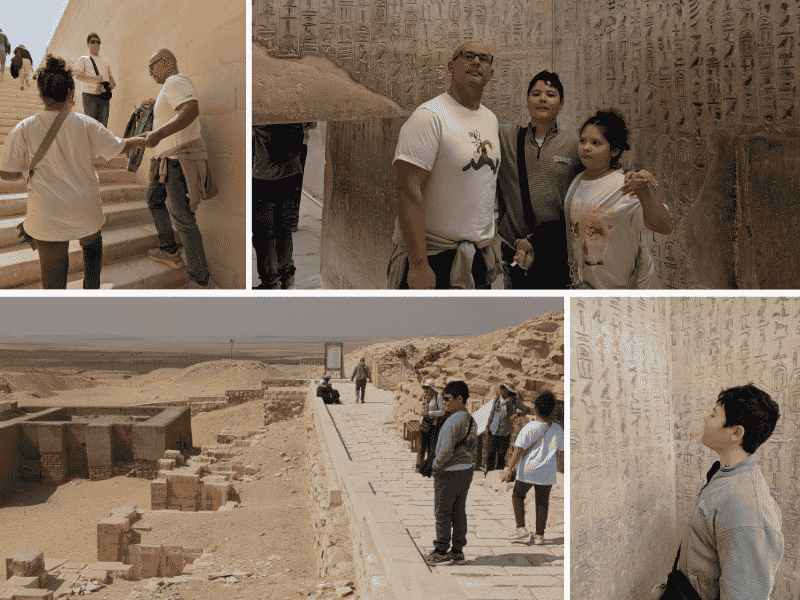
While there were a number of accessibility challenges throughout the day there were moments that made those challenges worth it. Given the distance to get there it’s best to be prepared.
👨👩👧 Visiting as a Family
For families, I think Saqqara can be a really memorable outing – especially if your kids enjoy history, mystery, tombs, or anything that feels even vaguely like a real-life adventure.
That part came easily for ours.
The “booby traps” commentary added an extra layer of fun, and I loved that the site gave enough space for imagination to take over a little. Historical places can feel abstract to children, but somewhere like this has enough atmosphere to make it feel alive in a different way.
At the same time, it is not a lightweight outing.
It helps to go in knowing that this may be a day where energy runs out before your curiosity does. That was true for us. We did not make it to the Serapeum that day, and honestly, I think that was the right call. We had already done enough. There was no benefit in pushing harder just for the sake of saying we had completed everything.
That is something I come back to often with family travel: finishing the list is not the goal. Having a day that is still manageable, meaningful, and sustainable is.
We plan to go back.
And I like that. I like that not every place has to be “done” in one visit to count.
☀️ Timing, Weather, and Energy
We visited in March and it felt warmer than expected.
That alone shifted the day more than I anticipated. Historical sites in Egypt can look deceptively straightforward in photos, but once you add sun, walking, stone, open desert, and the effort of moving between sections, the energy load increases quickly.
You can absolutely see why peak season is winter.
If your family or travel group is sensitive to heat, fatigue, or sensory overload, this is worth factoring in from the beginning. A place can be fascinating and still require more from your body than you expected. Saqqara felt like that to me.
Earlier starts would likely help, especially if there are particular sections you want to reach before the day gets hotter or before closing times affect your plans.
🚗 Getting Around the Complex
One of my strongest practical takeaways from Saqqara is this: having a car makes a real difference.
The site is spread out, and that changes the experience. Being able to move between sections more easily helps with pacing, protects energy, and makes the wider complex feel more realistic to explore. Without that, the day could become much more physically demanding.
An arranged tour could also help for the same reason.
It is not only about convenience. It is about making a large archaeological site more manageable for the actual people visiting it.
That may be particularly important if you are traveling with children, older adults, anyone with mobility limitations, or anyone whose capacity drops once heat and walking start to stack up.
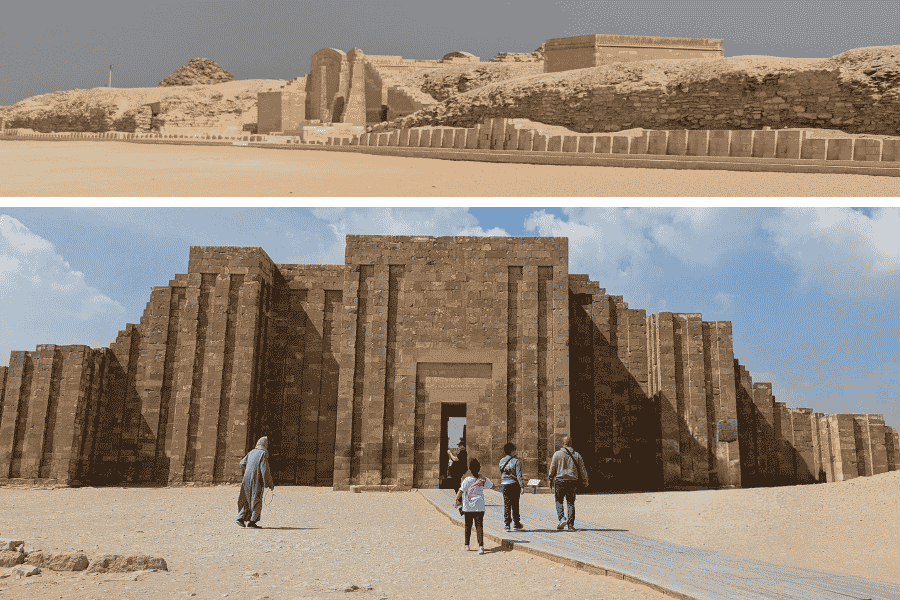
This is the entrance to just one section of the Saqqara archaelogical site. There was a lot of walking involved on the day and other sites were spread out even farther afield.
✅ Practical Tips for Visiting Saqqara
Here are the things I would keep in mind if we were planning this day again:
Wear solid, comfortable shoes
This is not the day for flimsy footwear. There is walking, uneven ground, and sections that require more physical effort than a quick glance might suggest.
Start earlier than you think you need to
The combination of distance, exposure, and heat can make the day heavier as it goes on.
Choose your priorities
You may not do every part of the complex in one visit, and that is okay. Decide what matters most rather than trying to cover everything.
Think beyond mobility alone
Consider claustrophobia, stamina, heat tolerance, and how your group copes with walking and enclosed spaces.
Factor in transport across the site
A car could make the whole day more manageable and help conserve energy for the parts you most want to explore.
Check timing for specific sections
On our visit, the South Tomb closed at 2pm. If there is a particular area you do not want to miss, build your day around that.
Leave room for flexibility
Sometimes the best decision is not to push through. Sometimes it is to pause, adapt, or save something for next time.
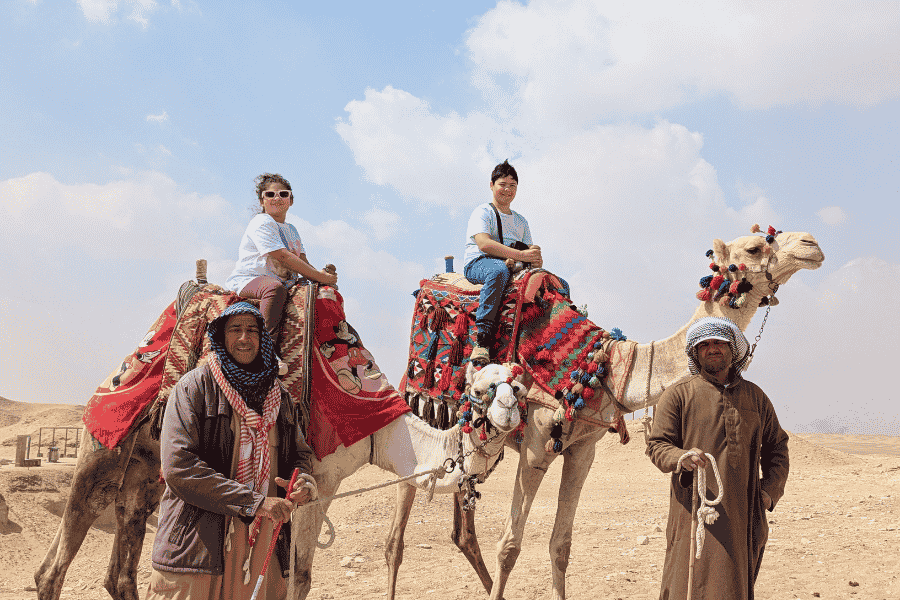
Riding the camels around the complex and back to the carpark became a very practical way for us to assist Susu with her mobility and fatigue issues.
✨ Final Thoughts: You Don’t Have to Do It All
Saqqara is absolutely worth visiting.
But I do not think it is best approached as a checklist site.
For us, it worked better as a place to experience in parts — to move through thoughtfully, to notice what was possible that day, and to accept what was not. That mindset made the outing feel far more successful than trying to conquer the whole complex would have.
We saw a lot. We enjoyed a lot. We adapted when we needed to. And we left some for another time.
That feels like a good travel day to me.
Not because everything went perfectly. Not because we managed every section. But because the day still held wonder, curiosity, imagination, and enough margin to stop before it tipped too far into exhaustion.
And honestly, that kind of pacing is often what makes it possible to come back wanting more.
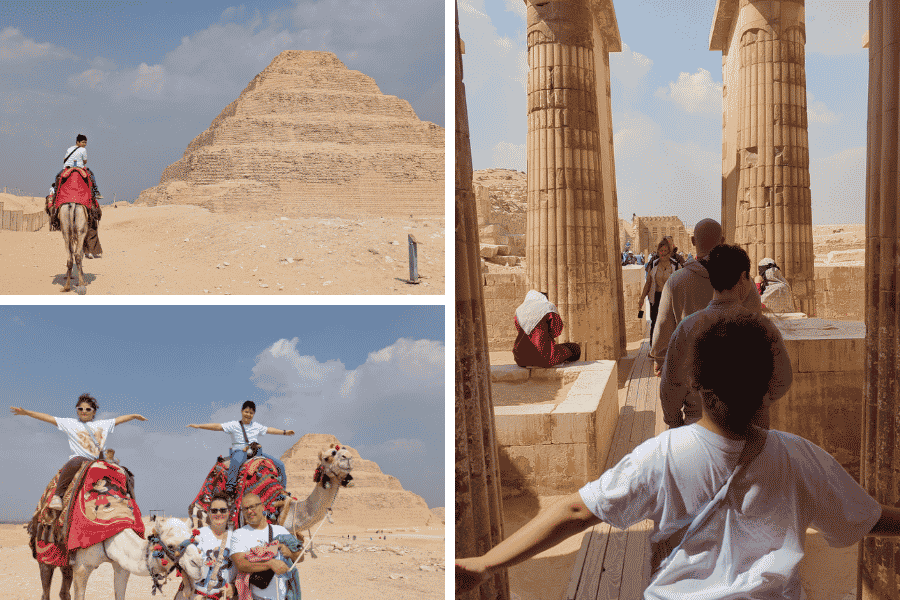
We walked away from this visit with some great memories that will last a lifetime. Even though it had it’s challenges, we’re grateful for the experience.
📌 Found this helpful? Pin it so you can come back anytime.

0 Comments